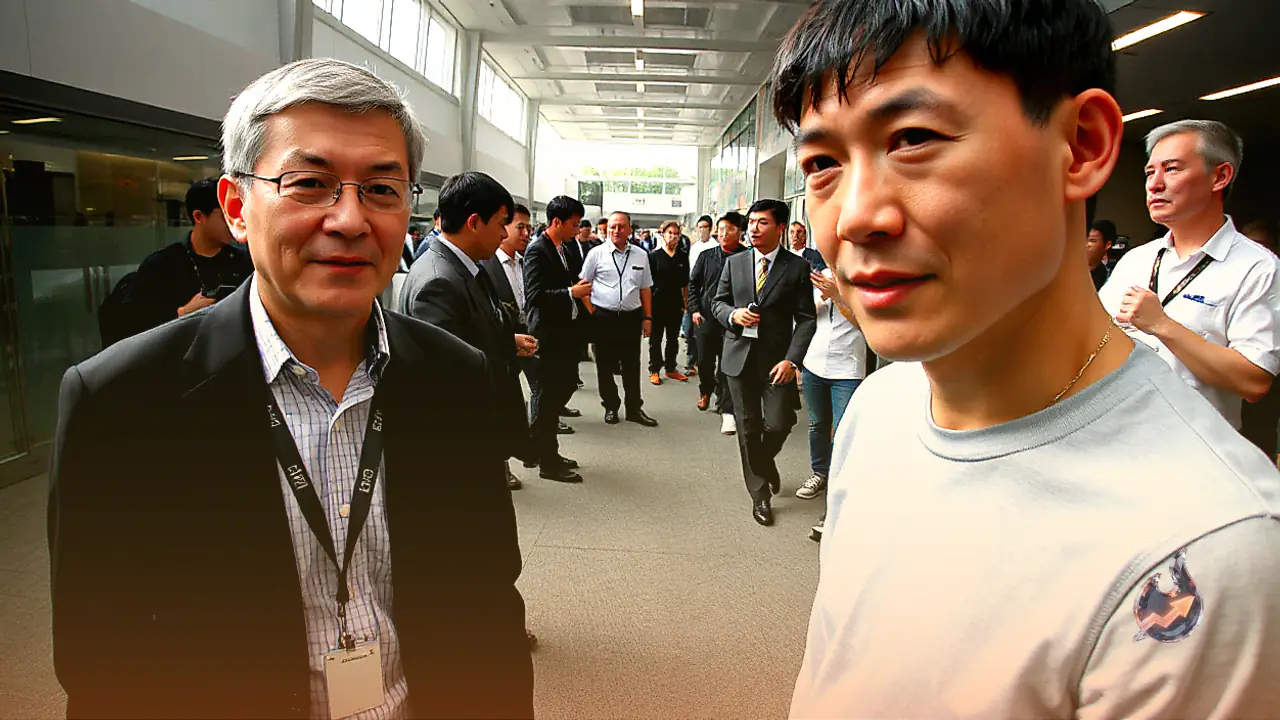





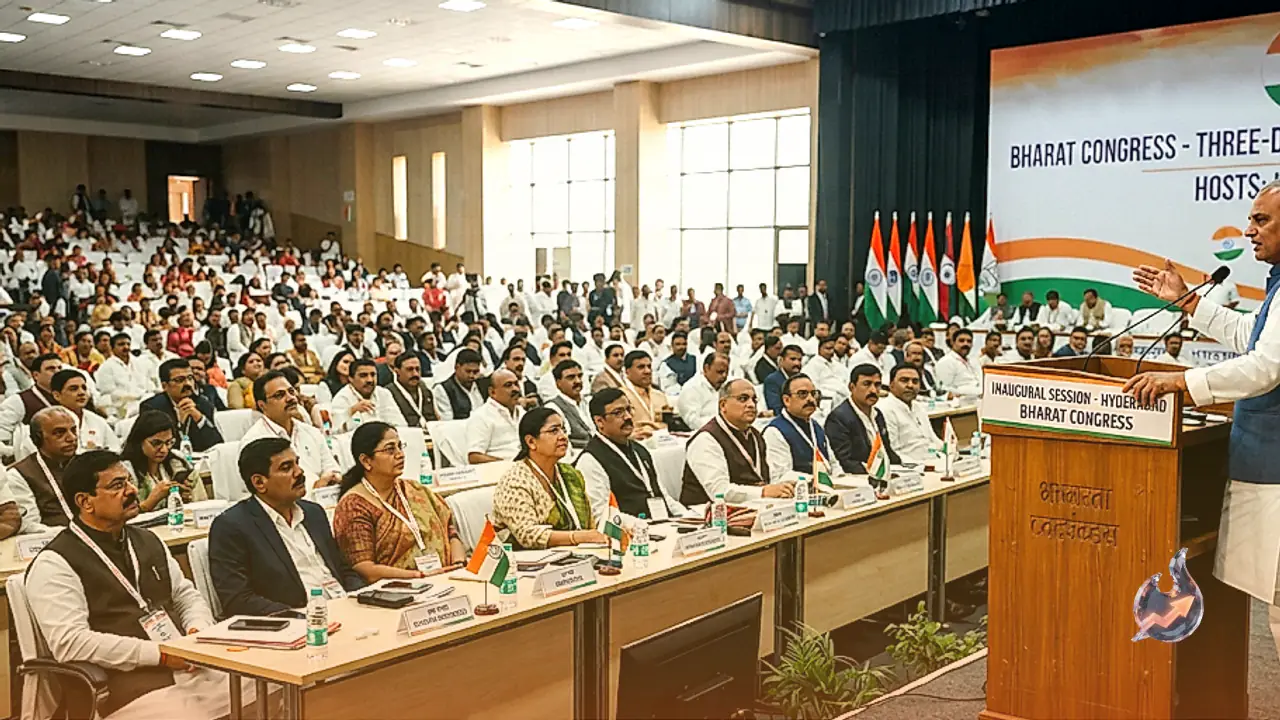


















A group of nine early-stage South Korean technology ventures presented their innovations this week at DETO 2026, an industry gathering held in Seoul. Each of the participating firms competed to secure an invitation to next year's Startup Battlefield 200 while laying the groundwork to enter the United States market as part of their international commercial strategies. The companies represent core segments within the deep tech sector, spanning artificial intelligence, healthcare, financial technology, energy efficiency, robotics, and advanced semiconductor memory design.
Voice-Based Cognitive Health Assessment Takes Top Honor
Securing first place in the Seoul pitching event, Voinosis is creating an artificial intelligence platform engineered to identify subtle physiological shifts in brain health through vocal evaluation. The software examines distinct acoustic and structural patterns during speech, measuring factors such as pitch variations, silent pauses, vocal rhythm, and the time taken to respond. A complete vocal screening requires under five minutes to conclude.
According to the firm, its underlying model has been evaluated across English, Japanese, and Greek datasets without needing isolated model training for each individual tongue. In an evaluated clinical cohort of 146 human subjects, the company reported an 88% accuracy rate in detecting markers indicative of potential cognitive impairment. The company is actively marketing its platform toward medical centers, assisted living facilities, insurance underwriters, and independent consumers. Its operational roadmap also includes connecting these quick vocal evaluations directly with professional cognitive training, specialist consultations, and targeted therapeutic care.
Voinosis was launched by Grace Shin, who previously practiced for over 25 years as an otologic surgeon specializing in ear-related clinical procedures. The firm is currently raising capital in a Series A financing round, having already welcomed a South Korean pharmaceutical corporation as a strategic backer.
Cleantech Heating Infrastructure and Borderless Digital Identity
Operating from Seoul, Awesome Lab engineers an energy generation solution named ThermoFlux, which relies on water ionization and electrolysis to produce thermal output. The system manages heating requirements for municipal water lines, commercial facilities, and diverse manufacturing workflows. The enterprise states that this equipment lowers total energy overhead while lowering associated carbon output. In executing its cross-border plans, Awesome Lab is tailoring commercial channels region by region. For its American entry, the firm intends to provide core original equipment manufacturer modules and partner directly with domestic water heating, boiler, and HVAC manufacturers on integrated product designs.
Focusing on global mobility, Crosshub provides a verification framework that assists travelers and international visitors with border authentication and localized financial onboarding. Its IDBlock platform integrates identity validation and merchant transactions through self-sovereign identity protocols and zero-knowledge cryptography. This architecture allows individuals to demonstrate legal identity internationally without disclosing unnecessary personal documents. Crosshub is coupling this identity layer with transaction networks to broaden financial options for cross-border travelers.
Non-Line-of-Sight Environmental Sensing and Compact Motors
Sensor developer DeepFusion AI has engineered a 4D radar imaging apparatus enhanced with specialized auxiliary sensors to support robotaxis, self-driving platforms, coastal defense monitoring, and autonomous navigation. The setup merges radio frequency detectors with radar and lidar channels to identify distant objects, velocities, and positional shifts without requiring a clear optical line of sight. All sensing instrumentation is integrated into a unified, customizable hardware package.
In the physical hardware space, EFLOW designs specialized electric motors engineered to produce elevated rotational torque while maintaining a reduced physical footprint. These power plants are targeted at robotic systems, aerial drones, orbital satellites, and automated transport vehicles. The company additionally manufactures precision actuators that regulate the physical articulation of robotic joints.
Tympanic Membrane Diagnostics and Rapid Warehouse Automation
Medical hardware firm Otiton Medical produces two specialized diagnostic instruments. The first monitors patient body temperature, while the second photographs the ear canal to inspect the condition of the tympanic membrane. The company reports that its diagnostic artificial intelligence model was trained using approximately 55,000 images of human eardrums, and the diagnostic tool has already secured domestic medical device certification in South Korea.
Aiming to streamline industrial logistics, Riibotics asserts that it can install functional robotic systems into commercial warehouses in as little as twenty-four hours. The company seeks to reduce automated onboarding expenses by simplifying site configuration, which encompasses facility spatial mapping, physical infrastructure setup, software integration via specialized middleware, movement programming, and rigorous operational safety validation.
Three-State Memory Architectures and Interactive Edtech
Headquartered in Ulsan, semiconductor startup Ternell is designing alternative memory hardware to curtail the electricity usage of demanding artificial intelligence processors. Moving beyond standard binary storage arrangements, Ternell's proprietary T-SRAM technology introduces a third operational state to maximize data density. The company was founded in 2019 by KyungRok Kim, an engineer who formerly worked at Samsung Electronics. Verification benchmarks conducted on 28-nanometer fabrication processes demonstrated that Ternell's architecture achieved between 33% and 102% greater memory capacity per unit of surface area alongside a 55% to 71% reduction in access power compared against standard SRAM chips.
Within educational software, Testbank develops an application called Solve that transforms traditional paper textbooks and test preparation guides into interactive digital tools. Using artificial intelligence, the software isolates question fields and response margins inside publishers' standard PDF documents without altering the source layout. Solve enables students to write answers directly on the digital page and receive immediate computerized scoring.