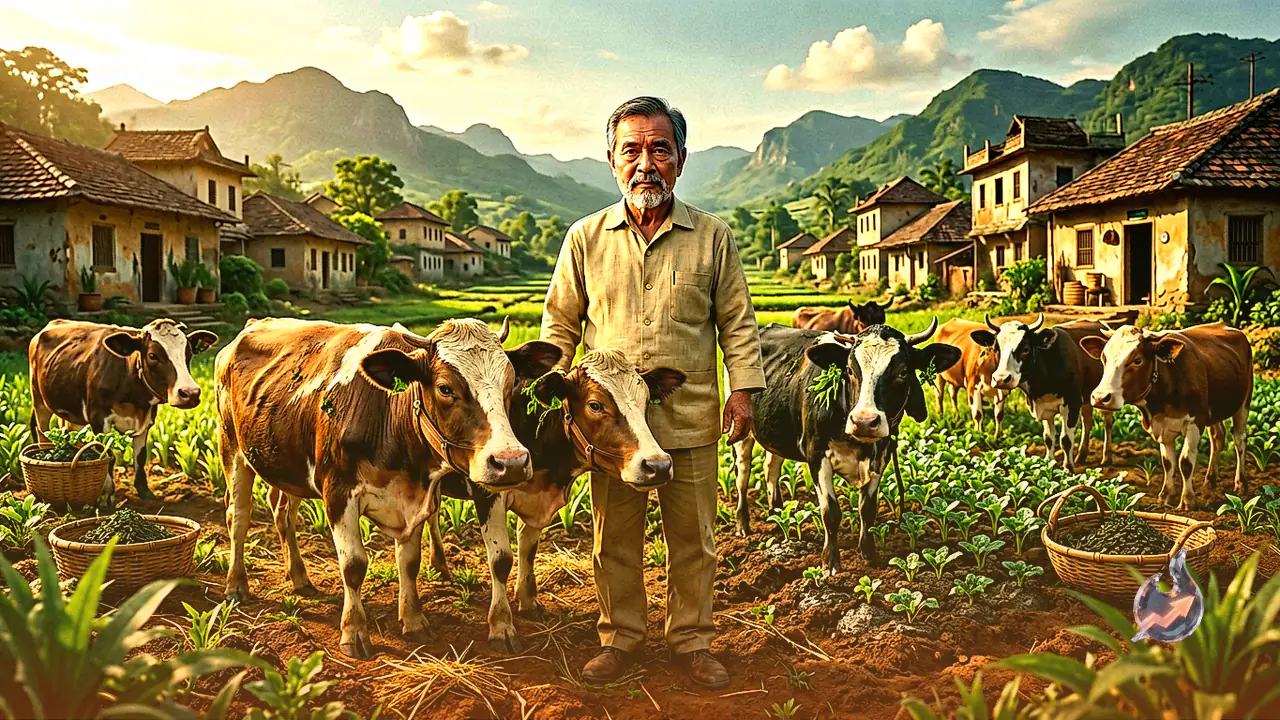
























The Uttar Pradesh government is preparing to expand its cattle conservation efforts by directly involving the younger generation, particularly Gen Z. Through state-wide awareness drives across rural areas, the administration aims to educate youth about cattle protection, cow care, and the socio-economic importance of indigenous breeds. Under this new strategy, the state plans to train nearly 10,000 volunteers known as Gau Mitras to lead community outreach efforts in villages.
Master Trainers to Build Grassroots Network
To implement the initiative systematically, a structured training hierarchy is being established. In the initial phase, master trainers will undergo specialized instruction before being deployed to train village youth in cattle management, cow welfare, and natural farming practices. Preference will be given to individuals who have already demonstrated an interest in animal care and social service. Shyam Bihari Gupta, Chairman of the UP Gau Seva Aayog, stated that Chief Minister Yogi Adityanath has prioritized cow protection to ensure that efforts extend beyond shelters into driving rural prosperity.
Integrating Cattle Protection with the Rural Economy
The state strategy links cattle conservation directly to rural economic growth, natural farming, women empowerment, green energy, and local employment creation. Gaushalas are being transformed into processing nodes for dung and cow urine-based commercial products. By creating a self-sustaining eco-system around cattle shelters, the state government aims to build a scalable model of rural self-reliance and generate new livelihood opportunities for local communities.
Educating Children and Youth on Sustainability
A central pillar of the new drive involves educating children and young people about the ecological and financial value of indigenous cattle. Village level awareness campaigns will cover topics such as indigenous breeds, organic soil health, and the role of cattle in sustainable agriculture. By creating a dedicated network of trained youth across villages, the administration hopes to instill long-term environmental and economic awareness among the younger demographic.
Over 7,500 Cow Shelters Housing 12 Lakh Cattle
Uttar Pradesh currently operates a massive network of over 7,500 cow protection shelters housing more than 12 lakh cattle across the state. This infrastructure helps protect stray cattle while reducing crop damage for local farmers. To ensure adequate maintenance, the government increased the daily financial subsidy per cattle from Rs 30 to Rs 50. Furthermore, CCTV surveillance cameras have been installed at most shelters to monitor daily care and operational transparency.
Public Participation through Chief Minister Sahbagita Scheme
To encourage broader public involvement, the state is expanding the Mukhya Mantri Sahbagita Yojana and the Poshan Mission. Under these programs, approximately 1.85 lakh cattle have been handed over to around 1.15 lakh cattle rearers. This family-based care model provides dedicated maintenance while supporting rural households. Uttar Pradesh maintains the largest livestock population in India and ranks first nationwide in milk production, a capacity the government intends to leverage for economic development.
Commercializing Gaushala Products and Empowering SHGs
State shelters are increasingly producing commercial items to achieve financial independence. Products currently being manufactured from cattle waste include go-kasht (dung logs), eco-friendly go-paint, vermicompost, incense sticks, pots, and traditional diyas. Agricultural inputs such as Panchagavya, Ghanamrit, and Jivamrit are also being mass-produced. Women Self-Help Groups are actively engaged in these operations, providing sustainable local employment for women across rural districts.
District-Wise Assessment for Customized Economic Activity
The UP Gau Seva Aayog has launched a comprehensive capacity assessment of shelters across all districts in the state. The evaluation aims to tailor economic operations to local conditions. For instance, districts with higher dung supply will prioritize biogas production, while others will focus on organic fertilizers, dung logs, or cow urine derivatives. This targeted approach ensures optimal resource utilization tailored to each region's specific strengths.