


















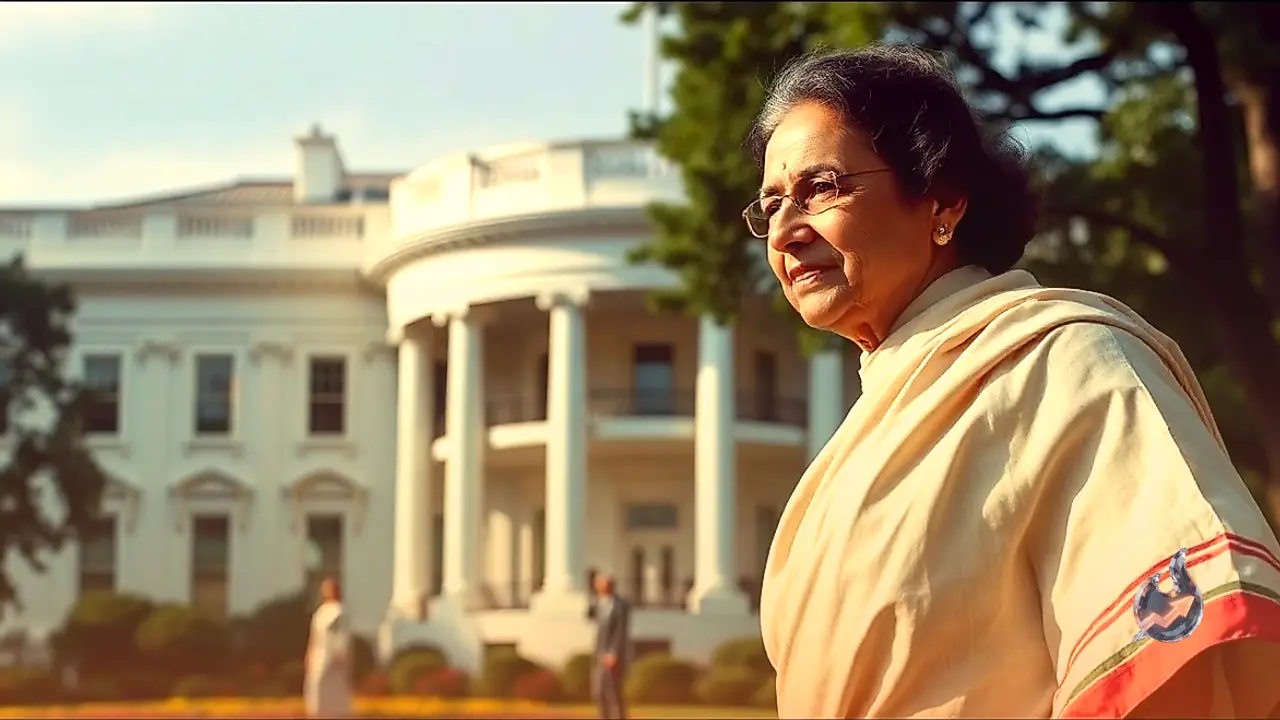

The history of international diplomacy contains pivotal moments where landmark summits temporarily ease tensions without entirely resolving underlying geopolitical rifts. The July 1982 meeting between Indian Prime Minister Indira Gandhi and US President Ronald Reagan in Washington stands as one such historical milestone. Accompanied by her 12-year-old grandson Rahul Gandhi, the Indian leader sought to repair bilateral ties frayed by Cold War dynamics. While the visit opened long-closed doors in technology and nuclear energy, diplomatic notes from the period reveal that strategic friction re-emerged soon after.
The Cold War Frost: Three Key Historical Friction Points
Prior to 1982, relations between the world's two largest democracies had reached an all-time low. Trust was severely eroded, and official channels of communication were largely frozen due to three major strategic disputes.
The first was ideological divergence during the Cold War. As global geopolitics split into Western and Soviet blocs after World War II, India chose non-alignment. Washington viewed this stance with skepticism, interpreting India's non-aligned posture as a de facto tilt toward the Soviet Union.
The second major rift occurred during the 1971 India-Pakistan War. The administration of President Richard Nixon and National Security Advisor Henry Kissinger backed Pakistan. When Indian forces achieved decisive military progress in East Pakistan, the US deployed the nuclear-armed Task Force 74, centered on the Seventh Fleet, into the Bay of Bengal to exert pressure on New Delhi. This move deeply scarred Indian security perceptions regarding US reliability.
The third trigger was India's May 1974 Pokhran nuclear test. In response to the peaceful nuclear explosion, the US enacted strict economic and technological sanctions. Crucially, Washington halted enriched uranium shipments intended for the Tarapur Atomic Power Station near Mumbai, threatening India's civilian power grid.
The July 1982 Washington Summit Dynamics
Despite this legacy of distrust, Prime Minister Indira Gandhi accepted an invitation to Washington in July 1982. President Ronald Reagan and First Lady Nancy Reagan received the Indian delegation with full ceremony on the South Lawn of the White House. Elected in 1981, Reagan was an uncompromising conservative steadfastly opposed to Soviet influence, whereas Gandhi maintained a robust strategic partnership with Moscow.
Nevertheless, pragmatic statecraft prevailed over ideological differences. The Indian leadership recognized the risk of exclusive technological and economic reliance on the Soviet Union. Concurrently, strategic planners in the Reagan administration recognized that isolating India while exclusively relying on Pakistan was unsustainable for broader Asian stability.
Four Key Outcomes of the 1982 Bilateral Engagement
The high-level discussions produced tangible progress across four strategic domains, altering the trajectory of bilateral cooperation over the subsequent decade.
Tarapur Nuclear Supply Resolution: To bypass domestic legislative prohibitions against direct US uranium exports to non-signatories of the Non-Proliferation Treaty, the two leaders negotiated a trilateral arrangement. The US facilitated the supply of enriched uranium to Tarapur via France under International Atomic Energy Agency safeguards, resolving India's immediate energy bottleneck.
Science and Technology Initiative (STI): The visit launched a structured framework for scientific cooperation. Discussions commenced regarding access to advanced computing architectures such as CRAY supercomputers, gradually unlocking US dual-use technologies for Indian research institutions, including ISRO and DRDO.
Economic Cooperation and Trade Foundations: Prior to 1982, commercial engagement was minimal. The summit signaled a policy shift that attracted attention from the US business community, laying early groundwork for Prime Minister Rajiv Gandhi's 1985 US visit and India's comprehensive 1991 economic liberalisation.
People-to-People Ties and Professional Mobility: Following the talks, the US streamlined visa processing for Indian scholars, engineers, medical professionals, and researchers. This policy shift laid the groundwork for the substantial migration of Indian IT professionals during the 1980s and 1990s.
Underlying Realities and the March 1983 Assessment
While the 1982 summit was heralded as a diplomatic breakthrough, archival records indicate that structural disagreements persisted behind the scenes. Prime Minister Indira Gandhi remained skeptical of long-term US strategic alignment in South Asia.
In an official note dated March 28, 1983, Gandhi recorded her frustration, stating that despite taking political risks within India to foster closer relations with Washington, the US administration continued to adopt postures contrary to Indian strategic interests across multiple domains. The document highlights the complex balancing act that characterized post-1982 India-US diplomacy.