























A water bottle that stays by your side from morning to evening often looks pristine on the outside, yet it quietly harbors trapped moisture and unpleasant odours on the inside. Many users simply shake a bit of tap water inside the container a few times before refilling it for the next day. This hasty routine fails to dislodge stubborn films, eventually altering the taste of fresh drinking water and leaving behind a persistent stench. Proper hygiene for stainless steel thermoses requires targeted cleaning rather than a quick surface rinse.
Where Hidden Grime and Moisture Accumulate Inside Flasks
Washing just the main interior cylinder of a vacuum flask is never enough to ensure total cleanliness. Moisture readily lingers underneath the screw cap, around the silicone or rubber sealing rings, inside built-in straws, and within narrow drinking spouts. Over time, these neglected crevices accumulate residue that generates stale smells. Furthermore, when flasks are routinely filled with tea, coffee, or milk-based beverages, stubborn aromas cling tenaciously to both the metal lining and the rubber gasket. Taking apart every detachable component is essential for eliminating these trapped residues.
Deep Cleaning Protocol Using White Vinegar and Baking Soda
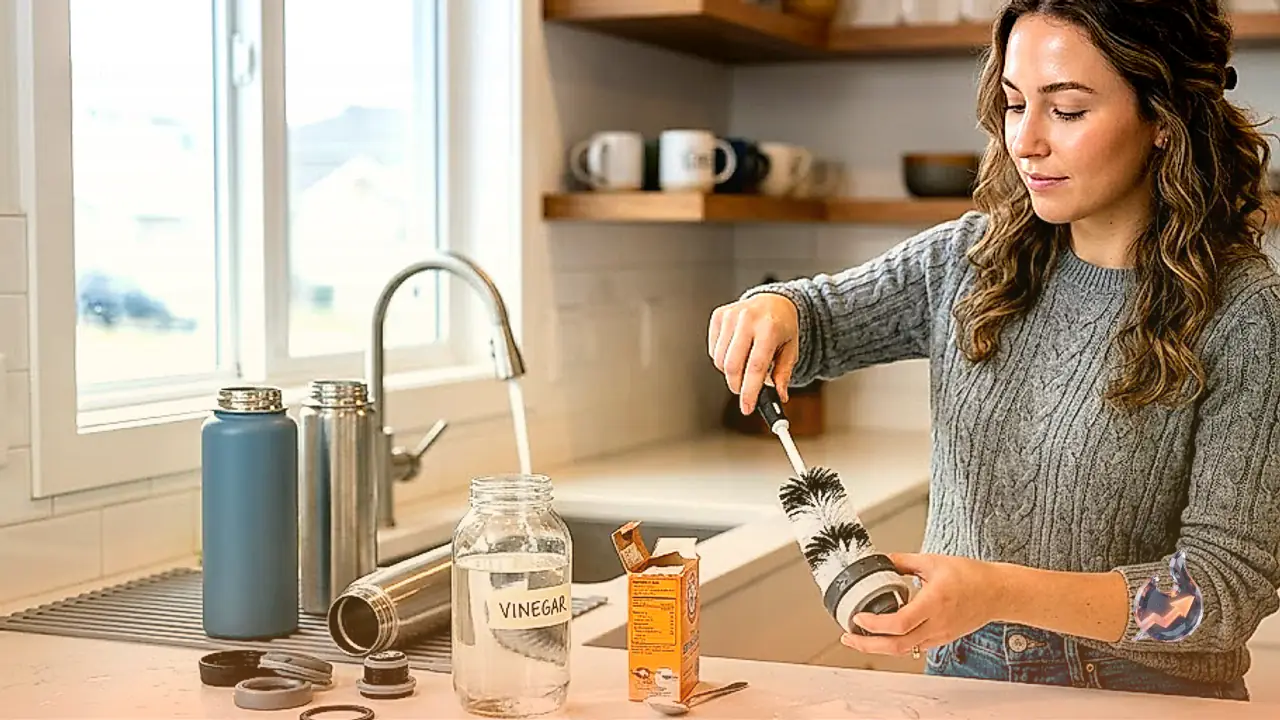
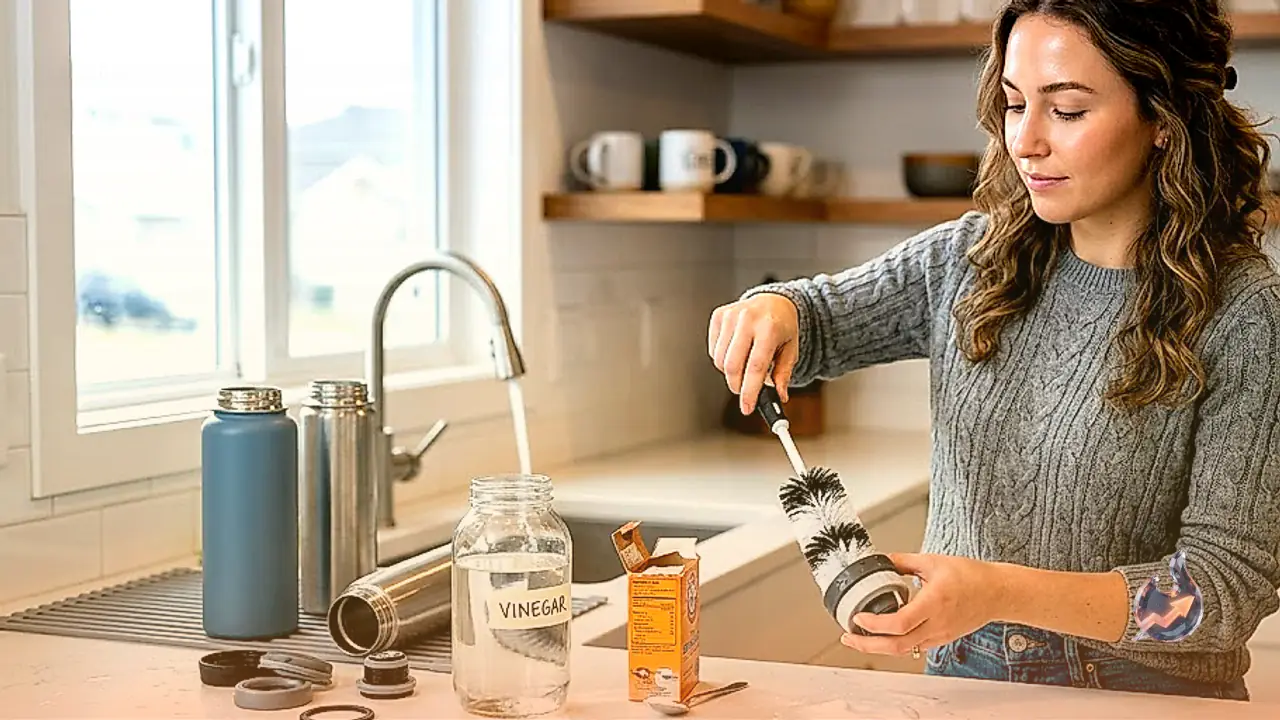
For eliminating stubborn smells and stubborn deposits from stainless steel walls, household white vinegar paired with baking soda serves as an exceptional natural remedy. A systematic approach ensures the best results
- Empty and initial rinse: Pour out any residual liquid from the thermos and rinse it thoroughly with clean room-temperature water.
- Add vinegar and soda: Pour approximately half a cup of white vinegar directly into the flask, followed by two teaspoons of baking soda.
- Allow the reaction to vent: The contact between baking soda and vinegar produces an immediate effervescent foam. Never seal the lid during this reaction, as pressure can build up inside.
- Soak with warm water: Fill the remaining space with warm water and leave the open solution to soak undisturbed for approximately 15 to 20 minutes to dissolve mineral films.
- Scrub with a long brush: Rinse the container out. If faint odors or films linger, thoroughly scrub the interior sidewalls and bottom using a long-handled bottle brush. Finish by rinsing with fresh water two to three times and let the flask air-dry completely while remaining open.
Targeted Care for Lids and Flexible Rubber Seals
The foul smell emanating from a vacuum flask frequently originates from the plastic cap assembly or the rubber gasket rather than the steel body itself. If the lid consists of modular parts, disassemble them carefully. Wash these individual pieces using lukewarm water and mild liquid dish soap. A soft-bristled brush works wonders for dislodging trapped grime along the narrow grooves of rubber seals. Avoid snapping the parts back together while damp; allow them to dry completely in the open air to prevent mildew growth.
Daily Maintenance Habits and Precautions
Establishing a daily habit of emptying and washing drinking containers prevents long-term grime build-up. Narrow-necked thermoses make hand-washing impossible, making a dedicated long bottle brush and mild dishwashing liquid indispensable tools for everyday care. Flasks used for warm milk or brewed beverages should never be left unwashed overnight. Additionally, avoid harsh industrial chemicals and abrasive steel wool scrubbers, as these scratch protective stainless steel linings. Always prioritize any specific maintenance instructions provided by the bottle manufacturer.