

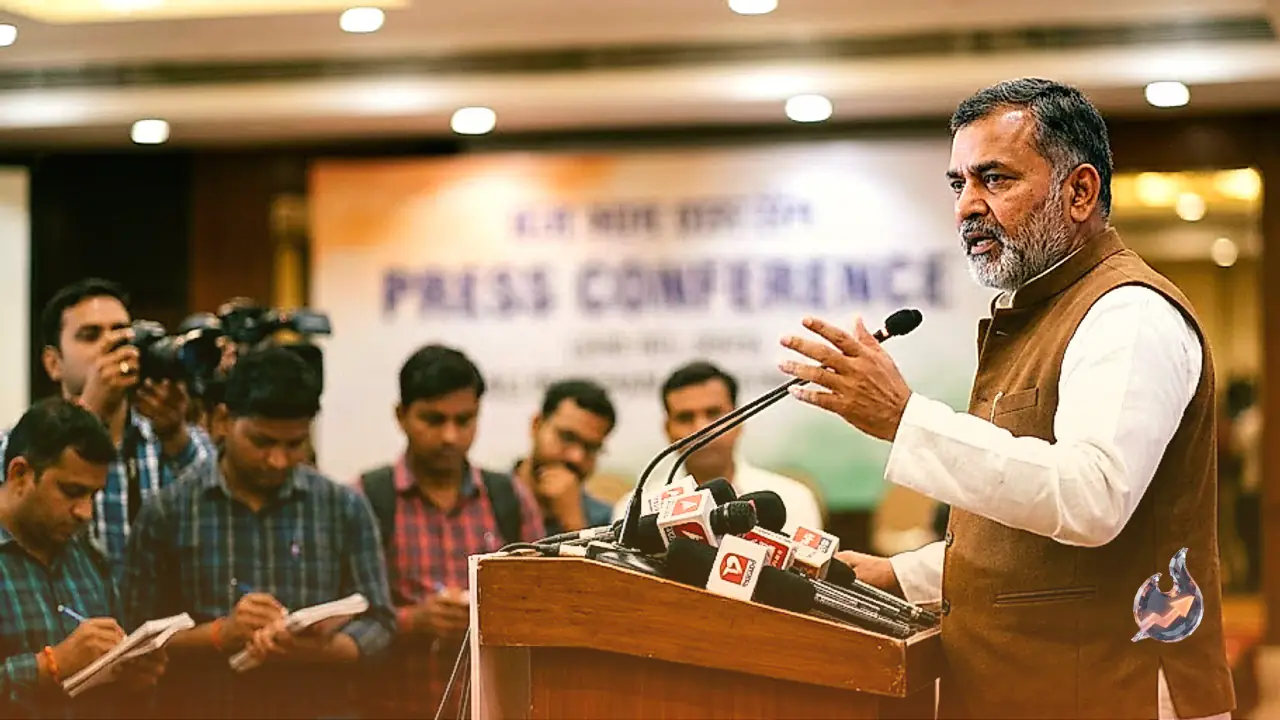




















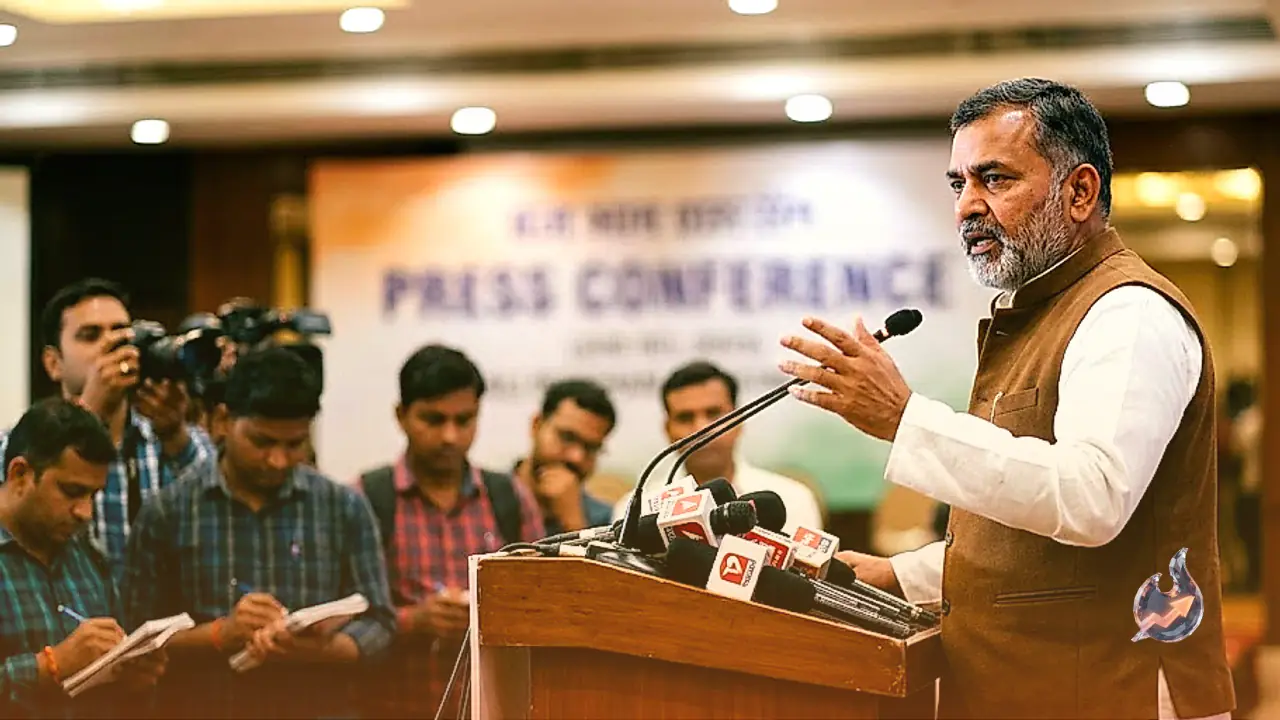

Former Bharatiya Janata Party parliamentarian Brij Bhushan Sharan Singh has launched a sharp offensive against opposition parties over the appointment framework and functioning of the Election Commission of India. He asserted that before Parliament enacted dedicated legislation in 2023, the absence of an explicit statutory mechanism meant appointments operated under a setup akin to Hitler-style dictatorship. The timing of his remarks is notable as it precedes a pivotal hearing scheduled in the Supreme Court regarding the operations of the election body and Chief Election Commissioner Gyanesh Kumar.
Addressing reporters in Gonda, Singh stated that prior to the 2023 legislative intervention, which followed directions from the Supreme Court, there was no defined legal framework for selecting election commissioners. Under the statutory mechanism enacted by Parliament, a three-member panel comprising the Prime Minister, the Leader of the Opposition, and a Union Cabinet Minister nominated by the Prime Minister was established to oversee the selection process.
Challenging the Opposition Stance on Electronic Voting
Singh argued that opposition formations have seen their political strongholds steadily crumble since 2014, prompting them to cast doubt on the neutrality of constitutional institutions, including Electronic Voting Machines (EVM) and the election watchdog itself. Questioning past conventions under Congress-led administrations, he raised queries about the historical procedures employed to select poll chiefs.
In this context, the BJP leader cited the past tenures of former chief election commissioners Navin Chawla and MS Gill. He pointed out that past leadership selections in the commission had faced significant allegations regarding political alignment, highlighting that MS Gill subsequently served as a Union minister in a Congress government. According to Singh, the opposition found the earlier setup acceptable only while holding power, but began targeting institutions once confronted with electoral setbacks.
The Supreme Court Hearing Scheduled for October 5
The controversy unfolds against the backdrop of an impending review in the apex court. A bench led by Chief Justice of India Suryakant is slated to hear petitions on October 5, 2026, dealing with the impartiality of the Election Commission, the Special Intensive Revision process, and internal collective decision-making protocols.
Earlier, a two-judge bench of the Supreme Court delivered a split verdict on petitions challenging the constitutional validity of the Chief Election Commissioner and other Election Commissioners (Appointment, Conditions of Service and Term of Office) Act, 2023, subsequently recommending the matter for consideration by a larger Constitution Bench. Singh's public intervention comes as parties prepare their arguments around this delicate statutory boundary.
Strategic Implications of the Statement
The public remarks point to three distinct political dimensions in the lead-up to the judicial proceedings. First, it represents an effort to reinforce public acceptance of the 2023 parliamentary enactment. By positioning the legislative framework as an orderly system replacing an era without statutory rules, the argument seeks to establish that executive participation is grounded in parliamentary sovereignty rather than unilateral overreach.
Second, the commentary attempts to frame the heightened legal and public activism of groups like the Congress and Samajwadi Party as purely motivated by partisan calculation. By portraying grievances against commission decisions as symptoms of political distress rather than genuine legal concerns, the narrative seeks to blunt the impact of their objections.
Third, referencing historical appointments allows the ruling side to shift from a defensive posture to an offensive historical critique. Evoking past tenures like those of Navin Chawla and MS Gill serves to remind observers that allegations of bias are not unprecedented in Indian administrative history. As the opposition looks to the judiciary to challenge the commission's structure and actions, the ruling party's proponents are countering by championing parliamentary primacy and past precedent.