






















Ongoing trade negotiations between New Delhi and Washington have encountered fresh complexity following a comprehensive White House study that places India on a list of over 40 nations monitored for potential Chinese goods transshipment. The primary concern in Washington centers on whether Chinese manufacturers are routing products through third-party countries to bypass heavy US tariffs. Immediately after the publication of the report, White House Senior Trade Advisor Peter Navarro issued a direct statement emphasizing that India is firmly on their radar. Issued during active discussions over reciprocal tariff arrangements, the statement signals a deliberate move by American negotiators to exert leverage at the bargaining table.
Detailed Structure of the White House Risk Tiers
Analyzing global logistics and trade corridors, the White House categorized more than 40 partner countries into three distinct risk tiers. India has been assigned to Tier-1 alongside Canada, the European Union, Israel, Japan, Mexico, South Korea, and Taiwan. US trade officials note that these markets feature large, highly diversified industrial capabilities where transshipment risks can easily blend into legitimate commercial activities. However, American authorities stressed that inclusion in this top tier does not constitute a direct accusation that the host government is complicit in smuggling or tariff fraud.
The secondary group, Tier-2, includes Brazil, Indonesia, Malaysia, Thailand, Turkey, and Vietnam. Meanwhile, Tier-3 covers countries such as Bangladesh, Cambodia, the Philippines, Singapore, Sri Lanka, and the UAE. According to American trade analysts, these classifications are designed to pinpoint geographic locations that could potentially be exploited by foreign entities to re-label or minimally process Chinese goods before shipping them onward to American ports.
Peter Navarro’s Warning and the US Position
Following the public release of the document, Peter Navarro outlined Washington's increasingly stringent posture regarding international trade flows. He stated, “This is about the 40 plus countries that are enabling transshipping, and as we put higher tariffs on other countries, India, Vietnam, and downstream others will try to transship.”
Elaborating further, Navarro emphasized that access to the US consumer market requires strict adherence to reciprocity and fair trade practices. He asserted that avoiding tariffs through deceptive routing or incomplete processing violates trade principles. Washington reiterated that access to American buyers cannot serve as a blanket license to validate or mask foreign export origins.
Understanding Chinese Transshipment and Screwdriver Factories
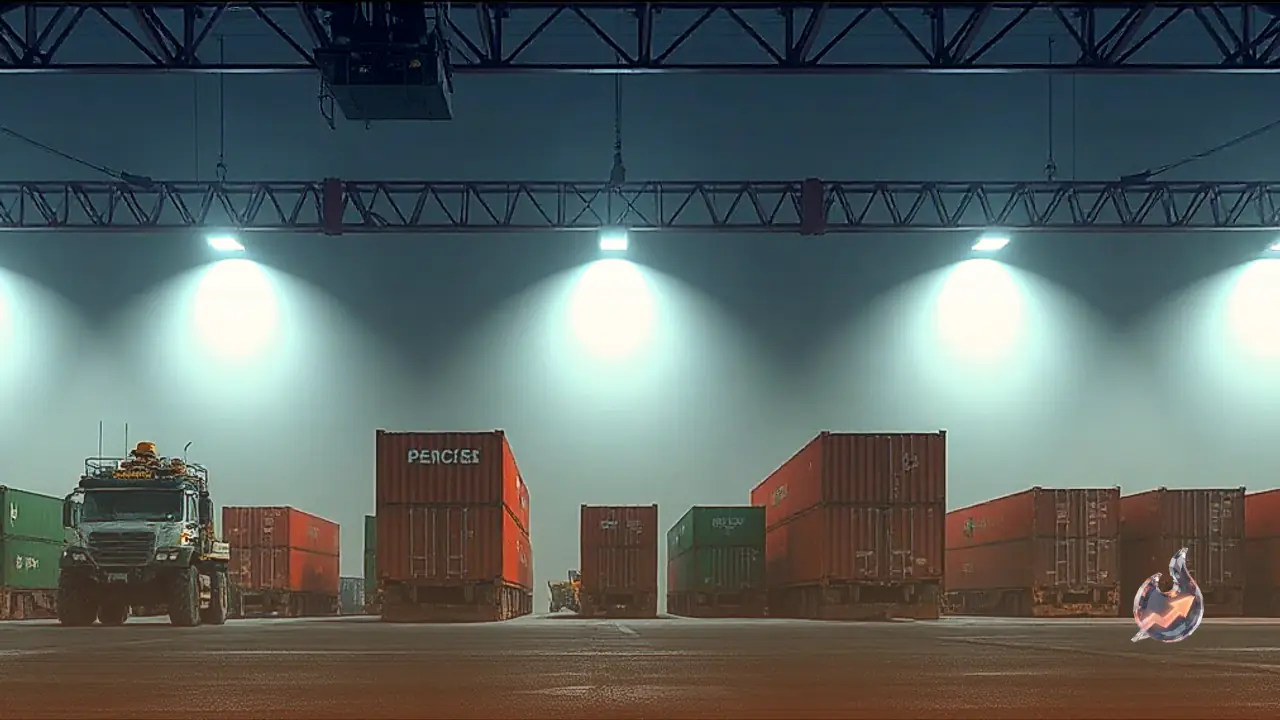
In standard commercial operations, transshipment refers to the movement of cargo through an intermediate destination prior to reaching its final destination. In modern globalized supply chains, multi-country manufacturing steps are completely lawful and standard. However, American objections arise when Chinese merchandise undergoes only minor adjustments or simple re-packaging in a third country solely to claim that country as its point of origin and secure lower duty rates.
The White House report illustrates this issue with specific examples, citing cases in Vietnam where Chinese-manufactured electric motors were installed into recliners before export to the United States. Additionally, the document highlights the rise of screwdriver factories. These are facilities where fully manufactured sub-assemblies arrive from abroad and undergo minimal local assembly, such as fastening components together, merely to change the declared origin of the finished product.
Detective Border and AI-Driven Enforcement Measures
To curb fraudulent transshipment, Washington is preparing to bolster the authority of its border enforcement agencies. An executive order is currently being drafted to significantly expand the investigative powers of US Customs and Border Protection (CBP). Simultaneously, the US is developing an advanced artificial intelligence surveillance initiative dubbed Detective Border, designed to identify high-risk cargo shipments long before they reach American ports.
Furthermore, American negotiators plan to incorporate binding anti-transshipment clauses into all future trade agreements. This structural shift indicates that transshipment scrutiny will no longer remain confined to routine customs inspections but will carry broader trade policy consequences.
Potential Impacts on US-India Trade Negotiations
The timing of this report coincides with delicate talks aimed at establishing a reciprocal tariff agreement between Washington and New Delhi. Having previously raised concerns regarding Indian trade barriers and energy purchases from Russia, American officials may now position transshipment controls as a central demand in ongoing discussions.
Should a bilateral trade deal materialize, it could empower CBP with expanded retrospective enforcement rules. Under proposed guidelines, if a shipment is found to have utilized fraudulent transshipment routes, CBP could assess retroactive duties not just on the specific consignment, but across all shipments imported by the offending firm over the preceding 12 months. While Washington has refrained from accusing India of wrongdoing, its inclusion alongside identified transshipment hubs like Vietnam, Cambodia, Malaysia, Indonesia, and the Philippines underscores the necessity for Indian exporters to maintain transparent supply chain records.