























A critical strategic debate is unfolding across the defense establishment in Washington regarding advanced military sales to Riyadh. Saudi Arabia finds itself navigating complex regional pressures, with ongoing hostilities in Yemen and claims targeting its aerial assets on one side, and intensifying scrutiny from its primary Western partner on the other. At the center of the deliberations is a proposed military agreement that would supply 48 F-35 stealth fighters to the kingdom. However, a classified assessment by the Defense Intelligence Agency (DIA) has underscored significant reservations regarding Beijing, focusing on the expanding technological and defense interactions between Riyadh and China. For strategic planners, the proposed transaction is no longer treated merely as a conventional arms sale, but as a critical dilemma involving the protection of classified military intellectual property.
Stealth Architecture and Fifth-Generation Capabilities
The F-35 is not simply a high-performance strike aircraft; it functions as an airborne digital node whose operational supremacy relies on tightly integrated systems. Defense documentation highlights that the true strength of the platform lies in its low-observable stealth profile, AN/APG-81 radar, F135 engine, and sophisticated electronic warfare suite. Furthermore, its onboard sensor fusion and AI capabilities, which continuously aggregate and process battle-space information from disparate streams, set it fundamentally apart from legacy platforms. These core technologies remain classified at the highest levels. The underlying concern for Washington is that any deepening cooperation between Riyadh and Beijing could inadvertently expose the operational parameters of these sensitive sub-systems to external exploitation.
Exposure Channels and the Risk of Countermeasures
The primary concern among intelligence officials does not center on an adversary physically acquiring an entire airframe, but rather on vulnerabilities embedded in its operational ecosystem. Modern stealth fighters require continuous maintenance, comprehensive training regimes, software patches, communication links, sensor suites, and an extensive technical logistical footprint. Proximity to such interconnected operational environments creates potential vectors for information leaks. Defense documents caution that if a technologically sophisticated rival accesses the underlying hardware schematics or software operational logic of the F-35, it could systematically develop effective counter-capabilities. An adversary would not need to reverse-engineer or clone the fighter; simply learning how the platform manages emissions, communicates with ground stations, or deploys its electronic countermeasures would enable the construction of specialized anti-stealth defenses.
Protective Protocols and Systemic Constraints
The F-35 enterprise already maintains strict safeguards, including rigorous cybersecurity verification, software monitoring, and protocols designed to detect unauthorized physical or digital interference. Yet defense analysts emphasize that technical firewalls alone cannot guarantee complete isolation against sophisticated monitoring. Because the aircraft is fundamentally integrated with real-time data networks, international logistical pipelines, and constant software updates, maintaining absolute data segregation remains a complicated challenge when deployed in environments characterized by diverse international commercial and technological footprints.
Yemen Clashes and Generational Technological Distinctions
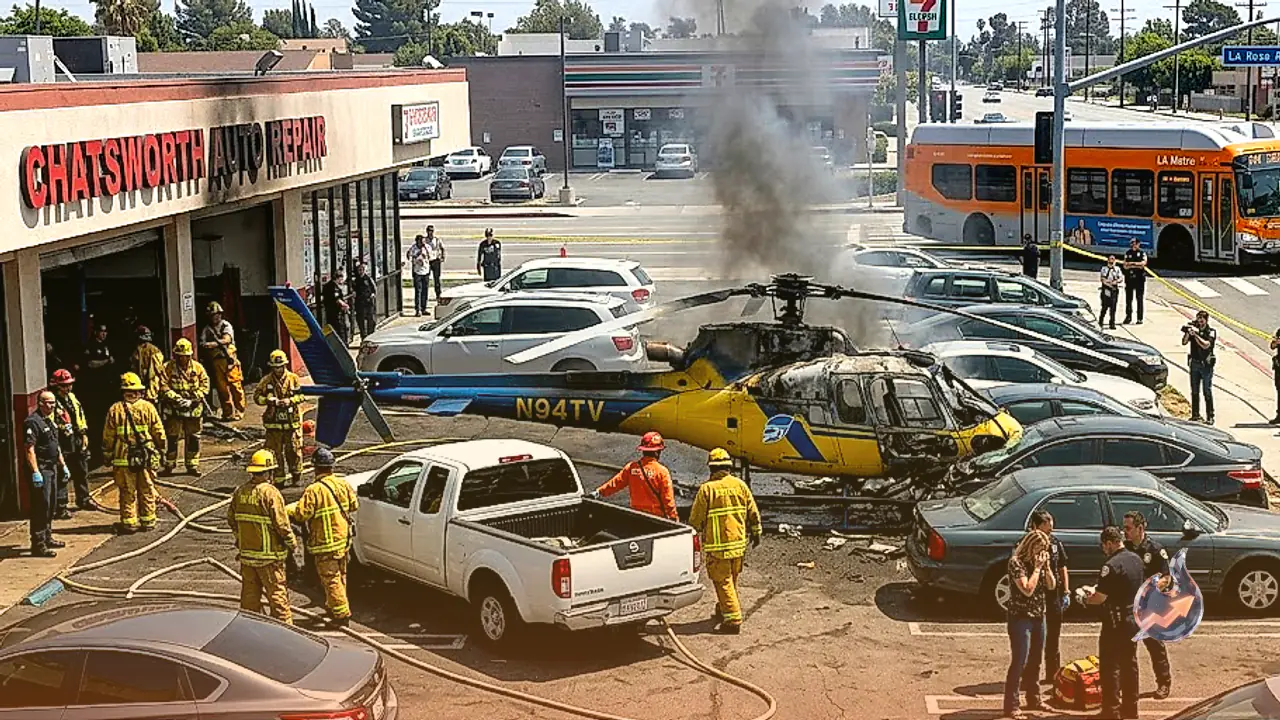
These strategic discussions surfaced alongside developments on the ground, where Houthis claimed on 16 September that they shot down a Saudi F-15 fighter over Yemen's Marib province. A Houthi military spokesman stated that the aircraft was brought down using a locally assembled air-to-air missile, accompanied by the release of video footage purporting to show the wreckage. Neither independent sources nor Saudi authorities immediately verified the claim. Defense analysts note that incidents involving the F-15 must not be conflated with the strategic considerations surrounding the F-35. The F-15 remains a fourth-generation fighter, whereas the F-35 is engineered as a fifth-generation stealth platform whose core value rests in radar evasion, integrated electronic defenses, network-centric warfare capabilities, and advanced sensor fusion.