





















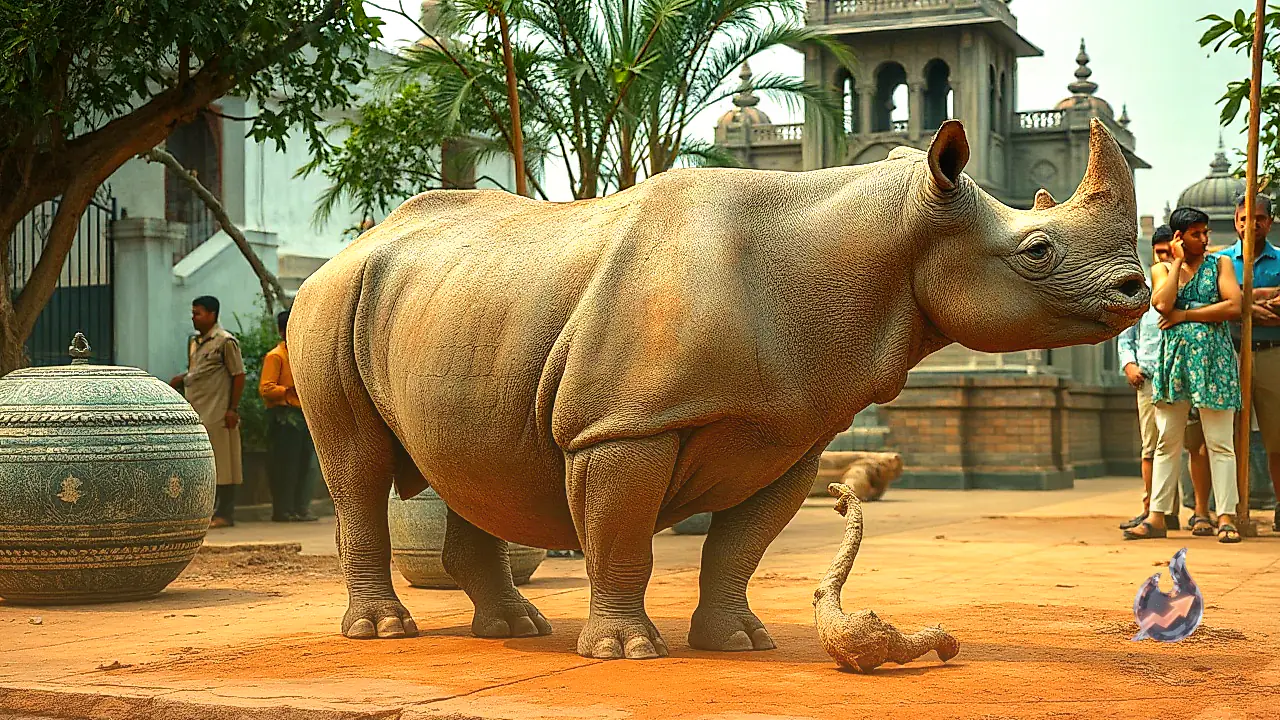

Assam marked World Rhino Day on Tuesday by showcasing significant strides in the preservation of the greater one-horned rhinoceros. Chief Minister Himanta Biswa Sarma highlighted that the state houses nearly 80 percent of the planet's greater one-horned rhino population and achieved an unblemished record with zero known poaching incidents throughout 2025.
Sharing updates on the milestone, Sarma noted in a social media post that the figures demonstrated Assam's stature as the primary stronghold for the species. Emphasizing the achievement, he stated that the numbers speak for themselves on this conservation milestone.
Global Population Trends and Assam's Dominance
The announcement follows the release of the 2026 State of the Rhino report by the International Rhino Foundation, which estimated the global population of greater one-horned rhinos at 4,075 animals. This reflects steady growth from the 4,014 individuals recorded in 2022. Out of this international total, Assam accounts for approximately 3,260 rhinos, representing roughly 80 percent of the global tally.
Given the region's historical vulnerability to wildlife crime, the complete absence of poaching incidents in 2025 carries exceptional importance. According to the International Rhino Foundation, 2025 marked only the second year since the 1970s that Assam documented zero known poaching incidents, repeating the benchmark previously achieved in 2022.
Protection Measures in Kaziranga and Beyond
Kaziranga National Park remains the foundation of conservation initiatives in Assam, sustaining more than 2,600 greater one-horned rhinos. This represents the single largest cluster of the species anywhere in the world. Parallel conservation schemes are actively working to build up populations in other protected territories across the state, such as Manas National Park.
The sharp drop in poaching incidents has been driven by actionable intelligence networks, streamlined inter-agency coordination, tighter surveillance protocols, robust frontline enforcement, and the active inclusion of local communities. Anti-poaching infrastructure in Kaziranga relies on hundreds of manned surveillance camps, aerial drone monitoring, and specialized frontline units.
Official Commitment and Ongoing Ecological Pressures
Assam Environment and Forest Minister Jayanta Malla Baruah reiterated the administration's pledge to defend the animal, describing the rhinoceros as one of the most treasured symbols of Assam's natural heritage. At the same time, wildlife authorities recognize that stopping illicit hunting addresses only part of a complicated ecological mission.
As the rhino population expands, protected territories encounter mounting strains, including fragmented habitats, the spread of invasive plant species, seasonal water shortages, and growing human encroachment around reserve boundaries. Observed globally every year on September 22, World Rhino Day aims to focus public attention on these multifaceted challenges, keeping the momentum alive for habitat integrity and species survival.