






















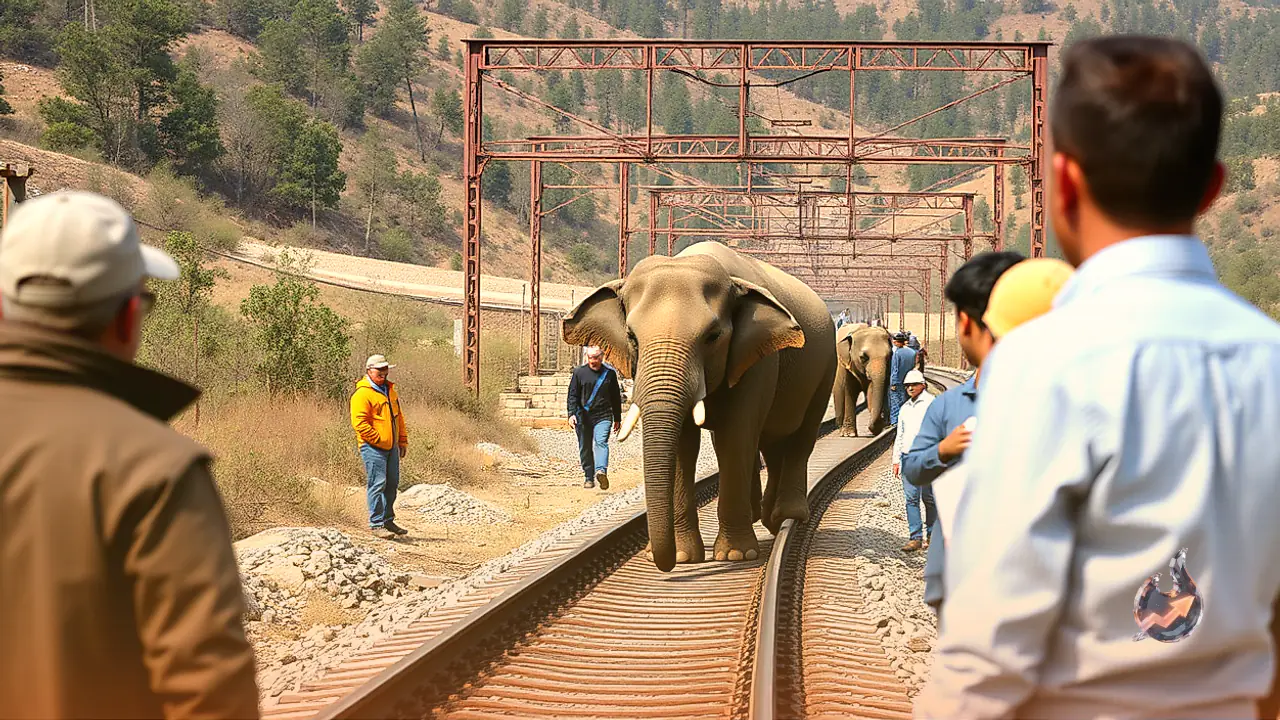

Heightened surveillance and active preventive strategies helped avert train strikes involving 255 elephants across the jurisdiction of Northeast Frontier Railway between January and September this year. Prompt action by railway staff, bolstered by technology-driven monitoring networks and systematic communication with forest authorities, averted collisions across vulnerable railway stretches.
Division Breakdown Across West Bengal and Assam
Among the 255 elephants protected from potential collisions across the nine-month span, 106 incidents occurred within the Alipurduar Division in West Bengal. The highest concentration was registered in Assam's Lumding Division, where 122 elephants were steered away from railway tracks or safeguarded from approaching train traffic. In addition, 15 elephants were shielded within Assam's Tinsukia Division, while 14 were successfully protected in the Rangiya Division. Railway officials highlighted that this multi-division success stemmed directly from persistent field vigilance combined with real-time operational coordination.
Deployment of AI Acoustic Tracking and Plan Bee
A central pillar of the wildlife protection strategy has been the adoption of an AI-based Intrusion Detection System that relies on Distributed Acoustic System technology. This system tracks ground vibrations and acoustic signatures, delivering real-time warnings whenever pachyderms wander near railway lines. The immediate transmission of data enables ground personnel to intervene swiftly and communicate warnings to locomotive drivers operating through hazardous sectors.
To provide further protection, railway engineers have placed the 'Plan Bee' deterrent mechanism at selected sensitive corridors. The setup emits amplified sounds of honeybee swarms, a noise that naturally deters elephants and prompts them to turn away from approaching rails. At several designated crossing points, specialized underpasses are also under construction to establish secure transit routes for wildlife without forcing herds across the open tracks.
Speed Restrictions, Waste Management, and Forest Department Coordination
Operational safeguards also involve situational speed regulations, including temporary speed caps and nighttime speed limits imposed whenever animal presence is flagged along active routes. Lower operational speeds grant train operators crucial reaction windows when visibility is limited or tracks run through dense foliage.
Northeast Frontier Railway Chief Public Relations Officer Kapinjal Kishore Sharma stated that the administration conducts continuous sensitisation drives targeting train operating crews, station personnel, pantry car workers, and traveling passengers. These campaigns stress the importance of not throwing leftover food along the tracks, as discarded edible waste frequently lures elephants and other wild species directly into the path of moving trains. Sharma noted that unbroken coordination and real-time messaging with the forest department make prompt intervention possible whenever movement is reported. He added that any incidents involving train-elephant collisions are handled with utmost gravity and scrutinized thoroughly under formal safety guidelines.