

















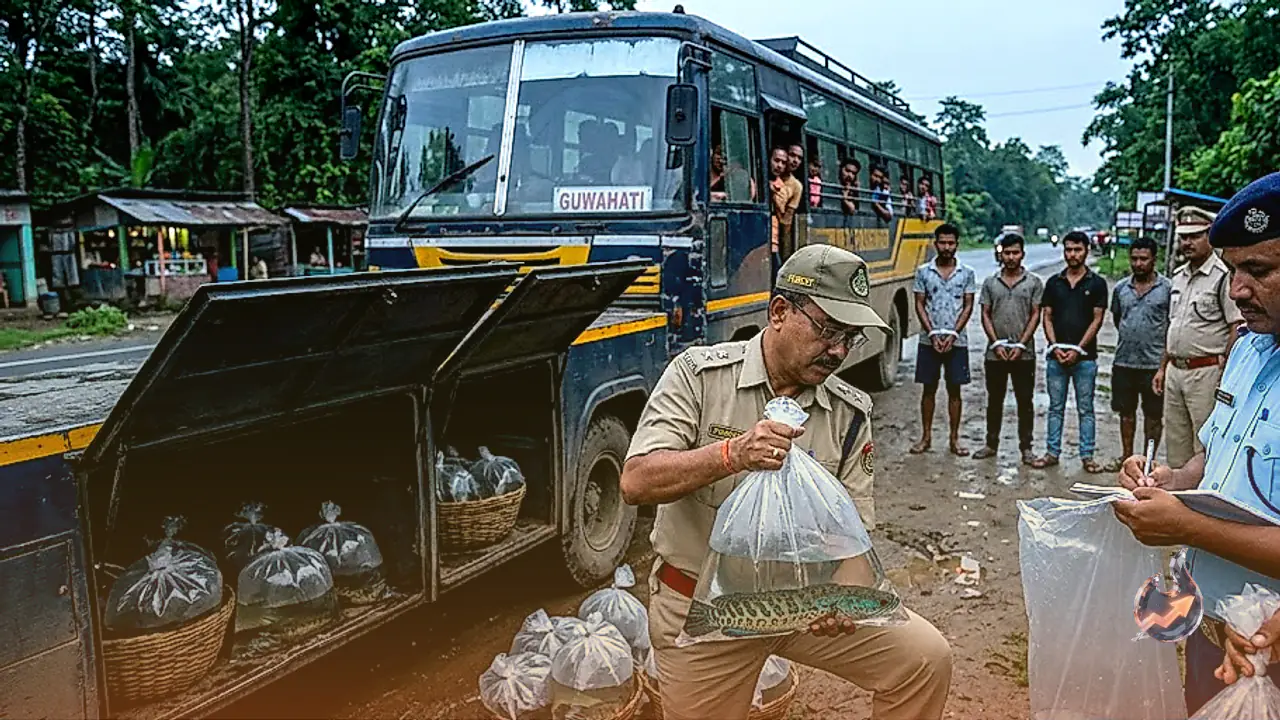

A major wildlife interception unfolded in Assam's Golaghat district on Tuesday, where forest personnel recovered approximately 300 live specimens of the rare freshwater fish species Channa barca from a bus. Environment and Forest Minister Jayanta Malla Baruah stated that five individuals were apprehended in connection with the alleged illicit transportation of the fish, which is locally referred to as Cheng Eli.
Intelligence-Led Interception Near Bokakhat
The enforcement operation was set in motion after local police shared specific intelligence regarding the unauthorised transit of the valuable aquatic creatures. Acting swiftly on the tip-off, a team from the Eastern Assam Wildlife Division intercepted the passenger bus near Bokakhat and conducted an exhaustive search of the vehicle. Upon inspection, forest officials discovered around 300 live Channa barca specimens being hauled without any valid documents, transit permits, or lawful authorisation. Forest authorities promptly seized the consignment and took the specimens into official custody. Addressing the recovery, the minister wrote on X confirming that around 300 live specimens were recovered from a public bus in Bokakhat following actionable inputs, resulting in five detentions.
Global Market Value and Conservation Concerns
Scientifically designated as Channa barca and commonly referred to as the Barca Snakehead, this elusive freshwater fish is indigenous to the Brahmaputra river basin. The species commands an enormous premium within the international ornamental aquarium trade, where individual specimens routinely fetch substantial sums due to their distinctive patterns and rarity. The species is currently catalogued as Data Deficient on the IUCN Red List, reflecting the scarcity of comprehensive ecological data. The scale of this single seizure underscores the relentless commercial pressure facing native aquatic wildlife in the region.
Ongoing Interrogation and Rehabilitation Plans
Following the interception, an offence report was formally registered at the forest department's Bokakhat Range. Investigators are presently interrogating the five detained individuals to map out the broader trafficking chain. Officials are working to uncover the exact water bodies where the fish were caught, their intended final delivery hub, and any links connecting the suspects to organised ornamental fish syndicates. The minister noted that broader inquiries are actively underway to ascertain whether additional facilitators or syndicates participated in the illicit trade.
All recovered fish remain housed in safe temporary facilities and will undergo detailed veterinary evaluations. Once health assessments and statutory formalities conclude, forest authorities intend to release the surviving specimens back into an appropriate natural riverine habitat, subject to formal clearance from the competent administrative authority or the court.