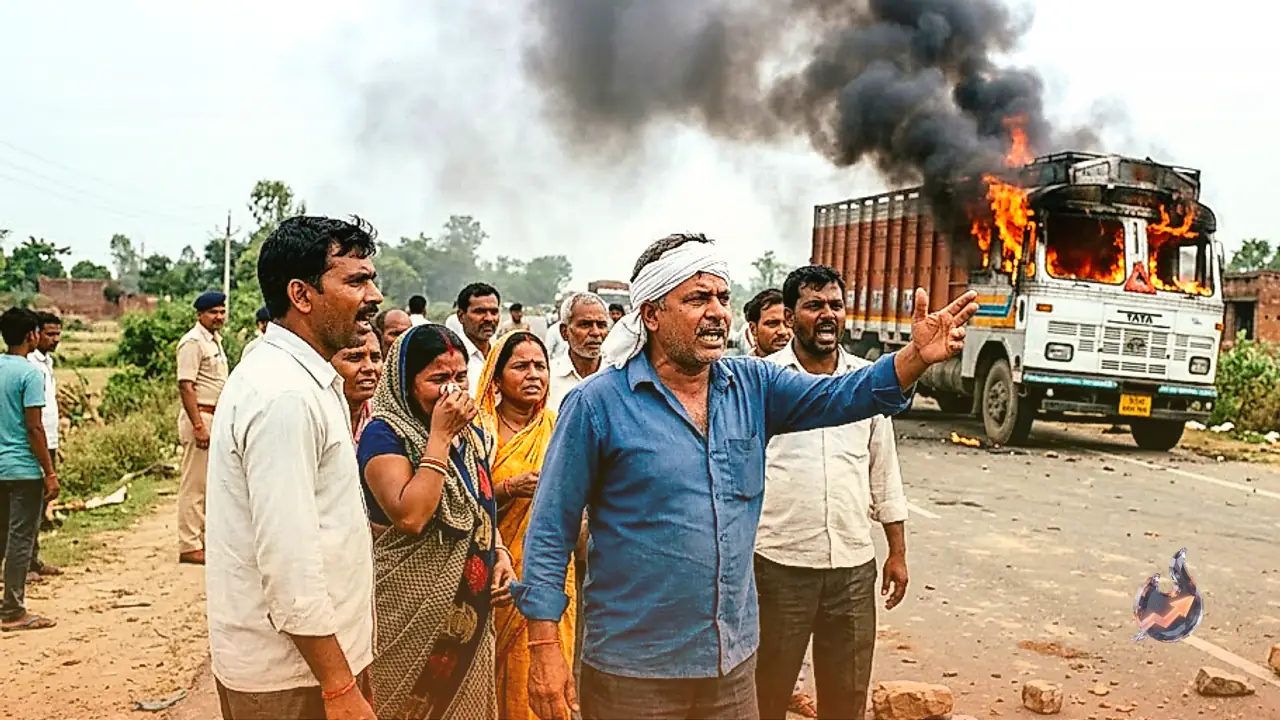






















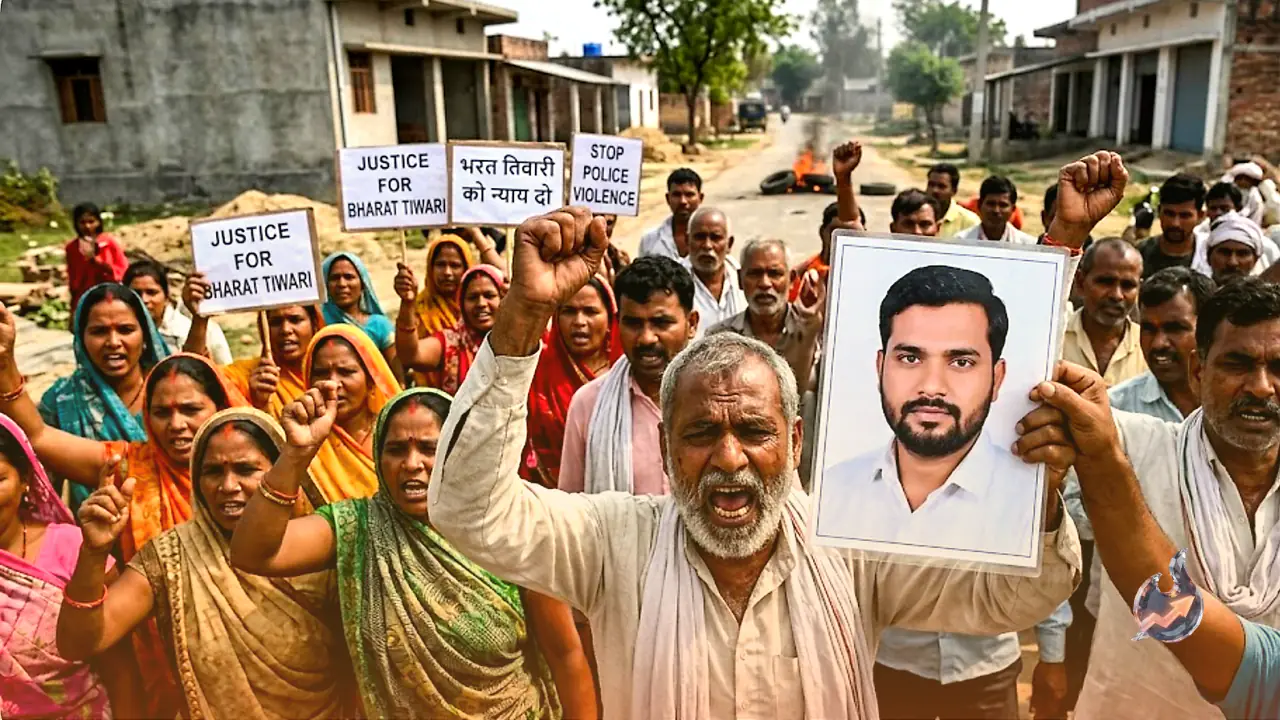

The streets of Bilaoti village in Shahpur are filled not just with mourning, but with a palpable sense of anger. Local residents are raising their voices in unison, demanding that a murder case be registered against the involved police personnel and that strict punishment be ensured. As an independent media organization, TrendKia believes it is our ethical duty to raise questions. If this was indeed a genuine encounter, the authorities must provide answers, otherwise, it raises suspicions of whether a homicide is being covered up under the guise of an encounter.
Did Bharat Tiwari Surrender Before Being Shot?
Several videos circulating on social media show Bharat Tiwari talking about societal welfare before throwing his pistol in front of the police, indicating a clear act of surrender. This raises critical questions: if he had already disarmed himself and handed over his weapon, why did the police feel the need to open fire? What immediate threat did a surrendered individual pose? Furthermore, why were four bullets fired at him? Was it completely impossible to capture him alive? The ultimate goal of law enforcement is to bring an accused to court, not to execute them on the spot.
A Citizen with a Clean Record Treated Like a Dreaded Criminal
Locals describe the deceased as a nationalist and a dedicated social worker. Crucially, Bharat Bhushan Tiwari had no prior criminal record. Police encounters are typically reserved for dreaded criminals, sharp-shooters, or terrorists. However, official records indicate that not a single criminal case was registered against Bharat in any police station across Shahpur or Bhojpur. How could a person with zero criminal background be gunned down on the streets like a hardened gangster overnight?
Legal experts emphasize that Indian law presumes innocence until proven guilty in a court of law. Courts exist to deliver justice, and the police do not have the authority to act as judge, jury, and executioner. Many believe that this encounter was carried out because the system had no legal counter to Bharat’s sharp and questioning voice.
Deep Connections with the Police Force
The tragedy has left Bharat’s family devastated. His mother is inconsolable, demanding justice for what she calls a cold-blooded murder. The irony is deeper because Bharat’s family has a long history of serving in law enforcement. His father is a retired constable of the Bihar Police, and his sister is currently an active member of the Bihar Police force.
Bharat, who was around 30-32 years old, was deeply passionate about nationalism and had recently traveled to Bageshwar Dham in support of a Hindu Nation. For self-defense, he had reportedly sold his Hanuman pendant (Hanumani) to purchase a pistol. Ironically, the very weapon he bought for protection became the centerpiece of the controversy surrounding his death.
The Controversy Over Mental Health Claims
The Bihar Police have consistently claimed that Bharat Tiwari was mentally unstable. However, his articulate speech and appropriate attire in recent videos tell a different story. Locals point out that even if he were mentally ill, he required medical treatment, not lethal force. If the weapon he held was illegal, he should have been arrested and prosecuted under the law rather than being shot.
Bharat was highly respected among marginalized families, having fought extensively for those displaced by local development projects. Following his death, thousands of people from several panchayats gathered at his funeral to voice their anger against the administration, demanding a transparent investigation into the actions of the police.