






















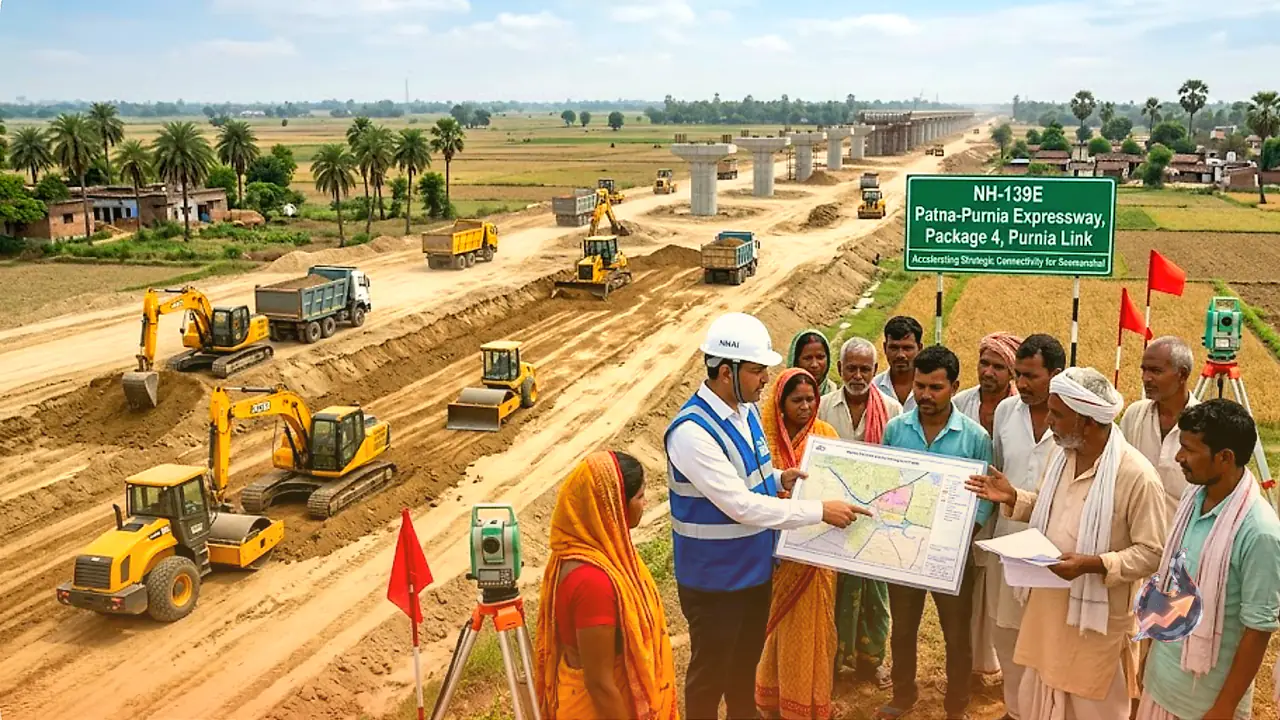

A massive infrastructure push is underway in Bihar as land acquisition surveys accelerate for the Patna-Purnia Expressway, officially designated as NH-139E. This mega-roadway is not only set to slash travel times across the state but is also expected to act as a strategic asset due to its proximity to the international borders of Nepal and Bangladesh. However, the project has run into friction with local landowners and farmers who argue that the government's compensation rates are outdated and unfair.
Accelerated Project Progress and Gazette Notification Status
The National Highways Authority of India (NHAI) is actively pushing ahead with multiple high-priority roadway projects in Bihar. Among these is the expansion of National Highway 31 into a four-lane corridor stretching from Khagaria to Purnia, alongside the rapid development of the greenfield Patna-Purnia Access Control Expressway. According to Pravin Kumar Katiyar, the Project Director for the NHAI Purnia zone, the field surveys and ground validation required for land acquisition are progressing rapidly. He noted that the official 3A gazette notification for the acquisition has already been published. Currently, field teams are conducting physical verification, land measurements, and installing boundary pillars. Once these preliminary assessments are concluded, the 3D gazette notification will be published, which will officially trigger the disbursement of financial compensation to the affected landholders.
Expressway Design Specifications and District Connectivity
This upcoming roadway will be a fully access-controlled highway designed to handle high-speed vehicular traffic. Motorists will be permitted to travel at speeds up to 120 kilometers per hour, ensuring a swift, safe, and seamless transit experience between Patna and Purnia. To facilitate smooth entry and exit, the NHAI has planned 21 dedicated connectivity points along the entire alignment of the expressway. Out of these, eight connection points will fall specifically within the Purnia district. Key locations such as Sukhasena and Banmankhi will be linked directly to Major District Roads (MDR), ensuring that regional traffic can access the high-speed corridor without bottle-necks.
Farmer Grievances and Land Valuation Disputes
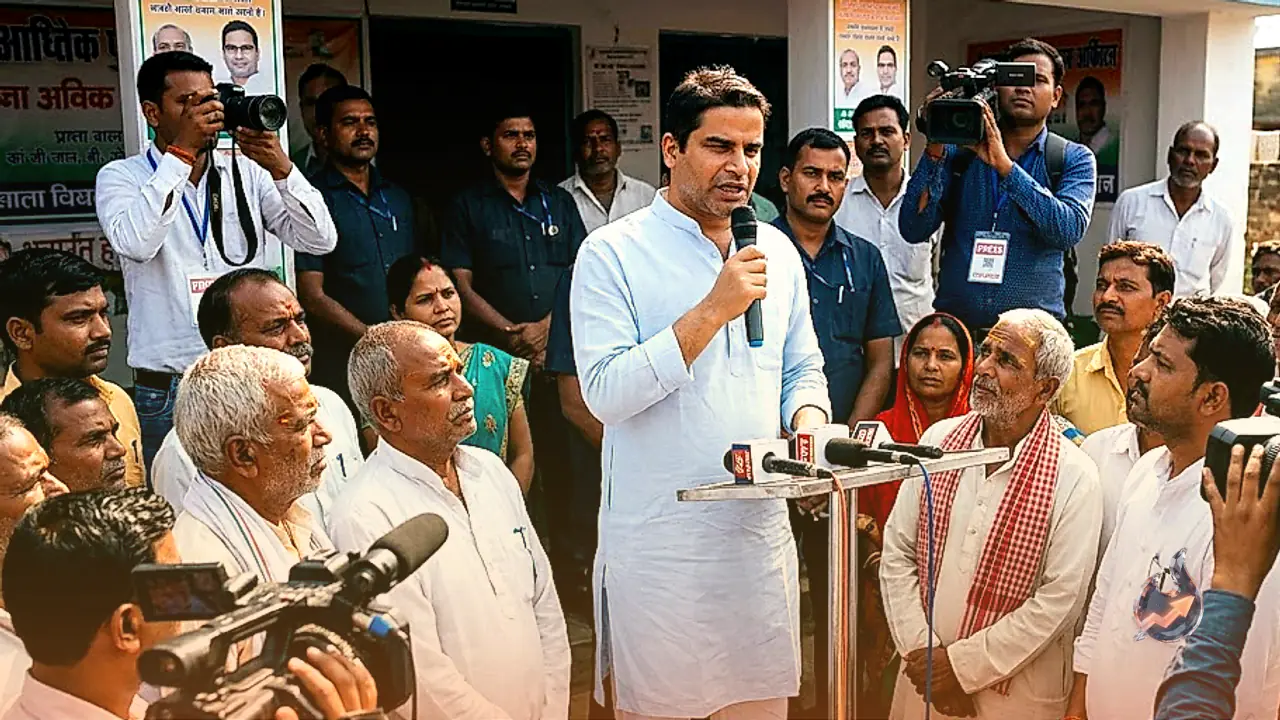
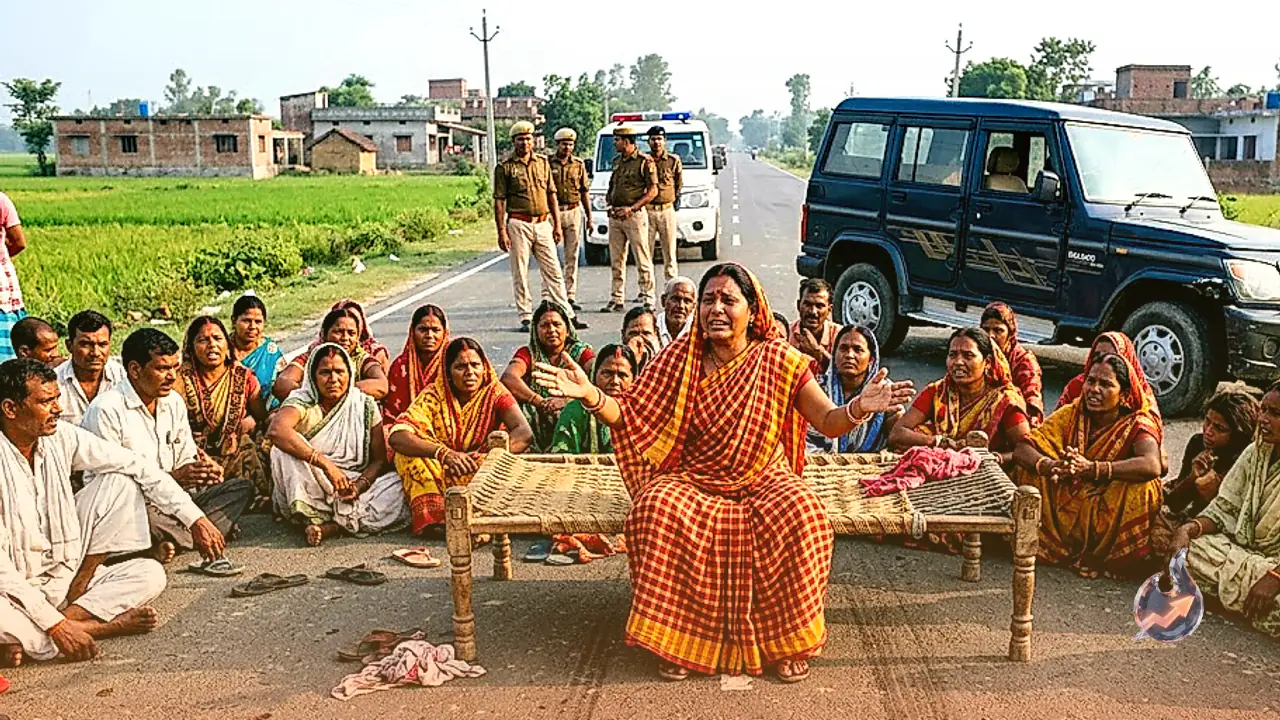
While the expressway promises to unlock significant economic opportunities, spark industrial investment, and generate local employment, it has also sparked a major dispute over land valuation. Farmers and landowners whose plots are being acquired for the project are deeply unhappy with the government's financial offers. They point out that the Minimum Valuation Rate (MVR) in Bihar remained frozen at 2014 levels for a decade. Although the state government recently updated the rates, the increase for rural zones was a meager 1.6 percent. Affected farmers argue that actual market rates for land have surged by 25 to 40 times since 2014. They claim that calculating compensation based on these suppressed government rates is highly unjust and fails to reflect the true economic value of their assets.
Airport Linkages and the Development of Purnia Aerocity
Beyond standard transit, the expressway is planned to integrate with other key infrastructure projects. Bihar's Land Revenue Minister Dilip Jaiswal highlighted that the state is aligning the expressway with the newly operational flight services from Purnia. A dedicated link road will connect the Patna-Purnia Expressway directly to the Purnia Airport. Along this arterial link, the government plans to develop an ambitious Aerocity. This planned zone will house modern commercial centers, retail malls, recreational parks, and residential complexes. Minister Jaiswal explained that these developments will eventually transform Purnia into a highly advanced satellite township, providing a massive boost to the entire Seemanchal region.
Strategic Value and Major Reductions in Travel Time
Currently, the journey from Purnia to Patna is a tedious affair. Commuters traveling via Khagaria must cover a distance of roughly 310 kilometers, which typically takes around 7 hours. An alternative four-lane route passing through Araria and Darbhanga spans approximately 360 kilometers and also demands significant travel time. Once the new expressway is fully operational, it will significantly bypass these long routes, slashing travel times and offering immense relief to daily travelers and commercial transporters. Furthermore, because of its strategic location near the international borders of Nepal and Bangladesh, the expressway holds significant national security and logistical importance. However, experts and locals agree that the project's long-term success will rely heavily on resolving the ongoing land disputes, ensuring that farmers are compensated fairly for their contribution to this developmental leap.