




















The journey to becoming one of Indian cinema's most revered actors was far from easy for Naseeruddin Shah. Before the accolades and widespread acclaim, he was just a teenager who took on a minor background role for a meager sum of seven rupees and fifty paise. Even legends of the industry advised him to abandon his acting dreams and return to his books. However, his relentless passion for the craft pushed him through family opposition and industry doubts, eventually cementing his legacy as a powerhouse performer who seamlessly bridged the gap between art-house and commercial cinema.
A Passion That Defied Family Expectations
Born in the town of Barabanki in Uttar Pradesh on July 20, 1950, Naseeruddin Shah grew up in an environment where academic excellence and stable employment were the ultimate goals. His father, Ali Mohammed Shah, envisioned a traditional, secure career path for him, similar to the steady jobs his brothers had pursued. But the young boy's heart was entirely captivated by the world of storytelling. From an early age, he developed an intense fascination with cricket, theatrical plays, and movies.
Determined to follow his true calling, he completed his initial studies at Aligarh Muslim University and then made a pivotal decision to join the National School of Drama. This move caused significant friction at home. His father was deeply disappointed, as the family strongly preferred a risk-free professional life over the uncertainties of the performing arts. Unfazed by the resistance, the aspiring artist chose to chase his ambitions. Seeking to further refine his skills, he later enrolled at the Pune Film Institute, where he immersed himself in the technical and emotional intricacies of acting.
The Humble Debut and a Discouraging Meeting
The early phase of his career was marked by immense struggle and small, uncredited appearances. His very first stint in front of the camera happened in 1967 with the film 'Aman'. At just 16 years of age, he worked as an extra on the set. For this fleeting presence, he was handed a grand total of 7.50 rupees as his remuneration, a stark reminder of the difficult road ahead.
During this challenging period of trying to find a foothold in the industry, he had an unexpected encounter with Dilip Kumar. The veteran star was acquainted with his family, and the young actor held him in the highest regard. Upon learning about the youngster's cinematic aspirations, Dilip Kumar bluntly advised him to drop the idea, suggesting he should return home and focus on his education instead. While such words from an idol would be shocking and disheartening for any newcomer, he refused to let the discouragement break his spirit. Instead, he channeled that energy into proving that acting could indeed be a highly respectable and successful livelihood.
Redefining Indian Cinema
The breakthrough finally arrived in 1975 when director Shyam Benegal cast him in 'Nishant'. This marked the beginning of a golden era for parallel cinema in India, with him at the forefront. He delivered a series of masterful performances in critically acclaimed projects like 'Aakrosh', 'Sparsh', 'Mandi', 'Ardh Satya', 'Mirch Masala', and the cult classic 'Jaane Bhi Do Yaaro'. His ability to bring raw, unfiltered realism to the screen played a massive role in establishing the credibility of the parallel cinema movement.
He did not restrict himself to offbeat ventures. Gradually, he transitioned into mainstream commercial blockbusters, proving his extraordinary versatility. Audiences embraced his diverse characters in popular hits such as 'Karma', 'Mohra', 'Sarfarosh', 'Iqbal', 'A Wednesday', and 'The Dirty Picture'. Whether playing the quintessential hero, a menacing villain, or an intensely serious protagonist, he left an indelible mark in every frame.
A Legacy Crowned with Honors
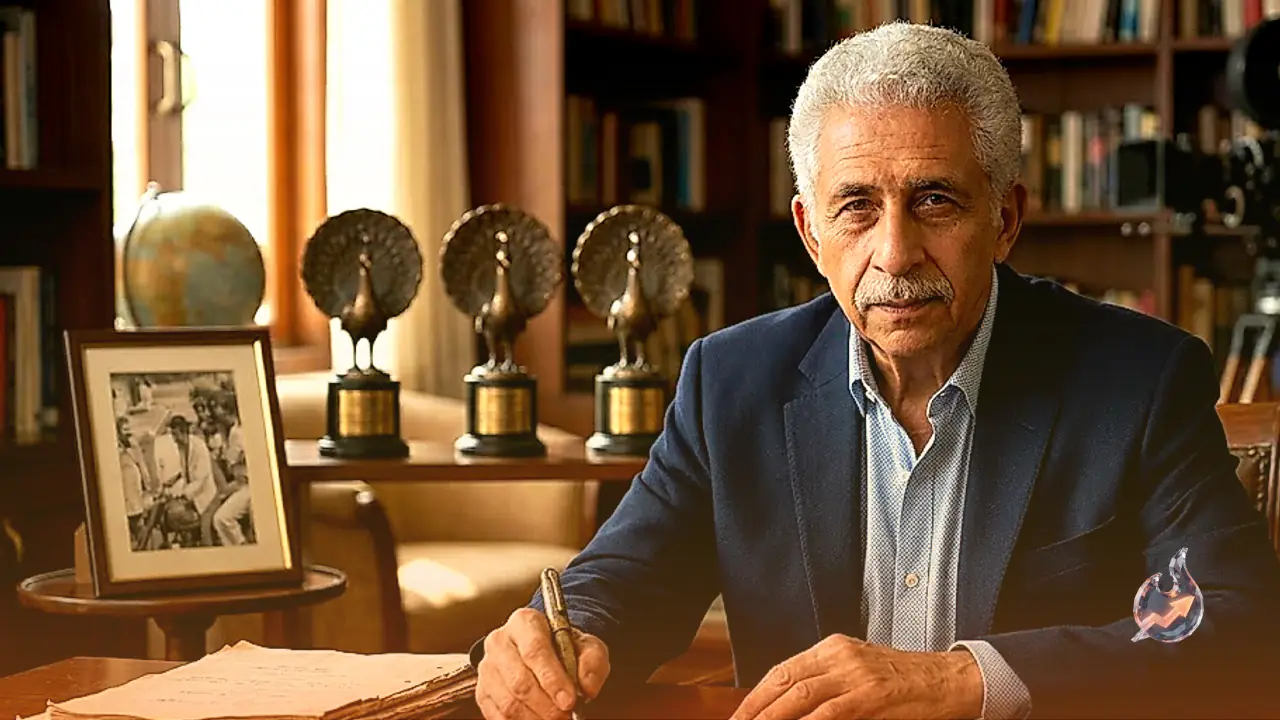
His unparalleled contribution to the arts has been officially recognized at the highest levels. He is the recipient of three National Film Awards, honoring his stellar work in 'Sparsh', 'Paar', and 'Iqbal'. Furthermore, the Government of India celebrated his artistic achievements by conferring upon him the Padma Shri in 1987, followed by the prestigious Padma Bhushan in 2003.
Beyond the silver screen, his dedication to live performance remains unwavering. He has devoted a significant portion of his life to the stage through his own theatre group. Television audiences also fondly remember his brilliant portrayals in iconic shows like 'Mirza Ghalib' and 'Bharat Ek Khoj', solidifying his status as a true maestro across all mediums of entertainment.