




















The history of Indian cinema is adorned with remarkable artists whose presence elevated every narrative, and Avtar Kishan Hangal stands prominent among them. Widely recognized as A.K. Hangal, he entered the film industry at the ripe age of 52 and went on to appear in more than 200 feature films. Before becoming a household name as screen grandfather and righteous elder, Hangal led a life deeply intertwined with India's independence movement, labor union activism, and revolutionary theater. His journey from a humble tailor and freedom fighter to an iconic Hindi cinema legend remains one of the most inspirational sagas in Indian cultural history.
Early Life, Freedom Movement, and Labor Union Activism
Avtar Kishan Hangal was born on 1 February 1914 in Sialkot, a city in undivided India located in present-day Pakistan. He spent his childhood and formative youth years in Peshawar. His father worked in government service and strongly desired that his son pursue a stable, traditional government job. However, young Hangal was driven by strong ideals and chose a completely independent path. At an early age, he was drawn into the Indian independence movement, actively participating in freedom struggles from 1929 until 1947. His activism during these turbulent years even resulted in imprisonment.
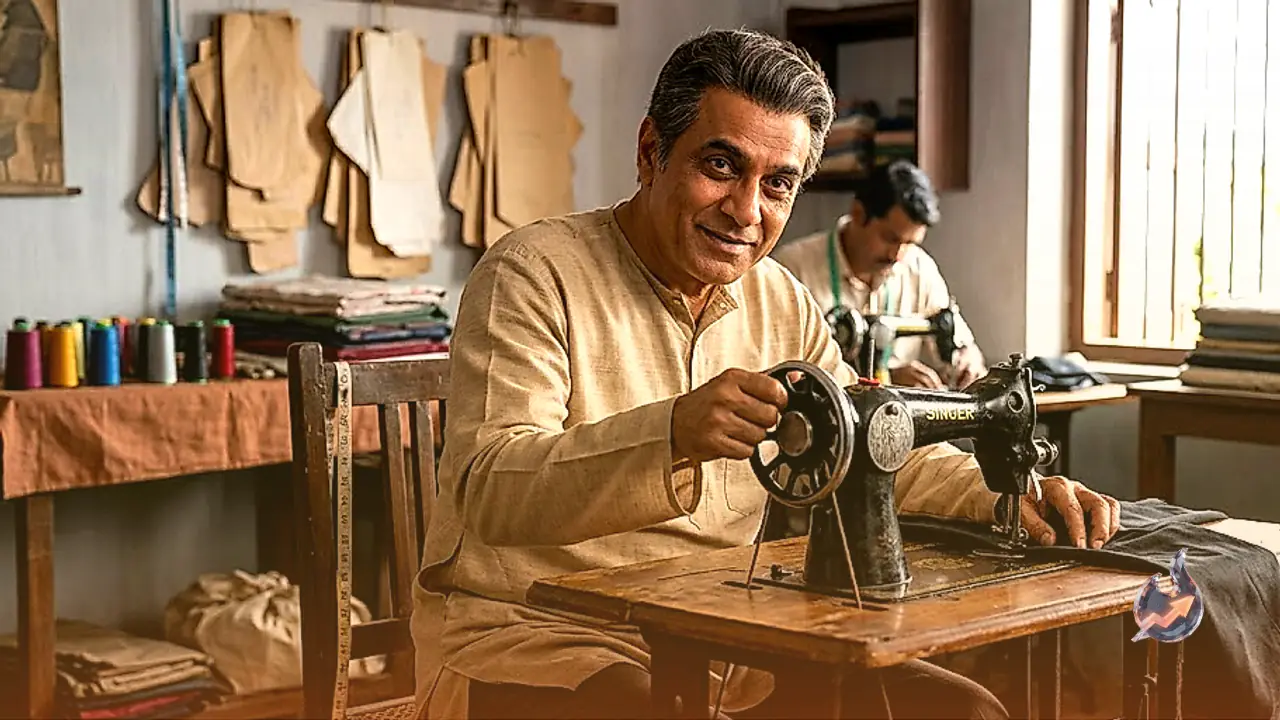
Refusing to accept a routine government position, Hangal trained as a tailor in Peshawar and began earning his living through tailoring. For Hangal, tailoring was far more than a mere source of livelihood. Working closely with fellow tailors, he witnessed their difficult working conditions firsthand and became a passionate advocate for labor rights. He worked tirelessly to organize factory workers and fellow tailors, establishing trade unions to secure fair treatment and proper wages for laborers.
Theater Beginnings, Partition, and IPTA Association in Mumbai
While balancing his tailoring profession and political activist work, Hangal developed a deep passion for the performing arts. In 1936, he joined a local theater group in Peshawar, initiating a lifelong commitment to the stage. Theater rapidly became a core pillar of his existence alongside his social activism. Following the partition of India, Hangal relocated to Mumbai, where he dedicated himself fully to theatrical art.
In Mumbai, he aligned with the Indian People's Theatre Association (IPTA), an organization known for socially conscious art. This platform brought him into close collaboration with artistic stalwarts like Balraj Sahni and Kaifi Azmi. Hangal spent approximately 15 years refining his acting craft on stage before making his transition to mainstream cinema.
Cinematic Debut at Age 52 and Notable Masterpieces
Starting a new film career at the age of 52 is an extraordinary challenge, yet Hangal proved that true talent transcends age boundaries. He made his silver screen debut in 1966 with director Basu Bhattacharya's acclaimed film Teesri Kasam. His impressive performance opened doors to a long and successful career in Hindi cinema.
Over the following decades, Hangal delivered memorable performances across diverse genres. His filmography includes classics such as Guddi, Bawarchi, Abhimaan, Namak Haraam, Chupke Chupke, Aandhi, Tapasya, Shaukeen, Avtaar, and Arjun. In the blockbuster film Satyam Shivam Sundaram, he portrayed the compassionate uncle of character played by Zeenat Aman, earning widespread audience affection.
Rahim Chacha in Sholay, Lagaan, and Television Work
The landmark 1975 blockbuster Sholay cemented Hangal's legacy in Indian cinematic history. Portraying the blind village elder Rahim Chacha, he delivered the iconic line, "Itna sannata kyon hai bhai" (Why is there so much silence, brother?), which remains one of the most quoted dialogues in Hindi film history. Throughout his career, Hangal amassed over 200 film credits.
In 2001, he delivered another memorable performance as Shambhu Kaka in the Academy Award nominated epic Lagaan. Beyond feature films, Hangal also embraced television during the later phase of his career, earning acclaim for his role in the television series Madhubala - Ek Ishq Ek Junoon.
Padma Bhushan Honor, Passing, and Cultural Impact
In recognition of his monumental contributions to Indian cinema and the arts, the Government of India conferred upon him the Padma Bhushan, the country's third-highest civilian honor, in 2006. In 2012, his health declined, requiring hospitalization in Mumbai. On 26 August 2012, Hangal passed away at the age of 98. Although A.K. Hangal is no longer with us, his unforgettable screen portrayals and rich artistic legacy continue to live on in the hearts of millions.