




















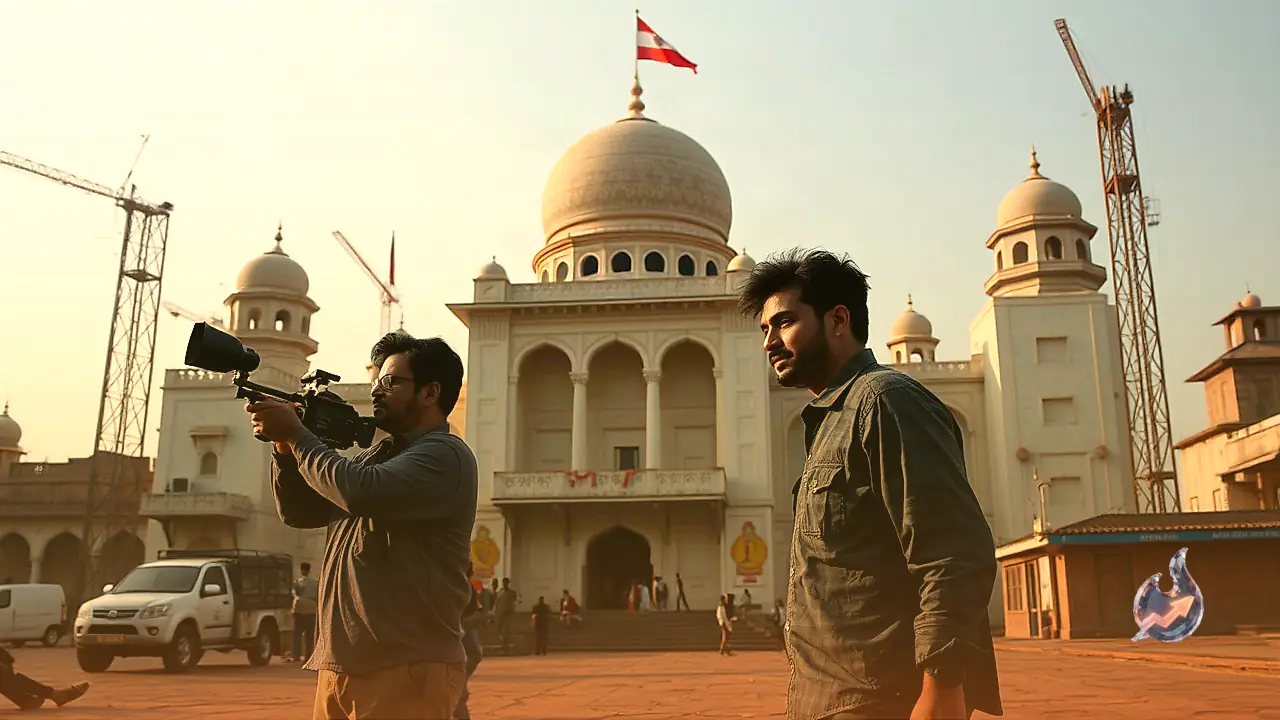

Throughout the history of Indian cinema, several remarkably talented performers have demonstrated that their skills extend far beyond acting in front of the camera. By stepping into the director's chair, these artists assumed complete creative control over their projects, shaping narratives from script to screen. Transitioning from leading roles on camera to guiding an entire film crew requires a profound understanding of storytelling, emotional pacing, and visual aesthetics. From regional film industries to mainstream Hindi and Tamil cinema, these actors proved that an intimate understanding of performance often translates into exceptional directorial vision.
Rishab Shetty and the Cultural Impact of Kantara
Rishab Shetty played a monumental role in putting Kannada cinema on the national map. Rather than confining himself to performance alone, he took full responsibility for writing and directing his flagship project. In the massive blockbuster Kantara, Rishab Shetty not only played the central lead character but also helmed the direction with remarkable detail. He placed the rich folk traditions, local spiritual beliefs, natural landscapes, and indigenous culture of Karnataka at the very heart of the narrative. By blending deeply rooted mythology with modern cinematic storytelling techniques, he created an immersive experience for audiences across the country. The powerful climax and emotional resonance of Kantara left a lasting impression on viewers. The film's unprecedented success proved that stories grounded in local authenticity can easily transcend regional and linguistic barriers when told with genuine conviction.
Farhan Akhtar's Dil Chahta Hai and Redefining Modern Friendship
Farhan Akhtar made his directorial debut in 2001 with the iconic film Dil Chahta Hai. When he released the movie, few could have anticipated that it would redefine the portrayal of youth and friendship in Hindi cinema for generations to come. Starring Aamir Khan, Akshaye Khanna, and Saif Ali Khan, the narrative captured the lives, personal relationships, romantic entanglements, and career anxieties of three young men navigating adulthood. Farhan Akhtar brought a fresh, contemporary directorial perspective that transformed urban storytelling in Indian films. Today, Dil Chahta Hai is widely celebrated as a cult classic, with much of its enduring legacy attributed to Farhan Akhtar's visionary direction and sharp understanding of youth culture.
Aamir Khan's Sensitive Storytelling in Taare Zameen Par
Widely recognized for his meticulous approach to filmmaking, Aamir Khan took on the dual responsibilities of directing and acting in Taare Zameen Par. The film went beyond standard family entertainment to raise crucial questions about the conventional education system and how society perceives children with learning differences. The emotional story centered on a young boy who struggles with academics and is unfairly labeled as careless or lazy by those around him. Co-directing the film alongside Amole Gupte, Aamir Khan crafted a deeply touching narrative that resonated with parents, educators, and students alike. The movie achieved tremendous commercial success at the box office while earning widespread acclaim from film critics, making it one of the most celebrated milestones in Aamir Khan's illustrious career.
Ajay Devgn's Directorial Journey and Story Selection
Known for his intense screen presence, Ajay Devgn has consistently expanded his creative repertoire by directing feature films alongside his active acting career. He made his directorial debut in 2008 with U Me Aur Hum, and later went on to direct ambitious scale projects such as Shivaay, Runway 34, and Bholaa. While these films faced mixed commercial outcomes at the box office and did not achieve massive financial collection numbers, they were widely recognized for their strong concepts and technical finesse. As a director, Ajay Devgn has shown a clear inclination toward visually compelling sequences and gripping narrative setups. His directorial work reflects a commitment to exploring unique themes, proving his dedication to cinematic craft behind the lens.
Kamal Haasan's Visionary Craftsmanship in Hey Ram
Kamal Haasan stands as one of the most innovative figures in Indian cinema, constantly pushing artistic boundaries and pioneering new storytelling techniques. His film Hey Ram serves as a prime example of his uncompromising creative ambition. For this project, Kamal Haasan handled writing, directing, and starring duties simultaneously, remaining at the absolute core of the creative process from initial concept to final execution. By weaving together complex historical themes, political tension, and intense human emotion, he delivered a cinematic piece that remains highly regarded among film scholars and audiences. Kamal Haasan demonstrated that a true cinematic artist can seamlessly bridge artistic depth with directorial brilliance.