



















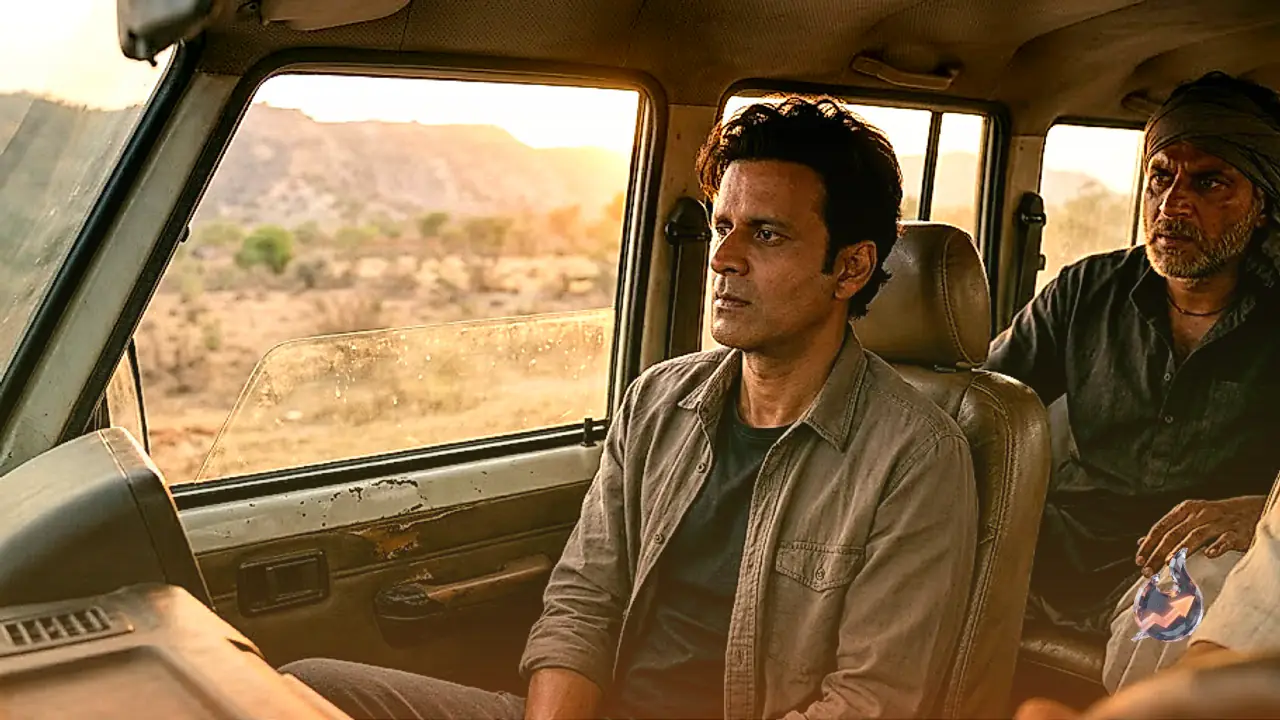

Manoj Bajpayee is widely recognized for his deep dedication to character study, often immersing himself completely into unfamiliar realities before stepping in front of the camera. A compelling example of this approach occurred during the making of Shekhar Kapur's acclaimed 1994 film Bandit Queen. In order to capture the unvarnished essence of his role, the actor was tasked with closely observing real life dacoit Maan Singh. Bajpayee spent significant periods in Maan Singh's immediate presence, studying his daily conduct, mannerisms, and survival habits firsthand. A past video clip revisiting this intense real life encounter has recently resurfaced on social media platforms, sparking fresh interest in the demanding process behind the landmark film.
Reflections on The Kapil Sharma Show
The conversation came to light during an appearance on The Kapil Sharma Show, where host Kapil Sharma asked Manoj Bajpayee if he had ever encountered a genuine dacoit in his lifetime. The question immediately brought back vivid memories from the production days of Bandit Queen, moments the actor stated he has never been able to forget. Bajpayee explained that filmmaker Shekhar Kapur had directly given him the responsibility of shadowing Maan Singh to understand his behavior and temperament up close. Taking that assignment seriously, Bajpayee spent his days observing Maan Singh and traveling alongside him, even when productions wrapped late into the dark hours of the night.
Uncompromising Alertness on the Road
Recounting their nighttime road journeys after shooting pack-ups, Bajpayee described how Maan Singh traveled in an entirely different manner than ordinary passengers. Instead of sitting back or relaxing, Maan Singh remained in a state of high physical and mental readiness at every moment. He kept a sharp, unwavering eye on the surroundings outside the vehicle, continually assessing movement along the road. His instructions to the driver were unpredictable and tense; at one moment he would demand that the vehicle accelerate rapidly, only to abruptly order a dramatic reduction in speed shortly afterward.
Living With Constant Rivalry and Danger
When Bajpayee questioned why he insisted on such erratic speed changes and unceasing vigilance, it became clear that old enmities in the badlands could materialize at any moment without warning. Maan Singh was acutely aware that hostile adversaries could be lurking nearby, making any drop in caution potentially fatal. He refused to treat even the smallest sign of danger lightly. Experiencing this constant psychological tension and hyper-vigilance from inches away provided Bajpayee with an unfiltered look into the mind of someone living permanently on the edge of survival.
The Legacy of Bandit Queen in 1994
Directed by Shekhar Kapur, Bandit Queen arrived in cinema halls in the year 1994 and became a watershed cinematic achievement. The narrative centered on the turbulent life of Phoolan Devi, bringing many of her most grueling, sensitive, and controversial experiences directly to the screen. Actress Seema Biswas delivered an iconic portrayal of Phoolan Devi, establishing one of the most powerful screen performances of her career. Bajpayee's participation in this landmark project, bolstered by his real world research alongside Maan Singh, remains an enduring testament to the relentless realism that defined the entire production.