





















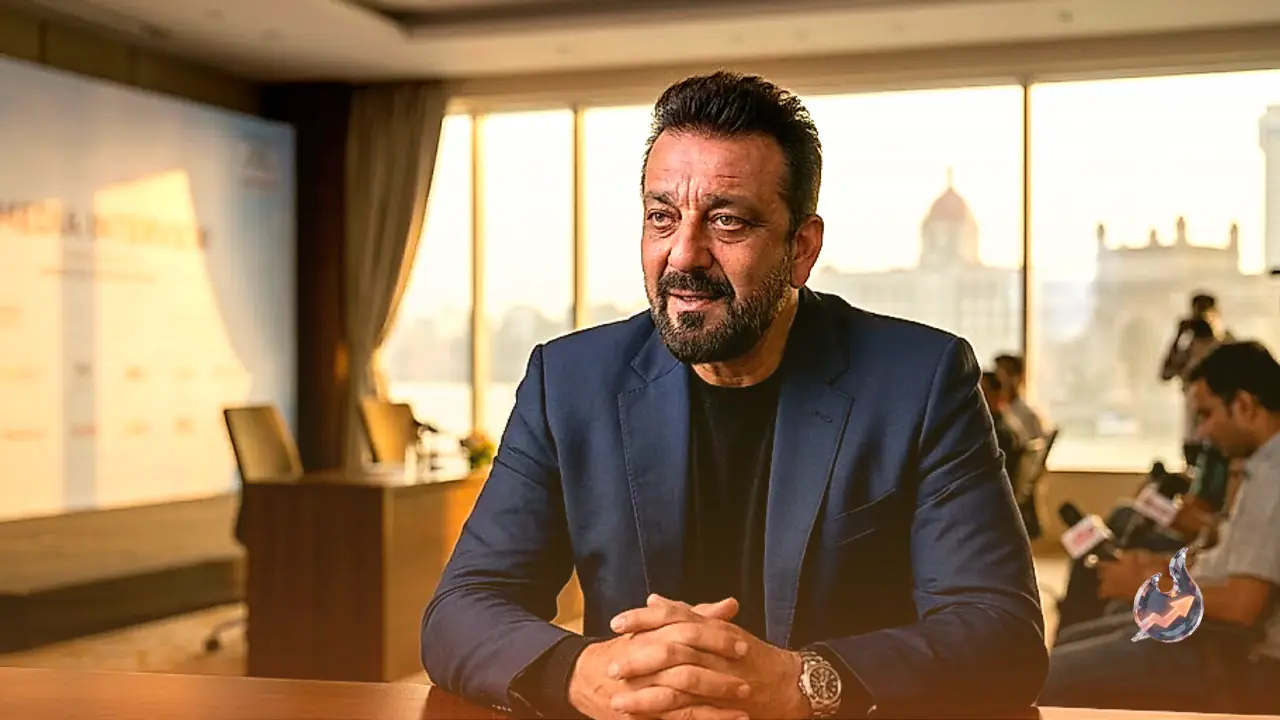

Veteran actor Sanjay Dutt, who has been an integral part of Indian cinema for over four decades, recently reflected on the shifting dynamics of the film industry and shared significant lessons from his personal life journey. Speaking in a special interview with Dr. D. Nageshwar Reddy, Chairman of AIG Hospitals in Hyderabad, streamed on the hospital's official YouTube platform, Dutt offered honest insights into the modern atmosphere of Bollywood, his unique acting philosophy, and the most vital realization he gained while serving time in prison. Looking back at his long artistic career, the acclaimed actor noted that the emotional bond and work culture within the Hindi film fraternity have undergone a substantial change over the years.
Transition from a Close-Knit Family to Cut-Throat Competition
Recalling the initial phase of his career in cinema, Sanjay Dutt shared that when he first entered the film industry, the entire fraternity functioned like a unified family. During those years, actors, directors, and crew members consistently supported one another through professional and personal challenges, celebrating each other's achievements with genuine warmth. However, Dutt observed that this supportive atmosphere has degraded significantly over time. According to the actor, the sense of belonging and mutual warmth has diminished in present-day Bollywood. Instead, the industry has turned intensely competitive and cut-throat, with individuals constantly competing against one another rather than standing together.
Comparing Bollywood's Environment with Hollywood's Solidarity
Expanding on his observations, Sanjay Dutt drew a clear contrast between the Indian film industry and Hollywood. He highlighted that in Hollywood, actors, writers, and various industry unions maintain a strong, united front. On prestigious global platforms such as the Oscars, artists demonstrate authentic joy and appreciation for their colleagues' triumphs rather than feelings of jealousy or rivalry. Dutt emphasized that this deep sense of unity and collective support is precisely what fortifies any film industry, pointing out that such solidarity is currently lacking in the domestic cinematic landscape.
Why 'Munna Bhai M.B.B.S.' Remains Closest to His Heart
When questioned about his favorite cinematic roles during the interview, the actor smiled and admitted that he has always enjoyed playing gangster characters on screen. Nevertheless, he revealed that the blockbuster film 'Munna Bhai M.B.B.S.' holds the most special place in his heart. Dutt explained that working on this movie fundamentally altered his perception regarding the relationship between doctors and patients. He noted that medical professionals work under tremendous stress and heavy workloads. However, if a doctor takes just two minutes to hold a patient's hand, inquire about their well-being, and reassure them that everything will be fine, it imparts immense psychological strength to the patient. He connected this realization to his own emotional experiences while attending to his mother during her illness.
A Spontaneous and Unprepared Approach to Acting
Disclosing his personal methodology as an actor, Sanjay Dutt explained that he refrains from extensive pre-scene preparation or elaborate rehearsals before shooting. His approach to acting is straightforward and spontaneous. He listens to the script narration carefully, arrives directly on the film set, and executes the scene strictly according to the director's explanation and guidance. Dutt believes that responding naturally on camera as directed creates a far more convincing and impactful performance than over-analyzing a role prior to the shoot.
Learning the Priceless Lesson of Forgiveness in Jail
Reflecting on one of the most difficult periods of his life, the senior actor recalled his time spent in prison and the lasting wisdom it imparted. He revealed that incarceration taught him life's single greatest lesson: the power of forgiveness. Dutt shared that a prison constable provided him with valuable advice, telling him that to truly move forward in life, one must learn to forgive others. Taking that constable's words to heart, Dutt adopted forgiveness as a core guiding principle in his daily life, noting that letting go of past grievances is essential for inner peace and progress.