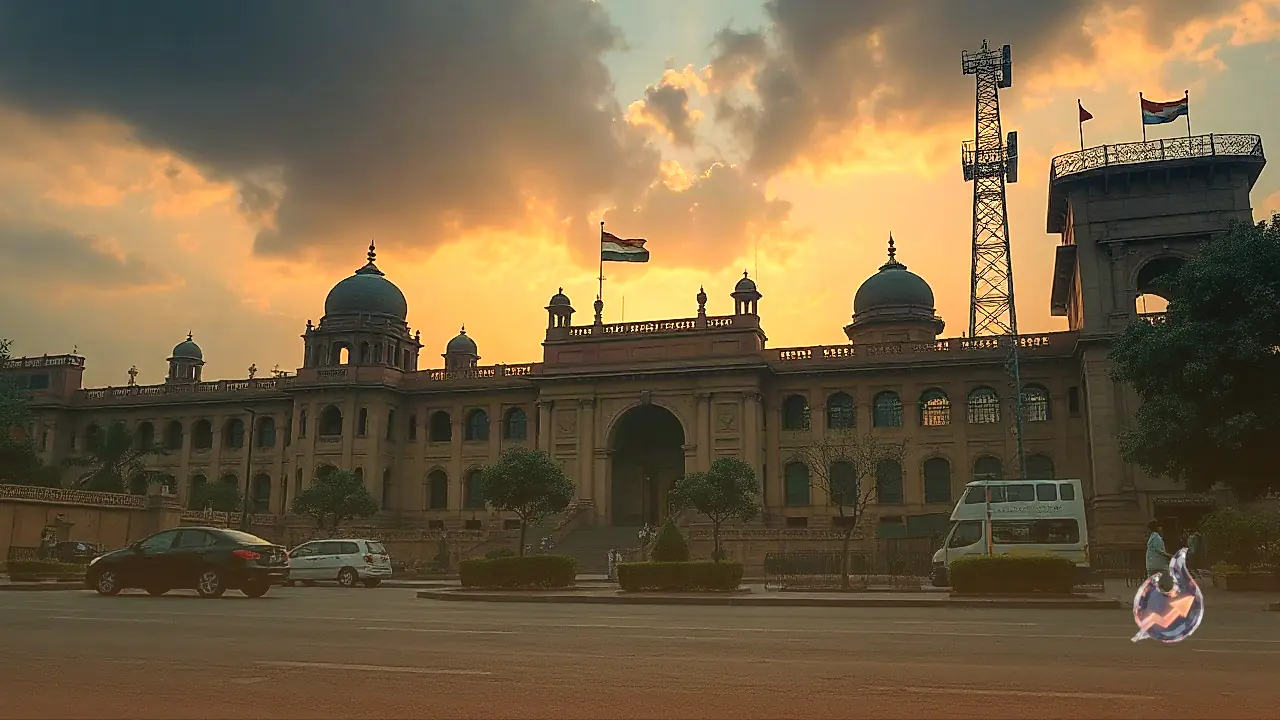


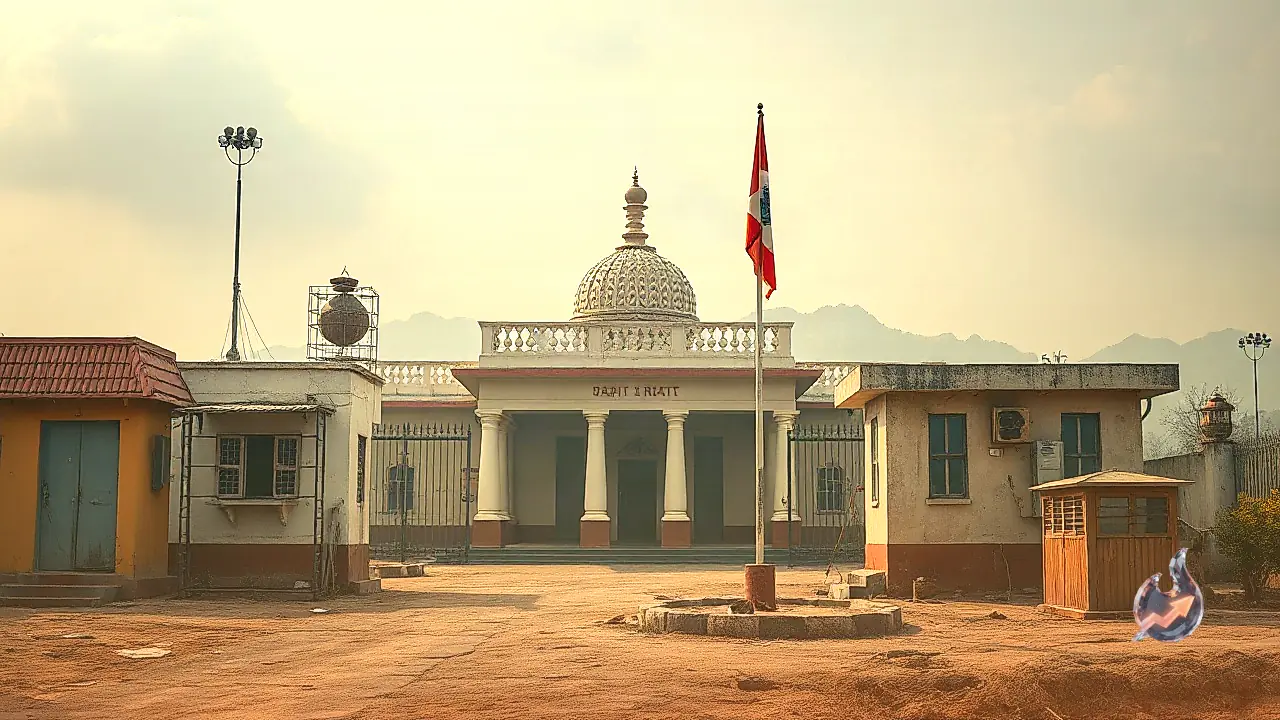


















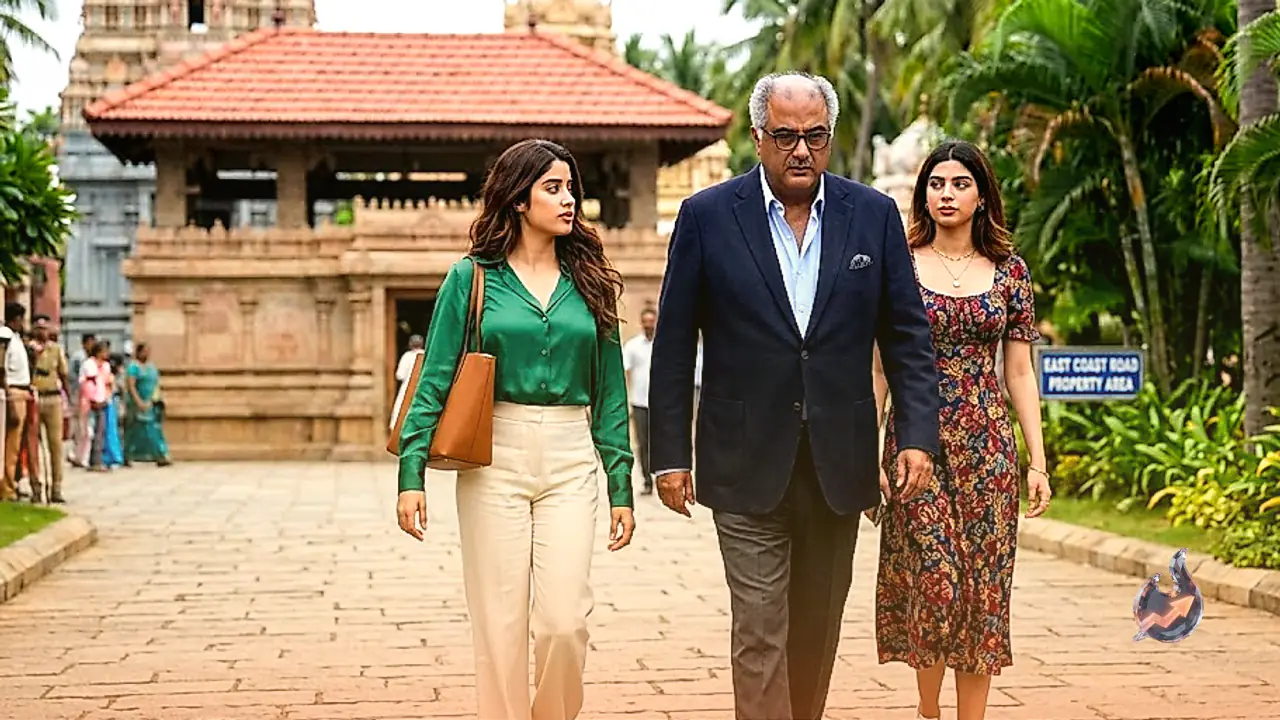

A long-running legal battle over a prime 2.7-acre real estate property belonging to the family of the late legendary actor Sridevi on Chennai's East Coast Road (ECR) has reached the Supreme Court of India. Hearing a petition challenging an earlier ruling of the Madras High Court, the apex court issued formal notices to film producer Boney Kapoor and his daughters, Janhvi Kapoor and Khushi Kapoor, while strictly ordering all parties to maintain status quo on the premises. In an effort to resolve the multi-decade land dispute without prolonged litigation, the Supreme Court also recommended exploring a structured mediation process.
Supreme Court Directs Status Quo and Recommends Mediation
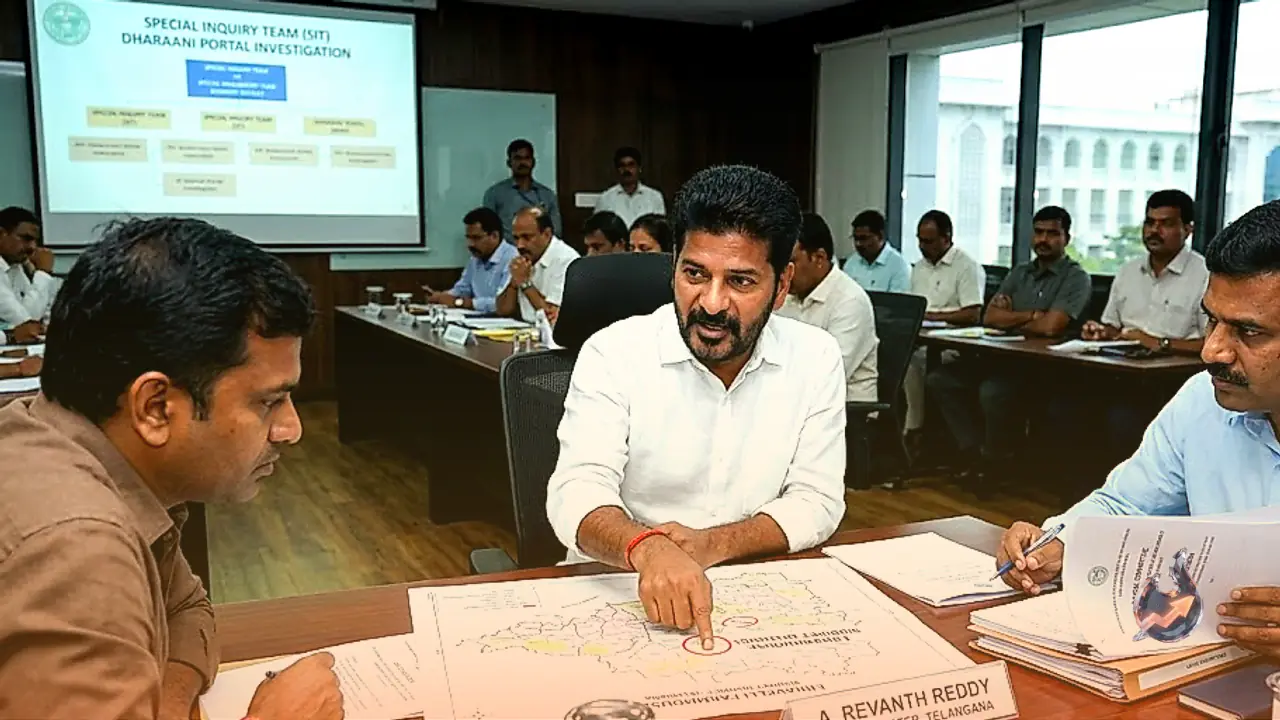
The legal proceedings took place before a Supreme Court bench comprising Justice K.V. Viswanathan and Justice Arun Palli. After evaluating the preliminary arguments from both sides, the bench sought responses from the Kapoor family and issued interim orders ensuring that no changes are made to the property's present physical or legal status along Chennai's East Coast Road.
Taking note of the lengthy history of the land transaction, the court suggested that both sides attempt an amicable resolution. The bench proposed appointing a retired High Court judge to function as an independent mediator to facilitate talks between the parties. The Supreme Court has slated December 18 as the next date of hearing to review the progress report of the mediation process.
Origins of the 36-Year-Old Land Ownership Dispute
The controversy traces its roots back to a land purchase executed on April 19, 1988. The petitioners, M. C. Sivakami and her brother, instituted the legal challenge claiming rightful inheritance over the 2.7-acre parcel of land. The dispute revolves around the estate of the original property owner, M. C. Chandrasekaran. According to the petitioners, who state they are children from Chandrasekaran's first marriage, their legal share in the ancestral property was improperly bypassed when the land was sold to Sridevi's family in 1988.
It is worth noting that the petitioners are not personal relatives or former spouses of Sridevi, but heirs of the original vendor. Following their claims, they dragged Boney Kapoor, Janhvi Kapoor, and Khushi Kapoor into litigation. The Madras High Court had previously dismissed their petition and ruled in favor of the Kapoor family, prompting the petitioners to approach the apex court.
Petitioners Challenge Madras High Court's Approach
Appearing for the petitioners before the Supreme Court, Senior Advocates Raju Ramachandran and Balkrishna Srinivasan argued that the trial court had correctly recognized prima facie substance in the matter and allowed the suit to proceed on limitation grounds.
The petitioners' counsel contended that the Madras High Court erred by conducting an abbreviated mini-trial during the initial stages of the case. They argued that the High Court prematurely entered into a deep scrutiny of title deeds and heirship documents at a preliminary phase, attempting to determine whether the petitioners were valid legal heirs before a full trial could be conducted.
Kapoor Family's Defense and Statute of Limitations Arguments
In response, Senior Advocate Abhishek Manu Singhvi, appearing for Boney Kapoor, Janhvi Kapoor, and Khushi Kapoor, defended the family's title to the property. He pointed out that the property was legally bought on April 19, 1988. Following Sridevi's death in 2018, the family submitted an application for revenue mutation of the land records in 2023.
Singhvi forcefully argued on the grounds of time limitation, pointing out that the petitioners attained legal majority in 1995 and 1999 respectively. He emphasized that filing a lawsuit in 2025 regarding a real estate transaction completed in 1988 is barred by limitation laws, arguing that a 36-year-old transaction cannot be reopened after such an extended passage of time.