


















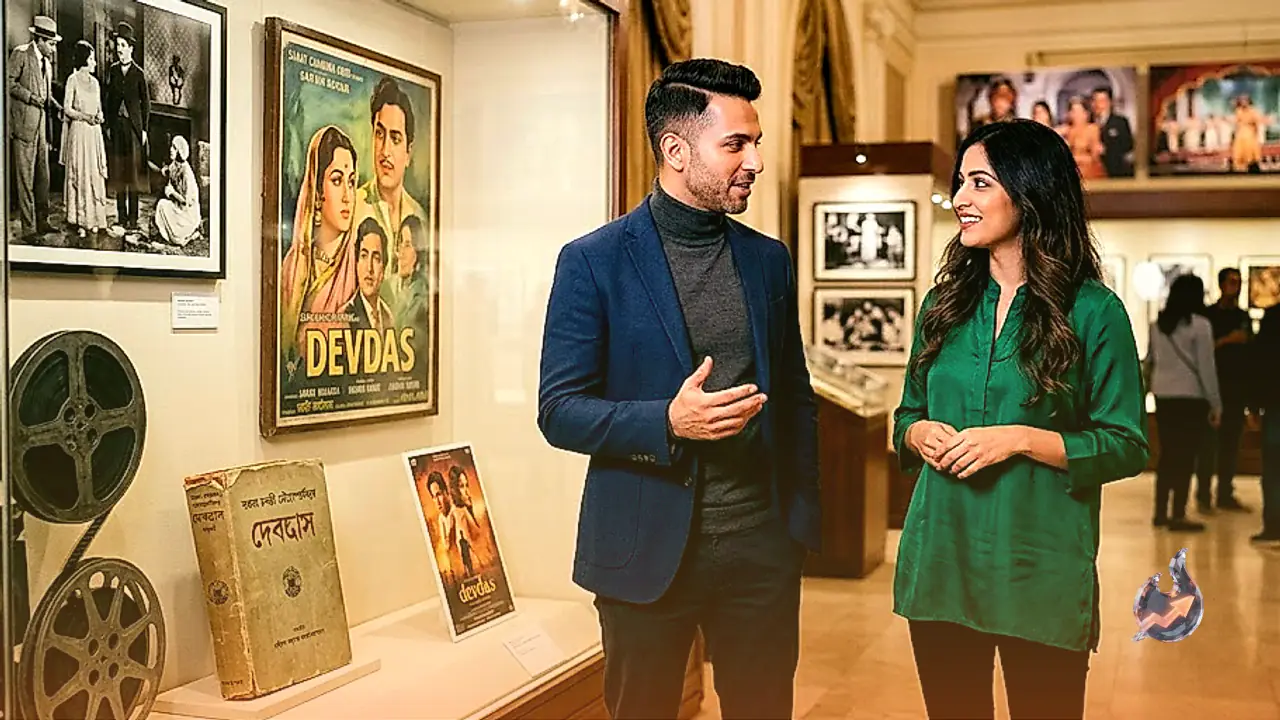

Very few works in Indian literature and cinematic history have retained an unbroken hold on the imagination of filmmakers and audiences across generations quite like Sarat Chandra Chattopadhyay's classic novel Devdas. Penned in 1917, this poignant chronicle of unrequited love, separation, and emotional unraveling has proven so universally appealing that filmmakers have adapted it under the identical title more than seven times across varying eras and linguistic landscapes. From the flickering frames of the silent movie epoch to the lavish, vibrant color spectrums orchestrated by modern directors, each filmmaker brought a unique artistic sensibility to the narrative. Among these diverse interpretations, the cinematic versions headlined by Dilip Kumar and Shah Rukh Khan emerged as the most widely celebrated.
The 1928 Silent Era Adaptation Marked The Narrative's Screen Debut
The journey of this literary masterpiece onto celluloid commenced in 1928, during the developmental infancy of Indian cinema. Working within the technical constraints of that silent era, director Naresh Mitra undertook the historic task of translating Sarat Chandra's written pages into a black and white visual narrative. In this inaugural production, actor Phani Burma was cast in the central tragic role of Devdas, while Tarakbala appeared opposite him as Paro. Because synchronized dialogue technology was absent in cinema at the time, the entire storytelling weight rested upon subtle facial expressions, gestural performances, and visual direction. Despite the total absence of spoken words, this ambitious endeavor successfully translated the poignant melancholy of separation to the silver screen.
The 1935 Bengali Talkie Introduced Voice And Psychological Depth
With the historic advent of sound technology in Indian cinema, the poignant story found a new medium through spoken dialogue and music. Director Pramathesh Barua helmed the first Bengali talkie iteration in 1935, taking on the dual responsibility of guiding the production and performing the title protagonist himself. Jamuna Barua portrayed the tragic heroine Paro. This version became notable for presenting the title character's inner turmoil with striking psychological realism, detailing his descent into despair, alcohol dependency, and the agonizing ache of estrangement on the big screen.
The 1936 Hindi Reinterpretation Became Immortalized By KL Saigal
Following the widespread acclaim of the Bengali release, director Pramathesh Barua reimagined the project for Hindi speaking audiences in 1936. For this production, celebrated singer and actor Kundan Lal Saigal, commonly known as KL Saigal, was cast as the tragic hero. Saigal's melancholic performance and emotive singing transformed the film into an enduring artistic landmark. The resonant impact of his musical numbers carried the story of Devdas to audiences across every corner of the Indian subcontinent, solidifying its place in popular culture.
The 1953 Devadasu Emerged As A Cult Classic In South Indian Cinema
The profound emotional architecture of the novel soon resonated with the film industries of Southern India as well. In 1953, director Vedantam Raghavaiah adapted the story for bilingual audiences in Telugu and Tamil under the title Devadasu. Legendary performer Akkineni Nageswara Rao, popularly recognized as ANR, took on the titular role alongside renowned actress Savitri as the female lead. The production achieved widespread critical stature and remains recognized as a definitive cult classic of South Indian cinema, with ANR's layered depiction continuing to stand as a major milestone in Telugu film history.
The 1955 Hindi Adaptation Cemented Dilip Kumar's Cinematic Masterpiece
In 1955, filmmaker Bimal Roy crafted what many film historians consider the most authentic and emotionally resonant cinematic adaptation of the novel. Leading the cast, Dilip Kumar delivered an iconic portrayal that captured the brooding introspection and devastating heartbreak of the protagonist. Suchitra Sen delivered an evocative performance as Paro, while Vyjayanthimala brought elegance and emotional resonance to the part of Chandramukhi. The profound depth of Dilip Kumar's tragic performance earned the feature an immortal standing among global cinematic landmarks.
The 1979 Bengali Revival Brought Together Soumitra Chatterjee And Uttam Kumar
Bengali cinema returned to this timeless narrative in 1979 under the directorial guidance of Dilip Roy. The defining element of this particular production was its remarkable ensemble cast. Legendary actor Soumitra Chatterjee portrayed Devdas, bringing nuanced complexity to the doomed central figure, while Bengali cinema's iconic superstar Uttam Kumar stepped into the role of Chunnilal. The collaboration between two of the industry's most revered talents offered Bengali film lovers a rich, fresh dramatic interpretation.
The 2002 Lavish Remake Reached Global Audiences Under Sanjay Leela Bhansali
In 2002, director Sanjay Leela Bhansali reimagined the story for contemporary viewers, utilizing cutting-edge technical craft, massive architectural sets, and an opulent aesthetic canvas. The project showcased powerhouse dramatic performances from Shah Rukh Khan, Aishwarya Rai, and Madhuri Dixit in the central roles. Supported by intricate choreography arranged by Pandit Birju Maharaj and an elaborate soundtrack composed by Ismail Darbar, the movie transformed into an international success story. It was notably screened at the prestigious Cannes Film Festival, showcasing the classic Indian narrative to global cinema enthusiasts.