



















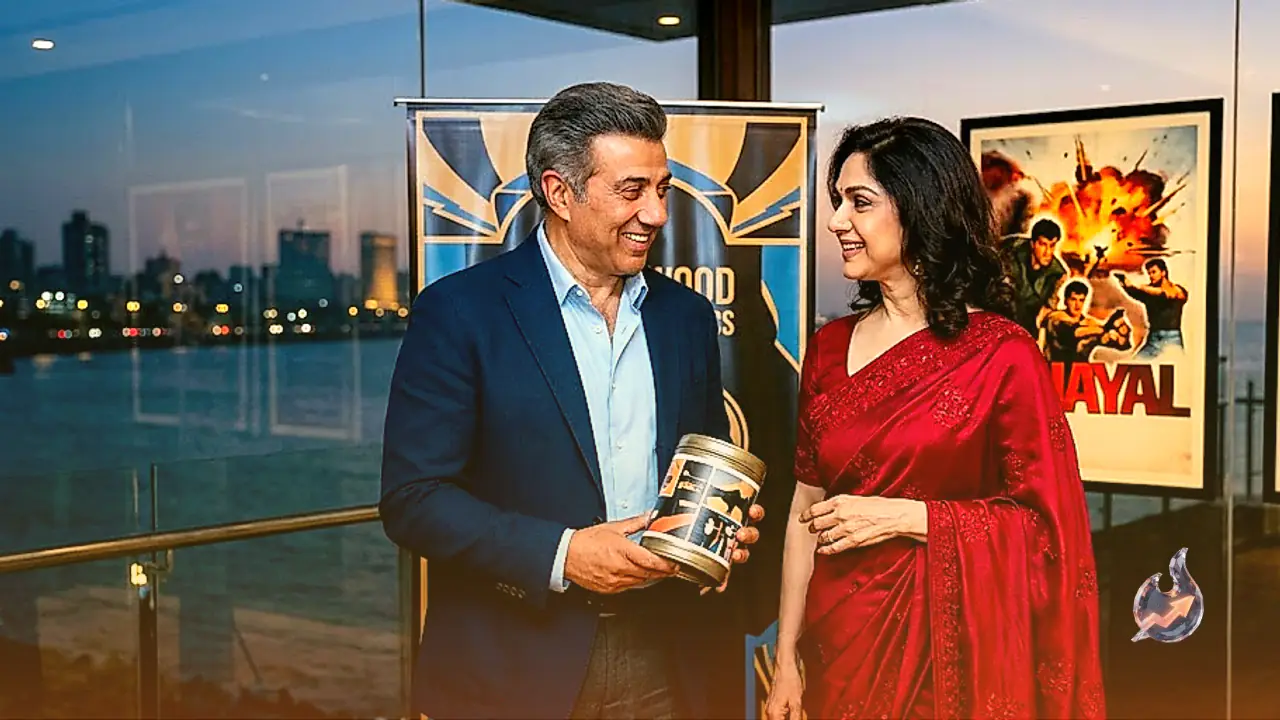

During the 1990s, Indian cinema witnessed an era of high-octane action drama that left an indelible mark on moviegoers. Two film titles featuring exactly six letters in their English spellings stood out by creating an unprecedented storm at the box office. Released on June 22, 1990, 'Ghayal' set new standards for action storytelling, and six years later on November 15, 1996, 'Ghatak' hit the silver screen to equal acclaim. Both movies belonged squarely to the revenge-action genre and shared a deep core theme: when an ordinary, honest individual rises up against systemic injustice and corrupt power structures, he can shake the strongest foundations of authority. This six-letter naming coincidence associated with two back-to-back hits became the most formidable blockbuster formula of Sunny Deol's illustrious career.
'Ghayal' Redefined Bollywood Action and Marked Rajkumar Santoshi's Debut
June 22, 1990, remains a landmark date in Hindi cinema history as it saw the arrival of 'Ghayal', which also marked the directorial debut of filmmaker Rajkumar Santoshi. The narrative centered on Ajay Mehra, played by Sunny Deol, an aspiring boxer who finds himself falsely framed for the murder of his own brother. After breaking free from police custody, Ajay embarks on a relentless mission to seek vengeance against the ruthless crime syndicate owner Balwant Rai, portrayed with menacing brilliance by veteran actor Amrish Puri.
In 'Ghayal', actress Meenakshi Seshadri took on the role of Varsha, a courageous journalist and Ajay's steadfast girlfriend. Far from being a conventional heroine serving as mere romantic interest, her character acted as the moral anchor and primary source of strength for the protagonist. Driven by sharp writing and memorable performances, 'Ghayal' made history by sweeping 7 Filmfare Awards and earning 1 National Film Award, cementing its place as a benchmark in Indian action cinema.
'Ghatak' Recreated the Winning Formula Six Years Later
Six years after the massive success of their initial collaboration, director Rajkumar Santoshi reunited with Sunny Deol and Meenakshi Seshadri for another action spectacle titled 'Ghatak', which arrived in theaters on November 15, 1996. The plot followed Kashi, portrayed by Sunny Deol, an innocent wrestler hailing from Varanasi who travels to Mumbai. Upon arriving in the metropolis, Kashi witnesses the terrifying reign of Katya, a tyrannical mafia boss played by Daniel Denzongpa. Driven by his principles, Kashi decides to stand alone against Katya's entire criminal empire and end his reign of terror.
Meenakshi Seshadri played Gouri in 'Ghatak', delivering a performance that showcased rich onscreen chemistry with Sunny Deol. Meanwhile, Amrish Puri took on the crucial role of Kashi's ailing father, delivering a deeply moving performance. The poignant father-son dynamic between Amrish Puri and Sunny Deol produced emotional scenes that left audiences in tears inside theaters across the country. 'Ghatak' emerged as a resounding box office triumph, securing its spot as one of the top-grossing films of 1996.
A Rare Cinematic Collaboration That Defined an Era
It is rare in the film industry for the same combination of director, male lead, and female lead to return in the same genre and create lightning in a bottle twice. Rajkumar Santoshi's directional vision, combined with Sunny Deol's iconic action persona and Meenakshi Seshadri's powerful dramatic performance, generated unmatched magic on screen. In both projects, Meenakshi Seshadri's characters were written as key drivers of the narrative, providing crucial strength and motivation to the lead hero.
A major key to Rajkumar Santoshi's success was his ability to seamlessly weave intense, hard-hitting action with genuine family emotions and human values. Even decades after their theatrical runs, 'Ghayal' and 'Ghatak' are routinely cited among the greatest action films ever produced in Indian cinema. These two six-letter masterpieces not only established Sunny Deol as Bollywood's ultimate action icon but also demonstrated that a tightly constructed screenplay without artificial drama can stand the test of time as a cult classic.