






















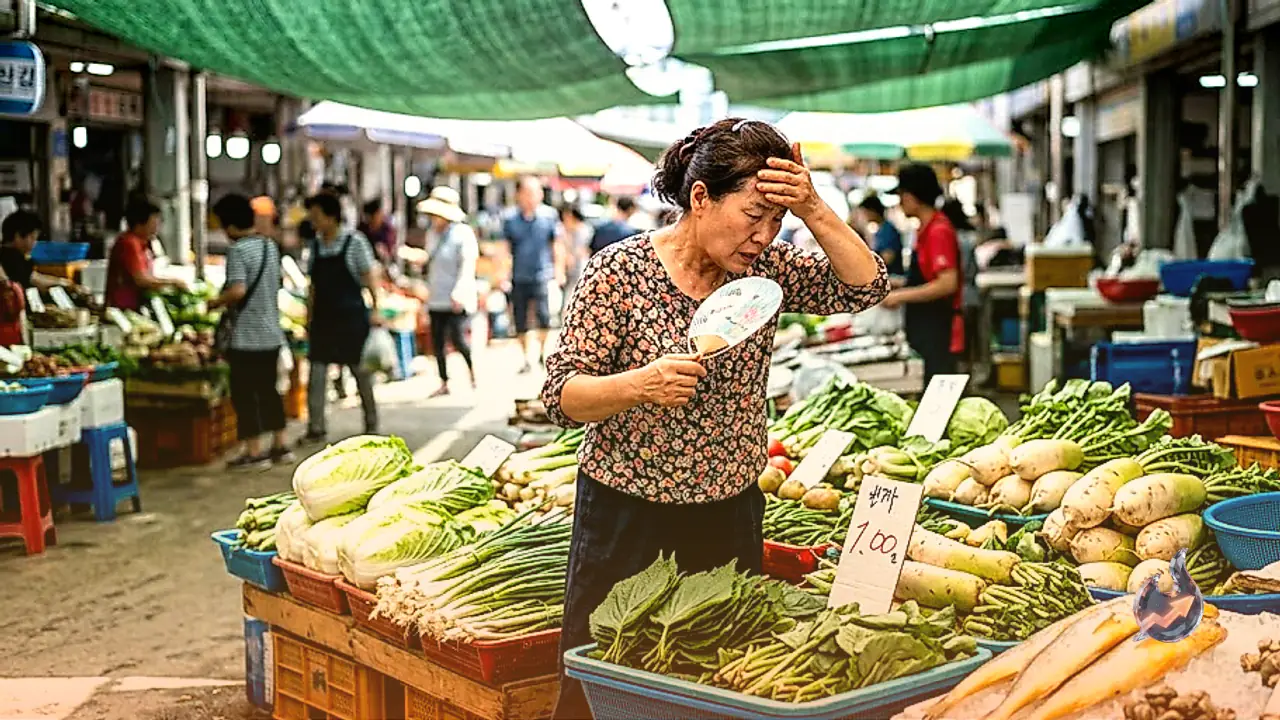

The intense heat wave baking South Korea has begun to heavily impact the cost of essential food items, placing a severe burden on household budgets. The prolonged hot weather has severely disrupted the supply chains for agricultural goods, livestock, and marine products, triggering a rapid surge in market prices across the country.
Steep Surges in Vegetable Prices
According to data released by the Korea Agro-Fisheries and Food Trade Corporation, retail prices for common vegetables have escalated dramatically. As of Friday, the retail price for 100 grams of spinach skyrocketed by a staggering 152.3 percent over the course of a single month. During the same timeframe, the price for 10 cucumbers jumped by 54.8 percent, while 100 grams of green lettuce saw a 41.7 percent increase.
Government Explains the Weather Impact
The government has pointed to the persistent high temperatures as the primary driver behind these soaring costs. The Ministry of Agriculture explained that crops such as spinach, cucumbers, and zucchini thrive best in relatively cool temperatures. When summer temperatures climb and farm yields drop, supplies shrink, causing prices to rise sharply.
Devastating Toll on Livestock and Poultry
The extreme heat has also taken a heavy toll on the livestock and fishery sectors. Fresh data from the agriculture ministry revealed that by Friday, a total of 901,602 farm animals had perished due to the extreme heat. Among these losses, approximately 95 percent consisted of poultry, including chickens and ducks.
Rising Sea Temperatures Hit Fishery Markets
Aquafarms have suffered heavily as ocean temperatures continue to climb. Reports indicated that 864,497 fish died due to the warm water conditions as of Friday. This mortality rate has directly influenced fish market prices. Between July 27 and August 1, the average auction price for flounder stood at 22,300 won, which is roughly 15.84 dollars per kilogram. This figure marks a 2.29 percent increase compared to the previous week and a 13.2 percent rise from the same period last year.
Outlook and Government Intervention
Industry experts warn that because ocean temperatures cool down much slower than land temperatures, the full repercussions of the heat may linger in the coming months. Experts predict that the heat's impact could peak in September, keeping prices for marine species like flounder and rockfish elevated for some time.
As concerns mount over food inflation, the South Korean government is stepping up measures to stabilize prices. These efforts include increasing imports of broiler chickens and launching special promotional campaigns for fish products at discount stores. Last week, daytime temperatures in parts of South Korea reached up to 40 degrees Celsius during the height of the heat wave, though forecasts suggest some relief on Sunday with maximum temperatures expected to ease down to around 34 degrees Celsius.