



















Nobody would have predicted that a boy from a family of American Christian missionaries would grow up to become one of Hindi cinema's most distinctive performers. Yet that is exactly the story of Tom Alter. Born on 22 June 1950 in Mussoorie, his grandparents Emmett and Martha Alter had arrived in India in 1916 as missionaries. The 1947 Partition split the family: his grandparents stayed in Lahore while his parents settled in Rajpur, near Mussoorie, choosing India as their permanent home.
The Film That Set Everything in Motion
Watching Rajesh Khanna in 'Aradhana' as a young man was the moment that determined Tom Alter's future. The film sparked an obsession with acting that never left him. To pursue it seriously, he enrolled at the Film and Television Institute of India (FTII) in Pune and graduated in 1974, earning the Gold Medal.
Typecast as the Villain, Remembered as the Artist
Mumbai had a ready-made mould for Alter. His fair complexion meant directors consistently cast him as British officers or foreign antagonists. But he refused to be defined by the limitations of appearance alone. His command over Hindi and Urdu was formidable, and his delivery gave those stock characters a depth that audiences did not expect. One of his early notable roles came in the film 'Charas' alongside Dharmendra, where he played the Chief Custom Officer.
Broader recognition arrived through Dev Anand's 'Saheb Bahadur'. Then Satyajit Ray gave him the role of Captain Weston in 'Shatranj Ke Khiladi', a performance that placed him in a different league entirely. Historical epics like 'Kranti' and 'Gandhi' followed. His portrayal of underworld don Musa in 'Parinda' remains one of his most chilling performances, and the character of Karam Singh in 'Ram Teri Ganga Maili' was warmly received by audiences as well.
Standing Between Two Lovers in Aashiqui
The year 1990 brought Mahesh Bhatt's blockbuster 'Aashiqui', and once again Alter found himself in a negative role. He played Arnie Campbell, a rigid and unforgiving girls' hostel warden whose purpose in the story is to keep Rahul (Rahul Roy) and Anu (Anu Aggarwal) from being together. It was a role that stuck with audiences who grew up watching the film, a testament to how effectively Alter inhabited even relatively brief negative parts.
Cricket, a World Cup and a Teenager Named Sachin
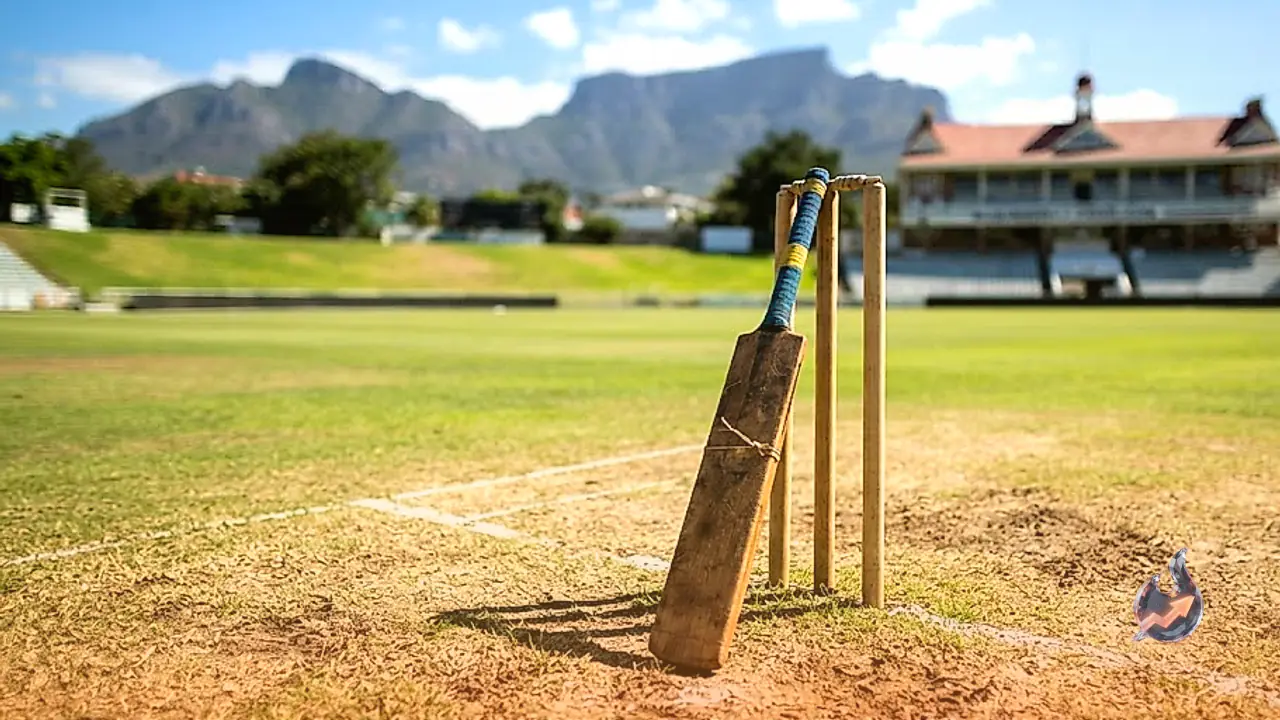
Cinema was not his only passion. Tom Alter had a genuine love for cricket. After India's historic 1983 World Cup triumph, he played in an exhibition match in America as part of the 'Indian Eleven' team captained by Sunil Gavaskar, and even managed to take one wicket during the game.
His most extraordinary moment in sports journalism came on 19 January 1989. At the CCI Nets in Mumbai, Alter conducted what became the first television interview of a shy, curly-haired 15-year-old boy. That teenager went on to become the biggest name in cricket's history: Sachin Tendulkar.
A Face Known to Every Indian Television Household
The small screen gave Alter yet another canvas. He played Charles Spencers in 'Zaban Sambhal Ke', Keshav Kalsi in 'Junoon', and Mahaguru in the hugely popular children's show 'Shaktimaan'. These roles made him a familiar and beloved presence across generations of Indian television viewers.
Defying Illness Until the Very End
In 2016, Alter was diagnosed with squamous cell carcinoma, a rare and aggressive form of skin cancer. He did not retreat. In March 2017, even while battling the disease, he staged his theatrical production 'Sons of Babur'. On 29 September 2017, this extraordinary performer passed away, leaving behind a legacy that spans film, television, theatre, sports and journalism in equal measure.