






















Farmers in Bihar's Chhapra district are turning waterlogged, unproductive plots into a source of income by combining water chestnut cultivation with fish farming in the same pond.
Flooded fields become a source of profit
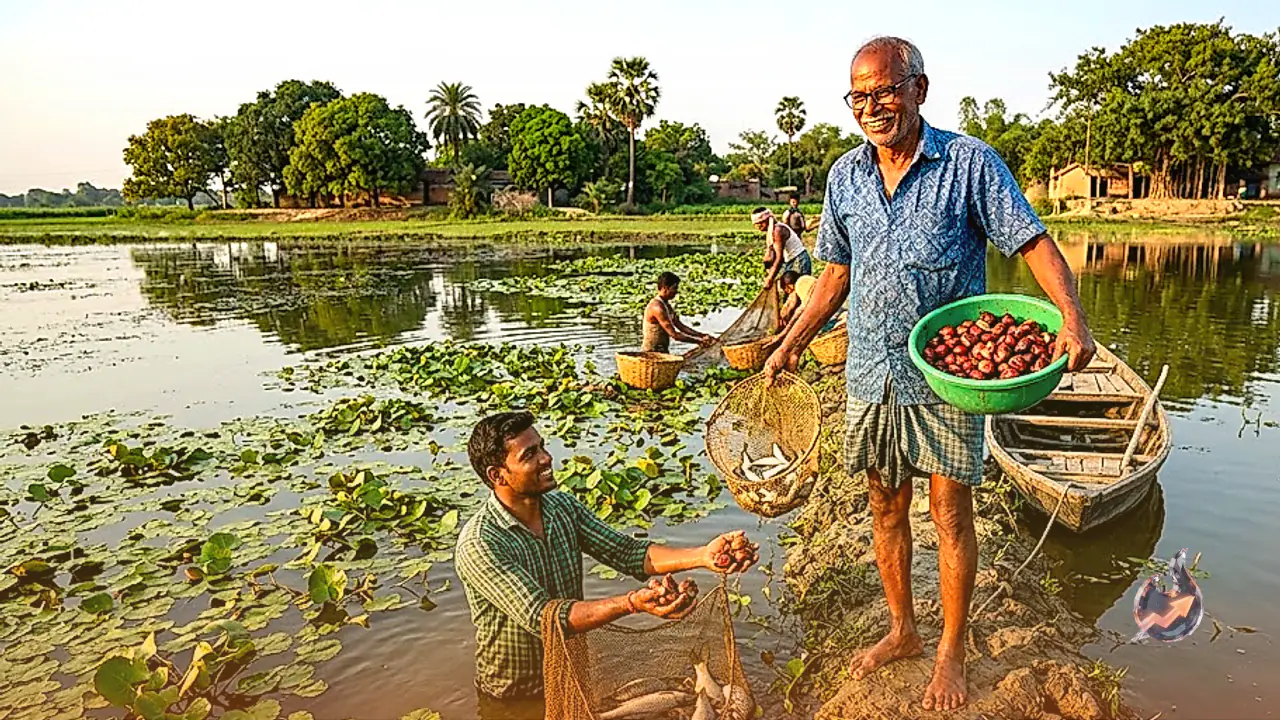
In Karinga village under the Chhapra Sadar block, hundreds of acres of fields and ponds submerge under water during the monsoon season. Normally, such land is a loss for farmers because crops like paddy cannot be grown there. But farmers in Karinga have converted this excess water into an advantage. They grow water chestnuts, known locally as singhara, on the surface of the pond, while raising fish in the same water underneath. By selling both the fish and the water chestnuts, these farmers earn a bumper income from a single plot of water.
The precaution that makes dual farming work
Running fish and water chestnut farming together requires one major precaution, or losses are almost certain. Farmers keep a portion of the pond free of water chestnut plants and leave it open. When they spray pesticide on the water chestnut crop, the fish move into this open, unplanted section of the pond. As a result, the fish are not harmed by the spray, and the water chestnut crop is not damaged either. This simple trick is what keeps the entire business model working.
Which fish are safe for water chestnut ponds, and which are not
Choosing the right fish species is the most critical step in this farming method. Raising the wrong fish means they end up eating the water chestnut pods themselves, causing heavy losses. Golden fish, silver fish, wicket fish and barari fish can be safely raised alongside water chestnut, since they do not harm the crop. Grass fish, rohu and catla, on the other hand, should be avoided in these ponds, because these species eat the water chestnut pods, ruining the farmer's entire yield.
A business passed down through generations
Karinga farmer Ramchandra Prasad has been raising fish alongside water chestnut for three to four generations. He said, "I have been raising fish along with water chestnut since my third or fourth generation." According to Prasad, his ancestors farmed the same way before him and earned double profit from it, and running this combined business successfully requires paying close attention to specific details. He too identified golden fish, silver fish, wicket fish and barari fish as safe choices, while naming grass fish, rohu and catla as species that damage the water chestnut crop.
Hundreds of farmers benefiting from this model
Hundreds of farmers in Karinga and the surrounding areas are following the same method to earn double profits. In places where fields stay waterlogged for extended periods, farmers can adopt this model to turn otherwise unusable land into a steady source of income. This is why water chestnut and fish farming together have become an established and trusted farming practice in this part of Chhapra.