





















During the Kharif season, paddy cultivation stands out as one of the most vital agricultural activities for farmers. At this stage, the paddy crop in the fields is experiencing rapid growth. Following the completion of transplantation, new leaves begin to emerge, and the process of tillering kicks off. During this delicate phase of crop development, the nutritional requirements of the plants increase significantly. If fertilizer management is executed scientifically at this juncture, not only does the overall plant growth improve, but a higher count of healthy tillers also develops, which directly influences the final yield.
The Importance of Proper Timing and Accurate Fertilizer Quantities
Many farmers fall into the misconception that applying excessive amounts of fertilizers indiscriminately will automatically increase production. However, this approach is flawed. Before applying any fertilizer, it is essential to consider the soil profile, the specific paddy variety, transplantation conditions, irrigation facilities, and the quantity of fertilizer already administered. While performing the second top dressing, farmers frequently commit errors regarding the exact proportion of urea needed. Applying surplus nitrogen causes the plants to become excessively lush and tender, which significantly elevates the vulnerability to pest attacks and diseases while also increasing the risk of lodging.
Guidelines for the Second Top Dressing
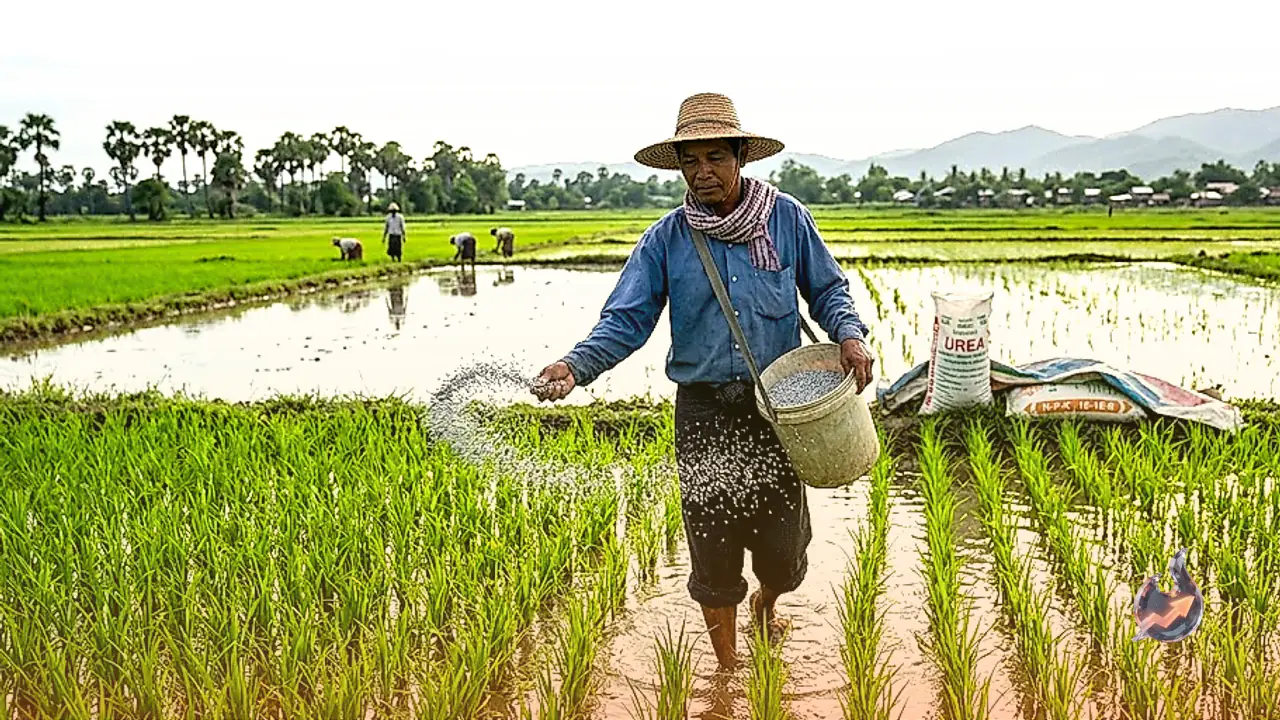
For those preparing to apply the second round of fertilizer to their paddy fields, roughly 20 to 30 days post-transplantation marks the ideal window. Maintaining precise fertilizer doses ensures robust crop health. Farmers can utilize approximately 20 to 30 kilograms of urea per acre for this second top dressing. The primary objective behind administering this second round of nutrients is to stimulate tiller multiplication and support the vigorous overall growth of the crop.
Beyond Nitrogen: The Role of Secondary and Micronutrients
Alongside the second fertilizer application, it is vital to recognize that paddy plants do not rely solely on nitrogen. For optimal development, other essential nutrients such as phosphorus, potash, sulfur, and zinc play indispensable roles. Phosphorus, for instance, dictates root development and early plant vigor. A deficiency of zinc in paddy fields can stunt plant growth severely. In such instances, distinct symptoms manifest on the leaves, and the plants appear weaker than normal, ultimately dampening harvest volumes.
Some cultivators mistake DAP and urea for identical fertilizers, whereas their compositions differ entirely. Urea primarily supplies nitrogen, whereas DAP delivers both phosphorus and nitrogen. Consequently, fertilizers must be selected based strictly on soil testing and field requirements. Before scattering urea, excess water should be drained from the field, leaving only mild moisture in the soil. Nitrogen assists in amplifying chlorophyll levels within the plants. Continuous cropping exhausts natural soil nutrients, which can only be replenished through balanced fertilization.
Agricultural scientist Dr. Pradeep Kumar Bisen explained that the second fertilizer application should be administered roughly 30 days after paddy transplantation. He noted that adequate soil moisture must be present prior to application. Maintaining proper moisture enables better nutrient absorption, translating to enhanced crop growth and elevated production.
He further cautioned that the field should not be flooded with excess water during fertilizer application. Excessive water stagnation can cause paddy leaves to turn yellow. Therefore, managing water levels meticulously during the second top dressing is imperative for protecting the crop.