























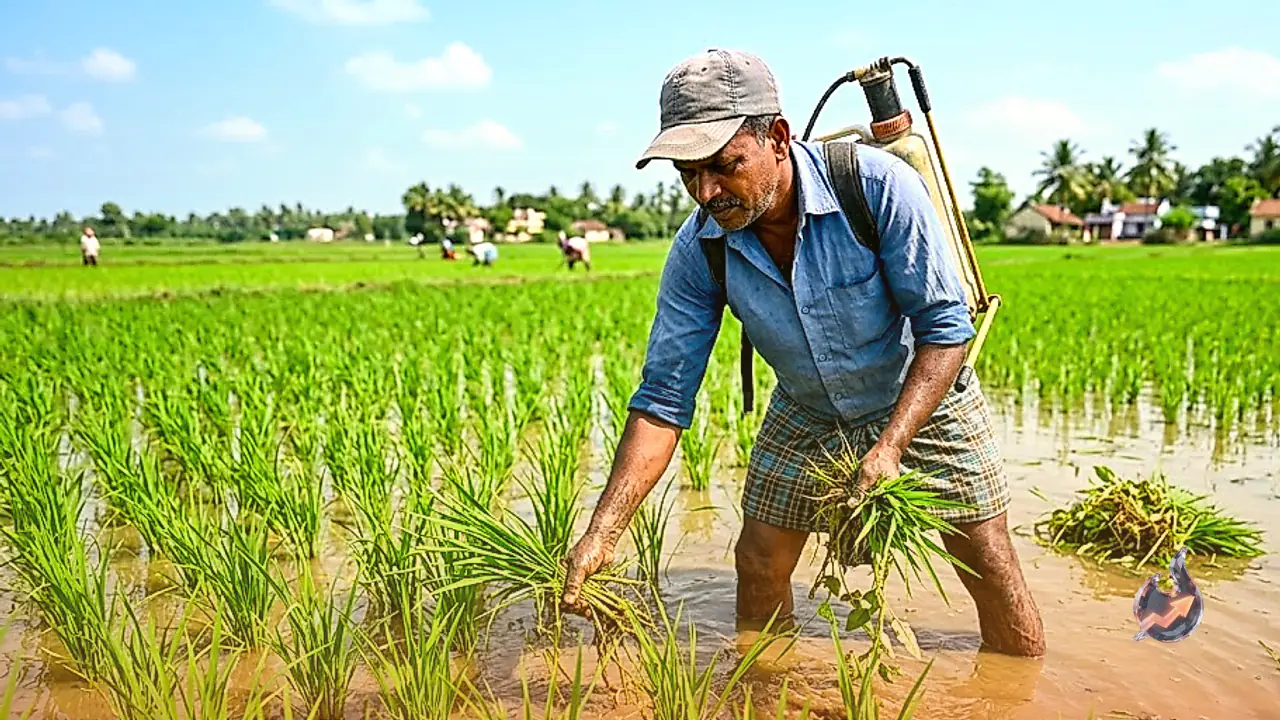

As the month of August begins in Gorakhpur, paddy cultivators face fresh hurdles in their fields. Particularly for farmers who completed sowing later than usual, the rapid growth of weeds becomes a major headache. When excess grass overtakes a field, the paddy plants struggle to receive adequate nutrients, water, and sunlight, which ultimately stunts growth and reduces final crop yields.
The Battle for Nutrients Against Weeds
Professor R.R. Singh from the Agriculture Department at Gorakhpur University explains that managing weeds during the early stages is crucial in late-sown paddy fields. If left unmanaged, unwanted vegetation begins competing directly with the paddy plants for vital soil nutrients, weakening the crop before it can mature properly.
Tackling Weeds Within the First Month
According to Professor R.R. Singh, farmers can apply Nominee Gold within roughly one month of sowing, depending on the weed infestation levels in the field. Spraying this at the correct time and in the recommended dosage helps suppress various types of weeds thriving alongside the paddy. However, before using any weedicide, growers must carefully inspect the product label to verify the precise dosage and application guidelines specifically approved for paddy crops.
Khaira Disease Threatens Crop Health
Another major complication for paddy crops in August is the onset of Khaira disease. This condition is primarily triggered by a deficiency of zinc in the soil. Once affected by Khaira disease, the leaves of the paddy plants turn brown or bronze, and overall plant growth becomes severely hampered.
Using Zinc Sulphate and Urea Solutions
Professor R.R. Singh points out that if farmers spot such symptoms in their fields, they should utilize zinc sulphate. To combat this deficiency, experts recommend mixing five kilograms of zinc sulphate per hectare with a two percent urea solution and spraying the mixture over the affected crop.
Vigilance Ensures a Healthy Harvest
The early developmental phase of paddy farming is exceptionally critical. Farmers must regularly monitor their fields and seek immediate guidance from agricultural experts whenever they notice weeds or abnormal color changes in the leaves. Timely weed management and correcting zinc shortages help maintain robust plant growth, steering farmers toward a successful harvest.