



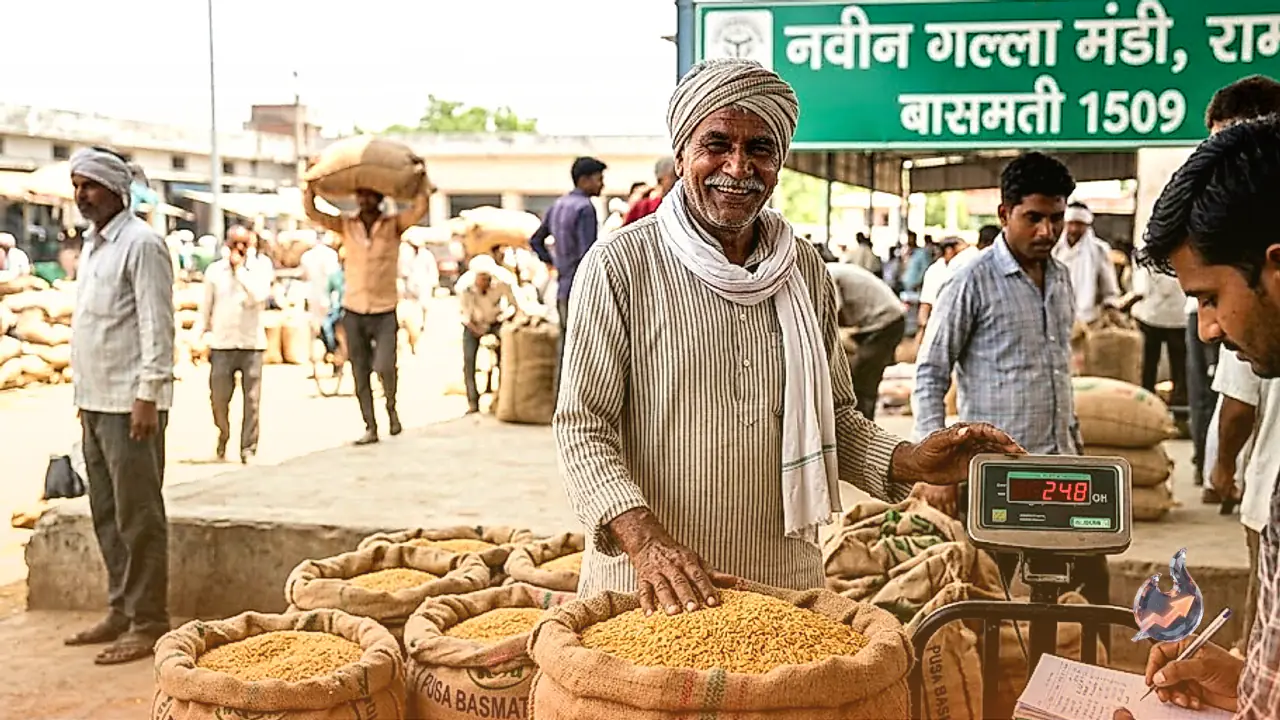



















Farmers cultivating paddy are constantly seeking crop varieties that mature rapidly, deliver generous harvest yields, and fetch lucrative market prices to maximize profitability. In Rampur district of Uttar Pradesh, 'Pusa Basmati 1509' has emerged as a preferred choice among local agriculturalists due to its impressive combination of early maturity and commercial value. Multiple farmers in the region have been growing this specific paddy variety for consecutive years with consistent success. During the current cropping season, local farmer Zahir Ali transplanted Pusa Basmati 1509 across one and a quarter acres of farmland. Based on his field experience, optimal crop management yields approximately 25 quintals of paddy per acre. In terms of current market trends, raw paddy is commanding rates around ₹4,000 per quintal, while processed rice derived from this variety sells for up to ₹120 per kilogram in commercial markets.
Rapid Maturation Within 115 to 120 Days
The standout advantage of Pusa Basmati 1509 is its exceptionally short growth cycle. While conventional basmati varieties and traditional long-duration paddy crops require extensive time in the field, Pusa Basmati 1509 reaches full harvest maturity within 115 to 120 days from planting. This swift turnaround enables farmers to vacate their fields significantly earlier than usual. From an agronomic standpoint, clearing the fields ahead of schedule provides crucial flexibility for crop rotation. Farmers can comfortably prepare their land without delay for the upcoming rabi sowing season, optimizing overall land utilization and boosting annual farm income.
High Harvest Yields of Up to 25 Quintals Per Acre
Beyond its quick growth cycle, Pusa Basmati 1509 delivers dependable output levels. According to Rampur farmer Zahir Ali, adopting proper agricultural practices allows growers to achieve yields of nearly 25 quintals per acre. Agricultural experts note that actual productivity fluctuates based on specific field conditions, including soil fertility, local weather patterns, irrigation availability, balanced fertilizer application, and cultivation techniques. When farmers maintain vigilant crop health management and timely pest protection, output potential can be maximized to hit peak harvest estimates.
Lucrative Pricing of ₹4,000 Per Quintal Boosts Revenue
Strong market valuation is a primary driver behind the growing adoption of Pusa Basmati 1509 this season. Farmers are securing prices around ₹4,000 per quintal for raw paddy at local grain markets. At an average yield of 25 quintals per acre, the gross revenue generated from paddy sales alone reaches approximately ₹100,000 (1 lakh rupees) per acre. It is essential to note that this figure represents gross income prior to accounting for operational expenditures such as seed procurement, fertilizer, pesticides, labor wages, irrigation, harvesting, and transportation. Nevertheless, the robust price point offers healthy financial returns for farming households.
Milled Basmati Rice Commands Up to ₹120 Per Kilogram
Market demand for the milled rice produced from Pusa Basmati 1509 remains robust. Zahir Ali highlighted that processed basmati rice from this variety commands retail and wholesale prices up to ₹120 per kilogram. Basmati rice enjoys widespread popularity across domestic Indian markets as well as steady demand in export destinations abroad. Traders and wholesale buyers actively offer premium rates for high-quality basmati grain. When growers maintain strict quality standards during cultivation and post-harvest handling, they can leverage strong market demand to secure top prices for their produce.
Semi-Dwarf Plant Structure Reduces Lodging Risks
Agronomically, Pusa Basmati 1509 possesses a semi-dwarf plant architecture characterized by shorter, sturdy stalks. Taller paddy varieties often suffer from lodging, a condition where heavy grain heads and weak stems cause plants to fall over flat before harvest. Lodging damages grain quality and complicates mechanical or manual harvesting. The compact plant frame of Pusa Basmati 1509 significantly mitigates lodging hazards, offering farmers greater peace of mind during field operations. However, severe weather events such as intense rainstorms, strong gales, excessive nitrogen fertilization, or waterlogged soil conditions can still trigger plant collapse.
Lower Water Requirements Support Sustainable Rotation
The compressed 115 to 120 day lifecycle of Pusa Basmati 1509 yields direct savings in water consumption. Because the crop completes its vegetative and reproductive stages quickly, it requires fewer irrigation cycles compared to long-duration paddy crops. This reduced water requirement helps lower electricity and diesel costs associated with running irrigation pumps, while simultaneously conserving local groundwater resources. For farmers facing water constraints or those seeking to harvest quickly to plant high-value secondary crops, Pusa Basmati 1509 offers a practical, resource-efficient, and profitable farming option.