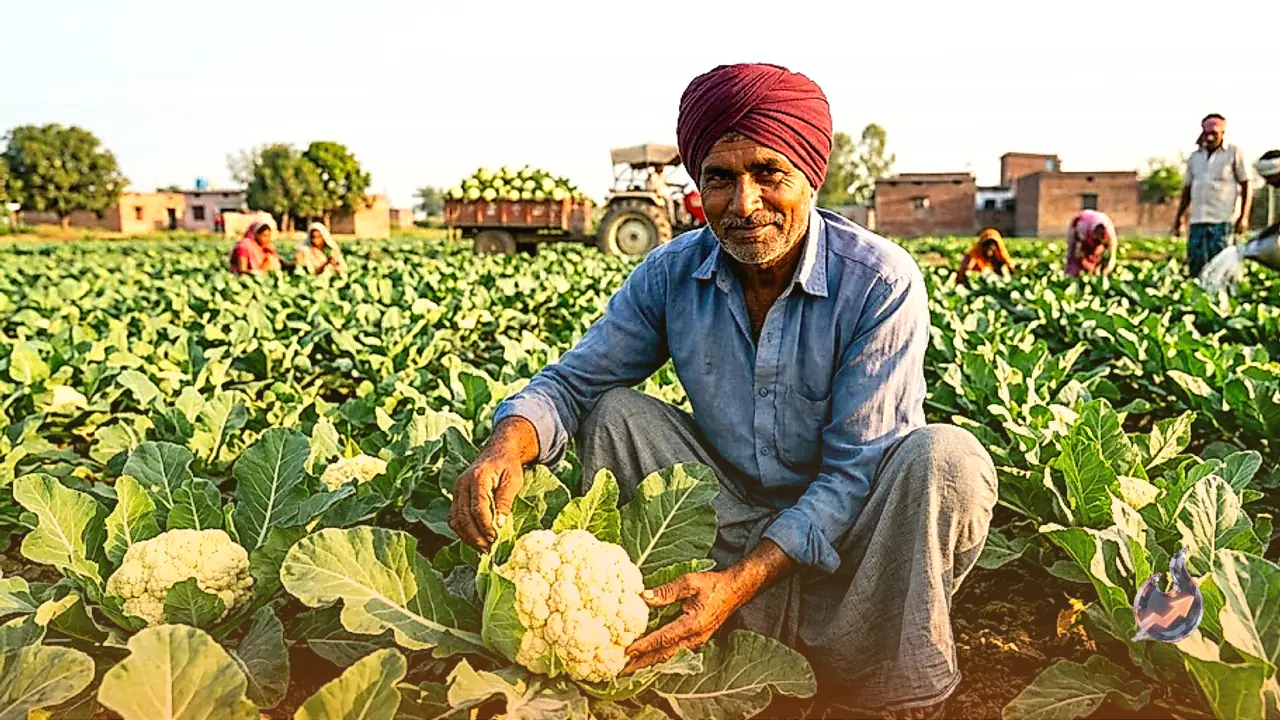
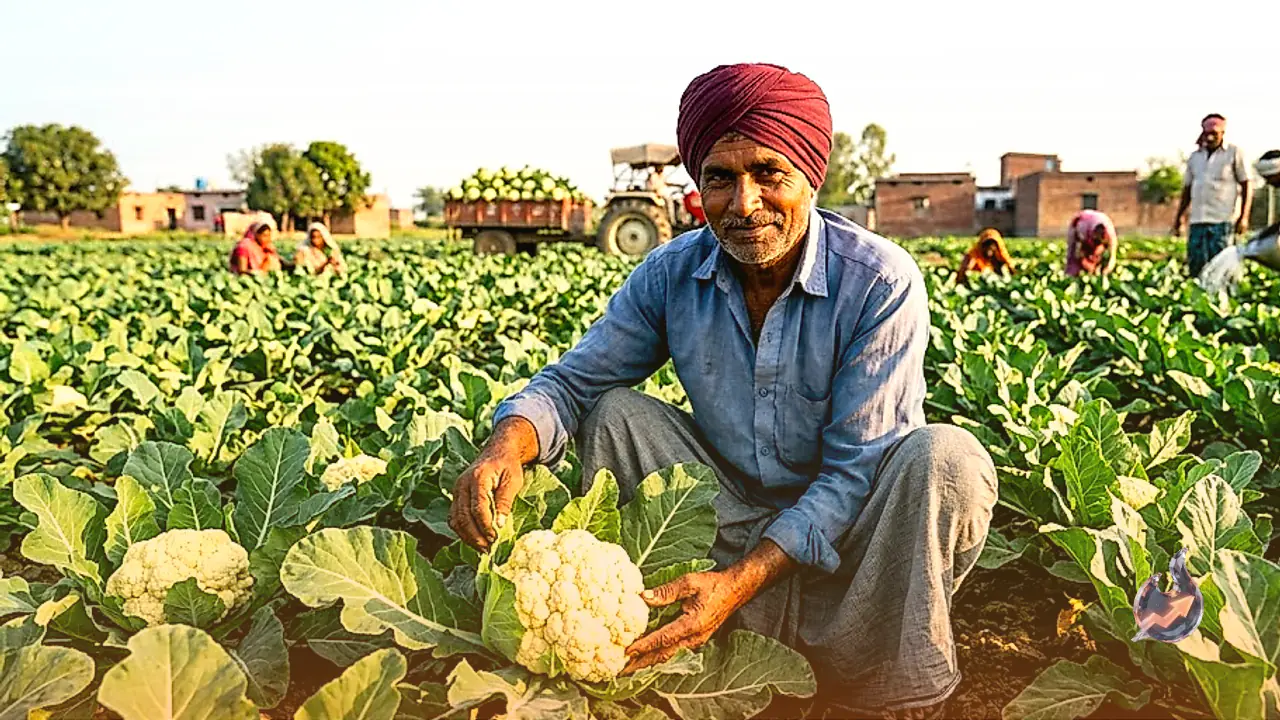





















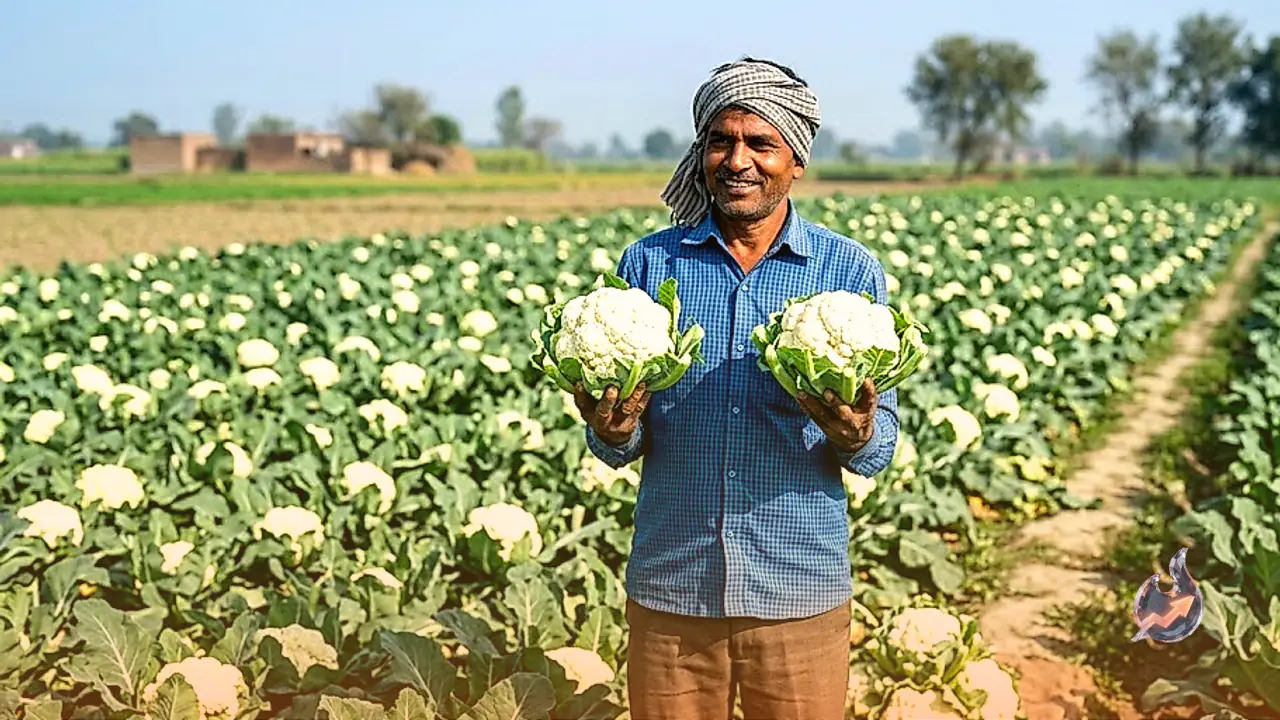

When the overall supply of a popular vegetable drops significantly in local markets, that exact window often turns into a golden opportunity for astute farmers to maximize their earnings. Vijay Pal, a dedicated farmer based in Rampur, has been successfully cultivating the Kaveri variety of cauliflower for the past two consecutive years. Keeping a close watch on shifting market demands, he timed his latest crop cycle strategically to hit the market at the right moment. Vijay Pal planted this specialized cauliflower crop across approximately 3 bighas of agricultural land. According to his field experience, because the current market arrivals for cauliflower remain quite low, he is securing very attractive prices for his ready harvest, currently fetching solid wholesale rates ranging between 45 and 50 rupees per kilogram at the local mandi.
Crop Maturity Timeline and Key Traits of Kaveri Cauliflower
Elaborating on the specifics of this agricultural venture, Vijay Pal notes that the primary advantage of growing the Kaveri variety is the ability to leverage low-supply market phases by timing the harvest correctly. Presently, individual cauliflower heads in his field weigh roughly 500 grams each, though during the peak winter months, the exact same crop witnesses a massive growth surge, with individual heads expanding anywhere between 1 and 2 kilograms. This demonstrates how seasonal shifts and harvest timings directly influence the physical size and weight of the produce. Notably, Kaveri cauliflower matures completely and becomes harvest-ready within a span of roughly 90 days. He initially prepared a dedicated nursery bed and transplanted the seedlings into the main field once they reached the ideal growth stage. Cultivating healthy seedlings during the nursery phase is vital because weak plants can severely hinder subsequent crop growth. Naturally, the growth duration and life cycle of different cauliflower varieties vary based on seasonal factors and specific seed types.
Production Estimates and Net Profit Margins Per Bigha
Vijay Pal shares that the Kaveri cauliflower variety yields a robust production output ranging between 10 and 15 quintals per bigha. Scaling this across his 3 bighas brings the cumulative harvest to an impressive 30 to 45 quintals. This explains why he places equal emphasis on marketing timing rather than focusing solely on raw production volume. He points out that low prevailing market arrivals are translating directly into premium pricing power for growers right now. After deducting all active farming expenditures and input costs from the current high market returns, he manages to save an estimated 50,000 rupees per bigha in net savings, culminating in total earnings of 150,000 rupees. However, right after transplanting tender nursery seedlings into open soil, crows often target the young shoots by pulling them out. This predatory behavior reduces plant density and creates the cumbersome burden of repeated replanting.
Simple Desi Technique to Protect Crops From Crows
To tackle the persistent nuisance of birds pulling out delicate seedlings, the farmer devised an effective and traditional indigenous method using simple thread. He tied strings at strategic intervals across various spots in the field, creating a physical barrier that made it extremely difficult for crows to descend smoothly between the rows and uproot the young plants. Safeguarding tender plants during their initial growth phase is exceptionally critical for crop establishment. Farmers can also utilize complementary protective measures such as reflective shiny ribbons or lightweight bird netting depending on their specific field requirements.