























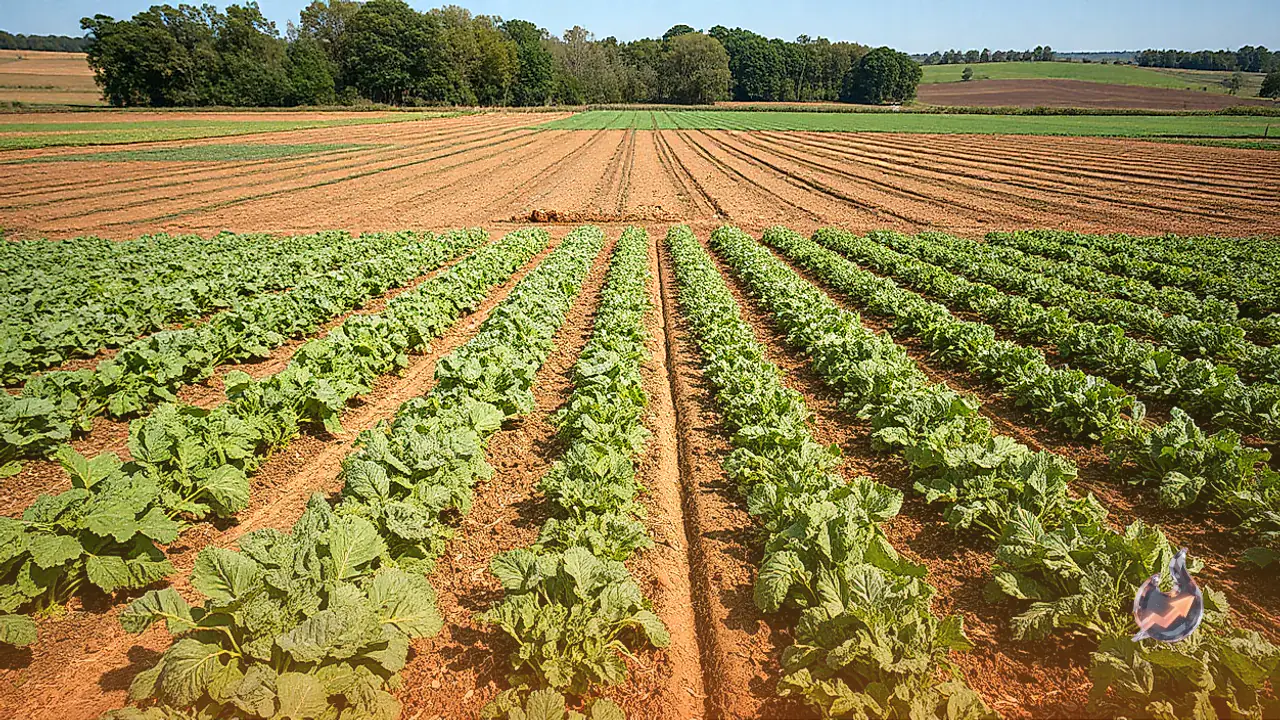

With the arrival of cooler weather, farming operations across agricultural belts are pivoting toward winter sowings. Traditional seasonal grains often require lengthy growing cycles and substantial capital commitments, which can squeeze net profit margins for smallholders. Root crops present an agile, financially rewarding alternative for producers looking to secure swift returns with managed input costs. Agricultural specialists emphasize that integrating improved cultivars of subterranean vegetables alongside precision field spacing enables growers to maximize tonnage per acre. Because these underground crops mature quickly and enjoy steady consumer demand, they provide regular household cash flow throughout the cooler months.
Beetroot Cultivars and Sowing Density
Surging dietary awareness has significantly elevated consumer appetite for fresh beetroot, turning its cultivation into an attractive commercial prospect. Growers planning field operations can rely on proven varieties such as Crimson Globe and Detroit Dark Red. The optimal planting window for this crop extends through the first week of November. Ensuring an airy, friable soil bed is crucial during land preparation so that developing taproots encounter minimal physical resistance.
Employing the dibbling technique ensures regular plant stands across the plot. Under this planting approach, an acre requires approximately 2 to 4 kg of seed. Proper vegetative expansion demands an inter-row spacing of 30 to 70 cm, while intra-row gaps between individual seedlings should measure around 10 cm. Standard cultivars yield approximately 80 quintals per acre, whereas opting for hybrid genetics can drive overall output up to 200 quintals per acre under diligent management.
Carrot Selection and Field Spacing
Carrots remain an indispensable fixture of cold-weather culinary staples, ensuring vigorous absorption across wholesale terminal markets. To harvest crisp roots with deep coloration, cultivators can deploy specialized varieties including Pusa Kesar, Pusa Rudhira, Pusa Vasudha, and Pusa Vrishti. The recommended timeline for drilling these seeds spans the tail end of October through the opening week of November, allowing juvenile plants to leverage the early onset of seasonal chills.
Establishing hybrid stands requires a seeding rate of 2 to 3 kg per acre. Field layout should maintain 30 cm between parallel rows and 60 cm between neighboring plants, ensuring adequate solar penetration and uninhibited root thickening. Harvesting cycles commence in December and stretch through March, reliably generating 80 to 120 quintals per acre, with high-performing stands frequently exceeding those baseline marks.
Quick Cash Turns Through Radish Cultivation
Radish stands out as one of the fastest maturing vegetable crops available, providing cultivators with rapid cash injections. Producers targeting quick turnarounds can utilize established selections like Pusa Chetki, Pusa Reshmi, Chinese Pink, and Kashi Hans. Agricultural experts identify November as the ideal planting window for this crop. Seed requirements remain remarkably minimal, requiring just 1 kg of seed per acre to achieve full field establishment.
Furrows should be drawn 30 cm apart, with emerging sprouts thinned to an in-row spacing of 10 to 15 cm. Providing adequate room prevents root crowding and promotes uniform, marketable taproots. Reaching markets between January and April, a well-managed radish plot yields an average of 120 quintals per acre.
Maximizing Margins With Winter Potato Crops
Commonly hailed as the king of vegetables, potato forms the cornerstone of commercial winter root cropping. For commercial plots, prominent high-performing selections encompass Kufri Chandramukhi, Kufri Jyoti, Kufri Bahar, and Kufri Chipsona. Planting operations can be executed across a flexible timeframe spanning September through December. Seed tuber requirements are substantial, calling for roughly 12 quintals of planting material per acre.
Tubers must be placed at a depth of 8 to 10 cm beneath the ridge surface to prevent tuber greening caused by direct sunlight exposure. Field spacing calls for 45 cm between planting lines and 25 cm between seed pieces along the ridge. Once digging begins between January and March, growers can expect output figures exceeding 80 quintals per acre for storage or direct spot marketing.
Low-Cost Turnip Production for Reliable Returns
Modest input costs coupled with steady wholesale absorption make turnip cultivation an accessible proposition for budget-conscious farmers. The cultivar Purple Top White Globe serves as the benchmark choice for winter cropping. Field sowings are most effectively conducted during the month of November, keeping seed overhead remarkably low at 1 to 1.5 kg per acre.
Field rows should be spaced 30 cm apart, maintaining an intra-row distance of 15 cm between plants. Harvesting operations running from December through March yield up to 120 quintals per acre. The crop thrives under moderate irrigation and basic field sanitation, producing reliable income with minimal management fuss.
Crucial Agronomic Guidelines for Root Beds
Senior scientist Dr. Shailendra Singh of Krishi Vigyan Kendra Bahraich points out that thorough seedbed preparation serves as the foundation for bountiful root crop yields. Deep plowing prior to sowing is imperative to fracture compacted layers, enhance aeration, and provide loose soil volume for expanding taproots. Furthermore, efficient field drainage channels must be carved out, as stagnant surface moisture triggers rapid root rot and spoilage. Dr. Shailendra Singh also notes that seeds should be placed at a precise depth of 1 to 2 cm to safeguard uniform germination and promote vigorous early root development.