























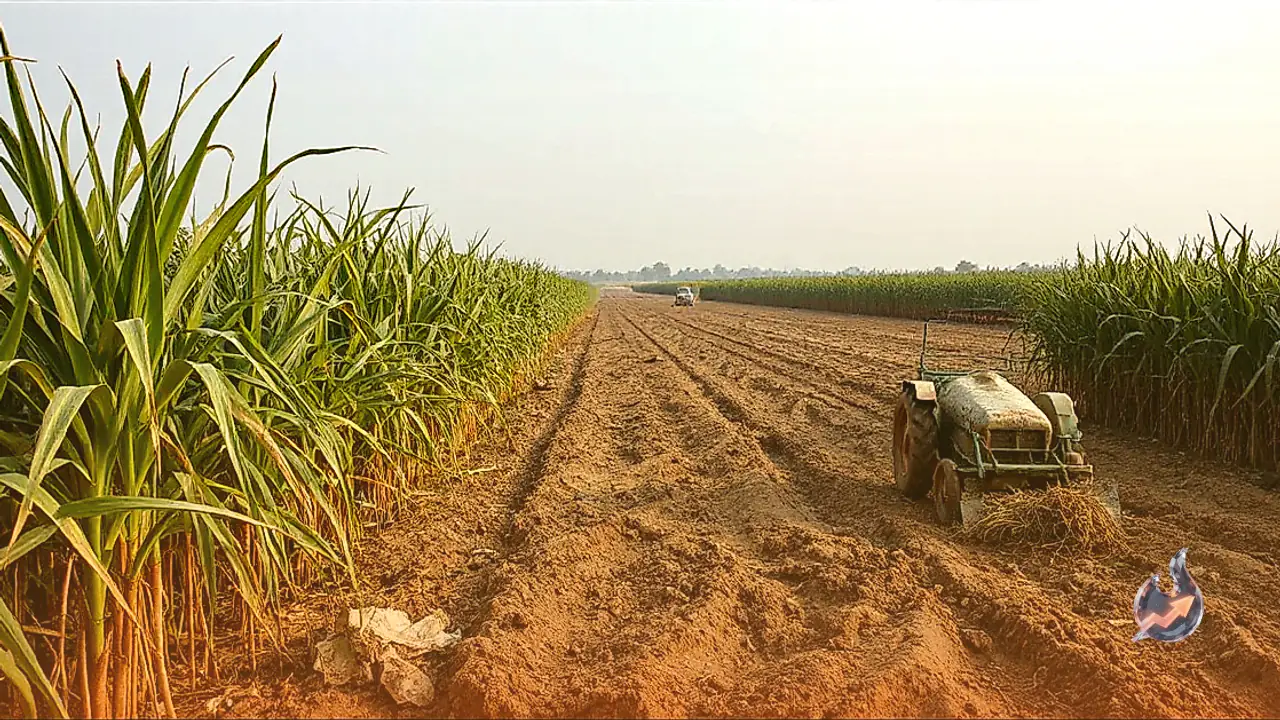

Agriculture forms the backbone of the local economy in Lakhimpur Kheri, where farmers cultivate sugarcane on a massive scale. A large number of residents depend entirely on sugarcane farming for their livelihood and sustenance. With the onset of the winter season, the sowing of sugarcane has officially commenced across the district. Farmers are actively preparing their fields in anticipation of superior crop yields and enhanced financial returns. Agricultural experts note that combining advanced crop varieties with proper farming techniques can significantly boost profitability for growers.
Two Decades of Farming Experience
Chhatrapal, a local farmer based in the district, has been dedicated to sugarcane cultivation for the past 20 years. Decades of hands-on farming experience have provided him with deep expertise in sowing techniques, crop maintenance, and harvest optimization. Chhatrapal states that he currently focuses on sowing the COJ 85 variety of sugarcane. According to him, this is an early-maturing variety that gives cultivators strong expectations of securing abundant harvests.
Seed Requirements and Field Preparation
Sharing practical insights, Chhatrapal explains that sowing sugarcane across one bigha of land requires approximately five quintals of seeds. The exact quantity of seeds needed depends heavily on the condition of the soil, the chosen sowing method, and the overall quality of the cane cuttings. He emphasizes that proper management right from the beginning is vital for sugarcane farming. Thorough field preparation and the selection of healthy seeds directly promote robust plant growth. Farmers must evaluate their local soil and climate conditions before selecting a crop variety for sowing.
Yield Potential and Crop Management
According to Chhatrapal, cultivating the COJ 85 variety can yield more than 70 quintals of sugarcane per bigha. However, actual production levels can fluctuate based on soil fertility, irrigation availability, weather patterns, and ongoing crop management practices. If farmers maintain diligent crop supervision, apply chemical fertilizers on time, and ensure consistent moisture levels within the soil, total production can see a significant upward push.