






















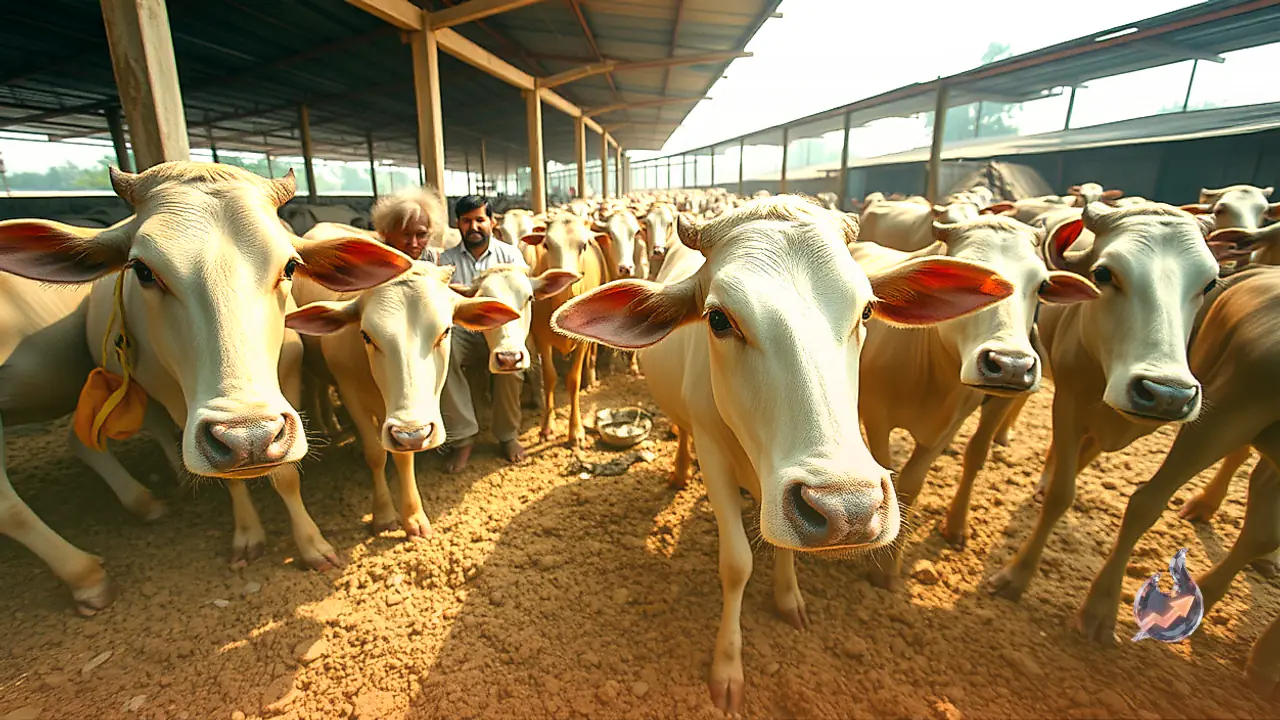

Livestock rearing alongside traditional agriculture has increasingly emerged as a viable commercial pursuit, yet running a profitable dairy farm demands strict management far beyond initial expectations. In Bhagalpur, seasoned livestock operators point out that while setting up cattle sheds appears straightforward, maintaining financial viability is an intensely delicate undertaking. Much like poultry or fisheries operations, cattle farming requires operators to balance strict input expenditures against multiple revenue streams to avoid operational losses. A widespread miscalculation among beginners is the singular reliance on milk sales to generate profit. Drawing from long-standing operational experience, dairy farmer Anil Sharma explains that turning a dairy setup into a resilient venture requires integrating cattle dung and cow urine into the core revenue model rather than relying solely on raw milk yields.
Building a Resilient Farm Budget Beyond Single Product Dependency
Long-term viability in dairy farming hinges on treating the entire facility as an integrated bio-resource unit rather than a single-commodity venture. According to Anil Sharma, dairy operations are exceptionally sensitive to routine management practices, where minor oversights in cattle nutrition, barn hygiene, hydration, and disease surveillance directly depress daily milk yields. When operating costs rise and milk remains the sole earning asset, thin profit margins quickly turn into operating deficits. To counter this vulnerability, operators need to capture the economic value of every by-product generated by the herd. Developing structured channels to process and sell cattle dung and cow urine provides a secondary financial cushion that absorbs feed price volatility and stabilises overall cash flows.
Turning Livestock By-Products into Reliable Commercial Resources
A frequent error among dairy operators is treating herd excretion as unusable waste, which directly limits the enterprise's earning potential. Anil Sharma emphasises that both dung and urine possess immediate market value when managed systematically. Dung can be processed into traditional dried cakes for domestic or ritual fuel demands, or decomposed into organic compost for local agricultural use. Furthermore, when supported by adequate processing knowledge and appropriate handling, cow urine serves as an input for specialised farming preparations. Planning deliberate collection, processing, and distribution protocols for these by-products eliminates waste accumulation in the barn while opening steady supplementary revenue streams.
The Risks of Passive Management and Labor Over-Reliance
Consistent, observant animal husbandry forms the backbone of any sustainable dairy business. Anil Sharma cautions that several entrepreneurs establish facilities with adequate capital but subsequently delegate all day-to-day oversight entirely to hired laborers. This passive management model frequently leads to declining herd performance, because livestock health, feed intake, hydration patterns, and early symptoms of disease demand attentive, owner-led supervision. A successful farm manager must personally evaluate daily milk production metrics, verify feed rations, ensure clean resting conditions, and track veterinary schedules. Direct involvement ensures rapid intervention before minor health setbacks turn into severe milk drops.
Prudent Budgeting and Tapping Local Demand for Organic Products
Safeguarding operational margins requires capturing even modest local income sources that conventional operators tend to dismiss. Anil Sharma notes that where local retail or agricultural demand exists, the sale of dried dung cakes and organic manure can systematically offset smaller daily utility and maintenance expenses. Before purchasing dairy stock, prospective operators must formulate a comprehensive cost ledger accounting for animal procurement, balanced nutritional feeds, labor wages, medical treatments, and facility maintenance. Calculating projected revenues across milk, dung, and urine simultaneously allows entrepreneurs to establish realistic profitability projections and build an economically sound dairy business.