






















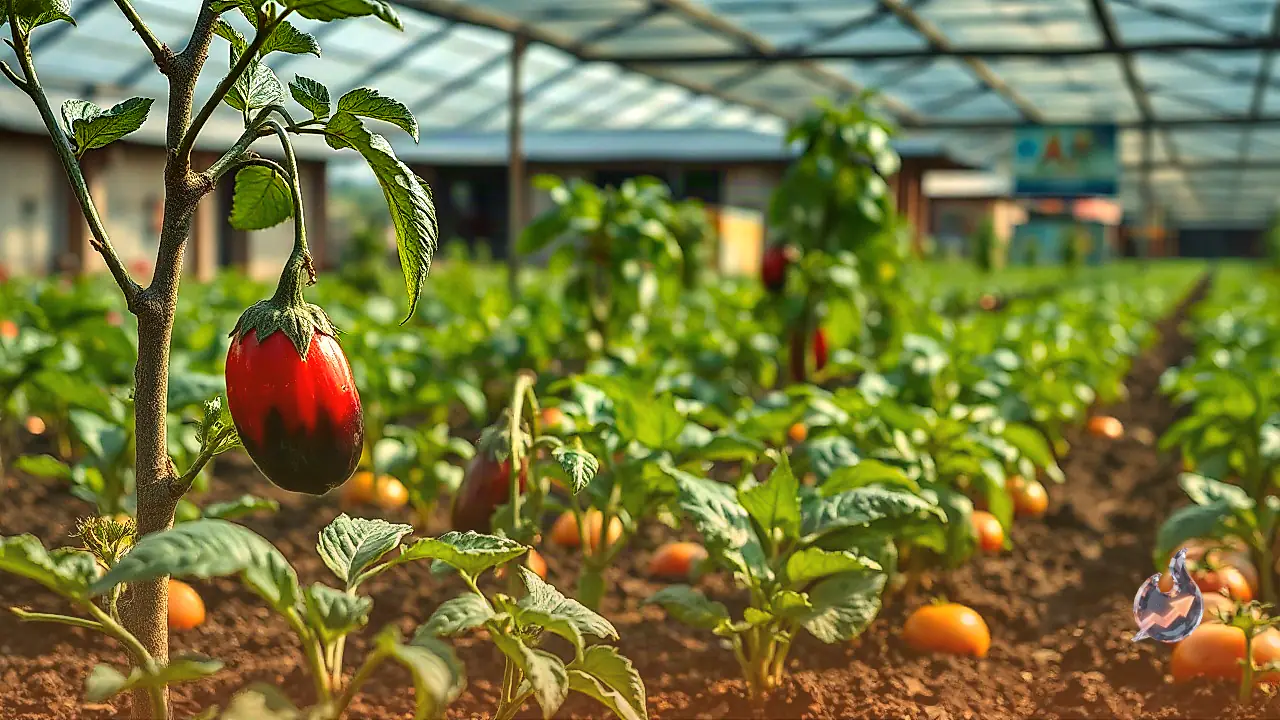

Cultivating crops like eggplants, chilies, and tomatoes often presents a lucrative opportunity for farmers to secure strong earnings within a short timeframe. Those preparing to plant these vegetables in their fields are currently gearing up for transplantation. Selecting high-grade plants alone is insufficient for a successful harvest; meticulous attention must also be paid to soil preparation, drainage, proper spacing between plants, and irrigation. Minor oversights during these initial stages can negatively impact the subsequent growth and overall yield of the crop, making careful management essential from start to finish.
Soil Preparation And Drainage Management
The foundation of a robust harvest begins with thoroughly clearing the field and plowing the soil until it becomes fine and loose. If water tends to accumulate in the plot, establishing an effective drainage system is crucial. Farmers should thoroughly mix well-decomposed farmyard manure or compost into the soil. Creating appropriate ridges or raised beds depending on the field conditions helps prevent water stagnation while ensuring that plant roots receive adequate aeration.
Nurturing Healthy Nurseries
Rather than sowing seeds directly into the open field, raising a nursery first is widely recommended for eggplants, chilies, and tomatoes. This practice simplifies the early care of young plants and allows for the selection of vigorous seedlings for final transplantation. Obtaining uniform, strong plants aids in better crop development across the field, while weak or diseased specimens can be filtered out beforehand. This early sorting yields a favorable impact on the subsequent growth stages and final produce.
Timing And Seasonal Considerations
The month of September is generally suitable for initiating preparations for these vegetable crops, though the ideal windows vary slightly among them. Nurseries for eggplants can be prepared from September through October, with seedlings becoming ready for transplantation in roughly four to five weeks. For chili crops in plain regions, nurseries are often sown in September, whereas the designated period for raising tomato nurseries in Uttar Pradesh ranges from July to September. Farmers can thus ready healthy plants based on local weather patterns.
Selecting High-Quality Seedlings
During the purchase or preparation of seedlings for transplantation, a careful inspection of their health is vital. The plants should appear green, robust, and entirely disease-free. If any seedling exhibits yellowing foliage, a fragile stem, or signs of pest infestation, it should be discarded rather than planted in the field. Healthy initial specimens provide greater assurance of vigorous subsequent development. Prioritizing quality over sheer quantity remains a key operational principle.
Maintaining Proper Plant Spacing
Maintaining adequate distance between individual plants during transplantation is critically important. Farmers occasionally crowd plants too closely together in an effort to maximize density, which restricts airflow and causes humidity to linger around the foliage for extended periods. Such conditions heighten the susceptibility to various diseases and pest attacks. Maintaining proper spacing dictated by the specific variety of eggplant, chili, or tomato grants plants enough space to spread and thrive.
Moisture Control And Irrigation
Before introducing plants to the field, verifying the presence of sufficient moisture in the soil is necessary. Planting in excessively dry earth can hinder new roots from establishing themselves firmly. Following transplantation, a light irrigation session helps settle the soil snugly around the root zone. However, avoiding waterlogging is equally critical, as excess moisture damages delicate roots. Water should therefore be applied strictly according to immediate requirements during the early stages.
Staking And Ongoing Crop Maintenance
Securing a top-tier harvest demands more than just superior seeds; continuous crop care is indispensable. Approximately twenty to twenty-five days after transplanting tomatoes and similar crops, plants should be supported upward using bamboo sticks or stakes, a practice commonly known as staking. This prevents plants from sprawling across the ground and helps preserve fruit quality. Additionally, preventing weed growth through timely weeding, monitoring soil moisture for targeted irrigation, and keeping a watchful eye on pest activity ensures high-end agricultural results.