








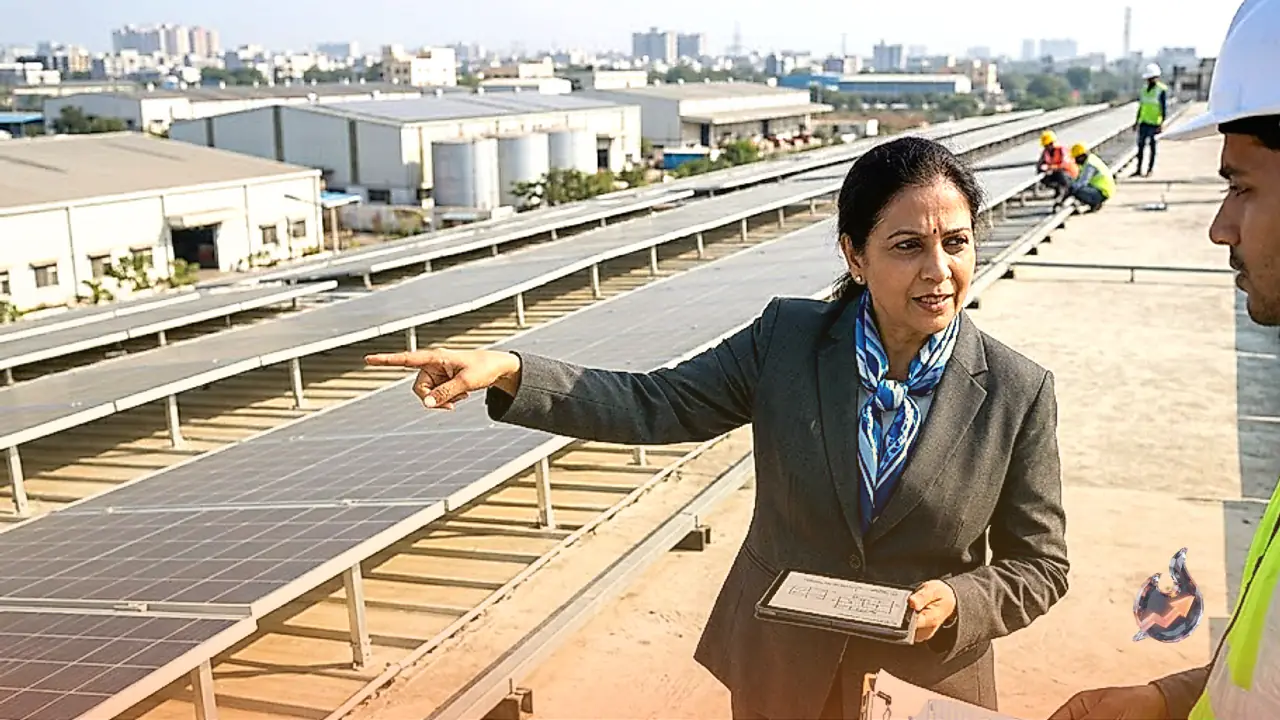














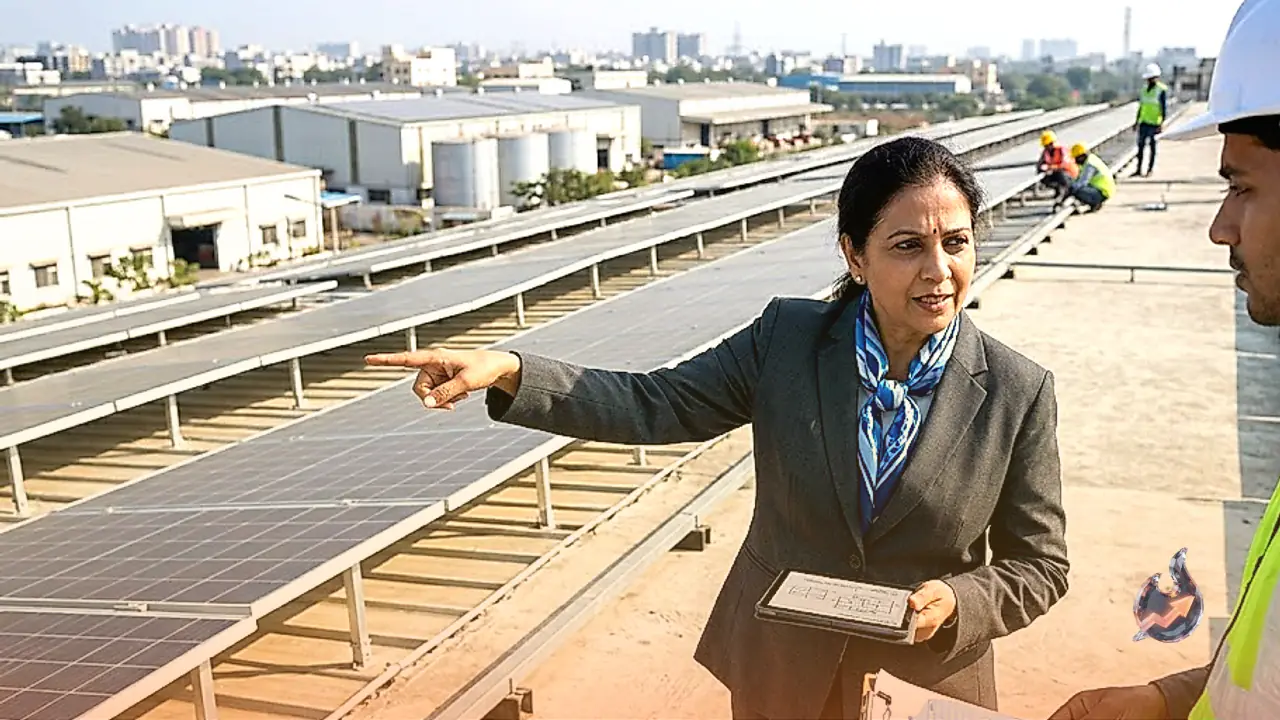

New Delhi. Shares of solar energy sector player Borosil Renewables have faced persistent downward pressure and sluggish movement over the past five years, but the company has now charted an aggressive strategy aimed at delivering stronger returns to investors in the future. Borosil Renewables has formulated an aggressive roadmap to enter the rooftop solar business, marking a direct strategic expansion into consumer-facing operations. Moving beyond just manufacturing solar glass, the company is now expanding its footprint into the branded distributed solar solutions market. Management expects this new business segment to contribute around 100 crore rupees to revenues in its very first operational year, which will serve as a pilot phase.
Surging Demand and Government Clean Energy Schemes
Pradeep Kumar Kheruka, Chairman of Borosil Renewables, noted that there is massive demand for solar rooftop installations across India. Driven by the National Solar Mission and the Pradhan Mantri Suryodaya Yojana launched in February 2024, demand for residential solar rooftops has witnessed an extraordinary surge. The central government has set an ambitious target to connect 1 करोड़ homes with solar energy through rooftop installations by March of next year, and the company is strategically positioned to capture a major share of this expanding market.
Rooftop Potential and Comprehensive Solutions
Data from the Council on Energy, Environment and Water alongside official government records indicate that India holds a massive solar power generation capacity of 796 gigawatts. The vast majority of this potential, amounting to 637 gigawatts, can be harnessed directly from residential rooftops, comprising 363 gigawatts in rural regions and 274 gigawatts in urban areas. Borosil Renewables is offering complete turnkey rooftop solar solutions to consumers, which encompass solar panels, inverters, and lithium-ion batteries. Among these components, the inverters and lithium-ion batteries are currently procured through imports. By handling sales, installation, and comprehensive after-sales services for these packages, the company is successfully venturing into a direct-to-consumer business model.
Massive Capacity Scale-Up Through New Furnaces
The company has also officially announced plans to drastically scale up its manufacturing capacity. Borosil Renewables currently produces 1,000 tonnes of solar glass per day. With the installation of two new furnaces each having a capacity of 300 tonnes per day, the total manufacturing capacity will scale up to 1,600 tonnes per day. Management anticipates that this additional capacity will become operational between December of this year and March of next year, with the full financial impact materializing during the 2027-28 fiscal year. Kheruka stated that operating at full capacity utilization will drive an estimated 60% increase in company revenues. Presently, the company maintains an EBITDA of approximately 32%, and officials expect a substantial enhancement in EBITDA once the two new furnaces go live.
Import Dependency and Historical Stock Performance
India remains heavily dependent on imports to meet its requirements for solar glass. The country imports roughly 8,500 tonnes of solar glass daily, whereas domestic production stands at a mere 1,700 tonnes. Given this wide deficit, the demand for Make in India solar glass is scaling up rapidly. A recent report by Jefferies highlighted that the three major industries driving the next phase of economic growth in India will be defense, aerospace, and solar power.
Meanwhile, the company's stock has faced prolonged downward pressure over the past several years. Over a five-year horizon, the stock has delivered a return of around 45 percent. Over the past three years, the return has been restricted to just 3 percent. Shorter-term metrics show a negative return of up to 10 percent over two years, a 19 percent decline over one year, and a 24 percent drop over a three-month period. Systematic Investment Plan returns have similarly reflected negative trajectories, showing a 26 percent decline over one year, a 13 percent drop over two years, and an 8 percent negative return over three years.