




















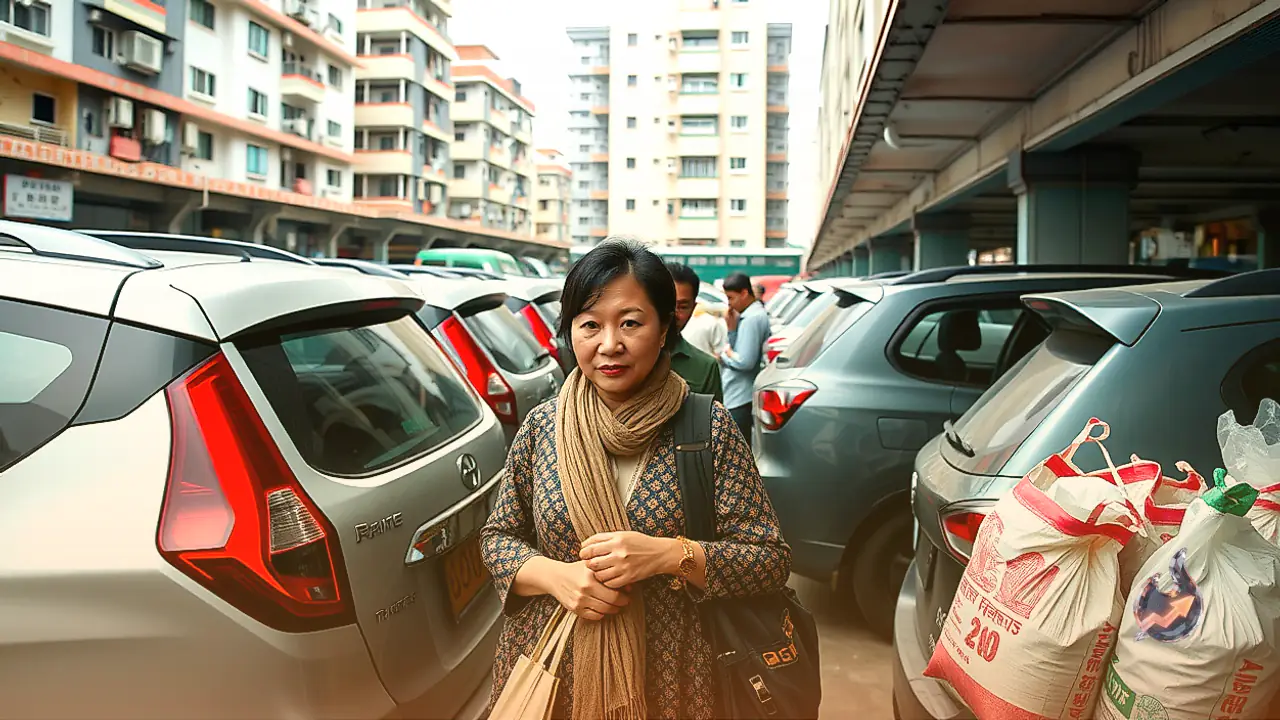

When people deploy capital into real estate, their attention almost instinctively turns toward housing units, commercial storefronts, or raw land plots. However, an investor from Hunan province in China challenged conventional wisdom by targeting an asset class that most homeowners took for granted. Anticipating that surging vehicle ownership would soon outpace urban capacity, she pooled substantial capital into dedicated parking spots before the surrounding neighborhood had even fully matured. Today, that counter-intuitive gamble yields substantial regular income alongside staggering capital appreciation.
Backing a Cash-Strapped Developer with a 40 Percent Bulk Buyout
The groundwork for this unusual property acquisition was laid back in 2018 upon the completion of a major residential development. At the time, incoming residents focused their financial commitments purely on residential apartments, leaving parking inventory largely untouched. The project developer was experiencing severe liquidity constraints and urgently required cash flow to balance its books.
Recognizing the developer's financial bind and the sheer scarcity of vehicle bays that would inevitably follow, the woman stepped forward to execute a bulk acquisition. She secured 196 individual parking spaces in a single sweep, taking ownership of roughly 40 percent of the development's entire parking inventory. The transaction was settled with an upfront payment of 1.4 crore yuan, translating to roughly 20 lakh dollars or approximately 19.36 crore rupees (close to 20 crore rupees). While onlookers initially dismissed the outlay as an impractical and risky gamble, market dynamics soon began shifting heavily in her favor.
Rapid Civic Growth Drives Intense Demand for Vehicle Space
Following the buyout, the surrounding locality experienced rapid infrastructural progress. What was once an underdeveloped zone quickly filled with modern shopping malls, reputable schools, healthcare centers, and extensive civic amenities. These developments triggered an influx of affluent families moving into the community, driving private automobile ownership to unprecedented highs.
With hundreds of cars arriving in the neighborhood, the structural shortfall of parking infrastructure became glaringly obvious. Because she held legal control over four out of every ten bays in the complex, residents found themselves entirely dependent on her inventory to park their personal vehicles securely. Her once-idle asset transformed into the neighborhood's most sought-after urban commodity virtually overnight.
Fourteen Lakh Rupees in Monthly Rent Sparks Friction with Neighbors
Leveraging the sharp demand-supply gap, the owner began leasing her spaces to local drivers at market rates that were double the prevailing pricing seen in 2018. Each leased slot generates an income of 7,258 rupees per month. Aggregated across 192 leased parking bays, her monthly rental collection reaches roughly 14 lakh rupees in steady cash flow.
This rental scale sparked friction within the residential community. Frustrated car owners organized to push back against the rates, formally urging her to slash the monthly fee to 4,334 rupees per bay. Firm in protecting her commercial margins, she unequivocally refused their request, noting that private assets leased in open markets are not subject to artificial discounts.
Eighty Percent Resale Premium and Court Ruling in Her Favor
The upside of her investment is not limited to recurring rental checks; capital appreciation has also unlocked substantial windfall profits. She has already structured resale agreements for several bays at premiums exceeding 80 percent of her initial purchase cost. Individual spaces that were acquired at a fraction of their present value are now commanding 15,000 dollars each, equivalent to roughly 14.52 lakh rupees.
Aggrieved neighbors ultimately mounted a legal challenge in an attempt to void her bulk transaction and break her control over the facilities. However, the court dismissed their plea entirely and ruled squarely in the investor's favor. In its official judgment, the court observed that every property buyer had the equal opportunity to purchase those parking spaces when the project was delivered. Because none of the other residents were willing to take the financial risk at that critical juncture, the woman who shouldered the uncertainty cannot be legally barred from enjoying the rewards of her successful commercial foresight.