



















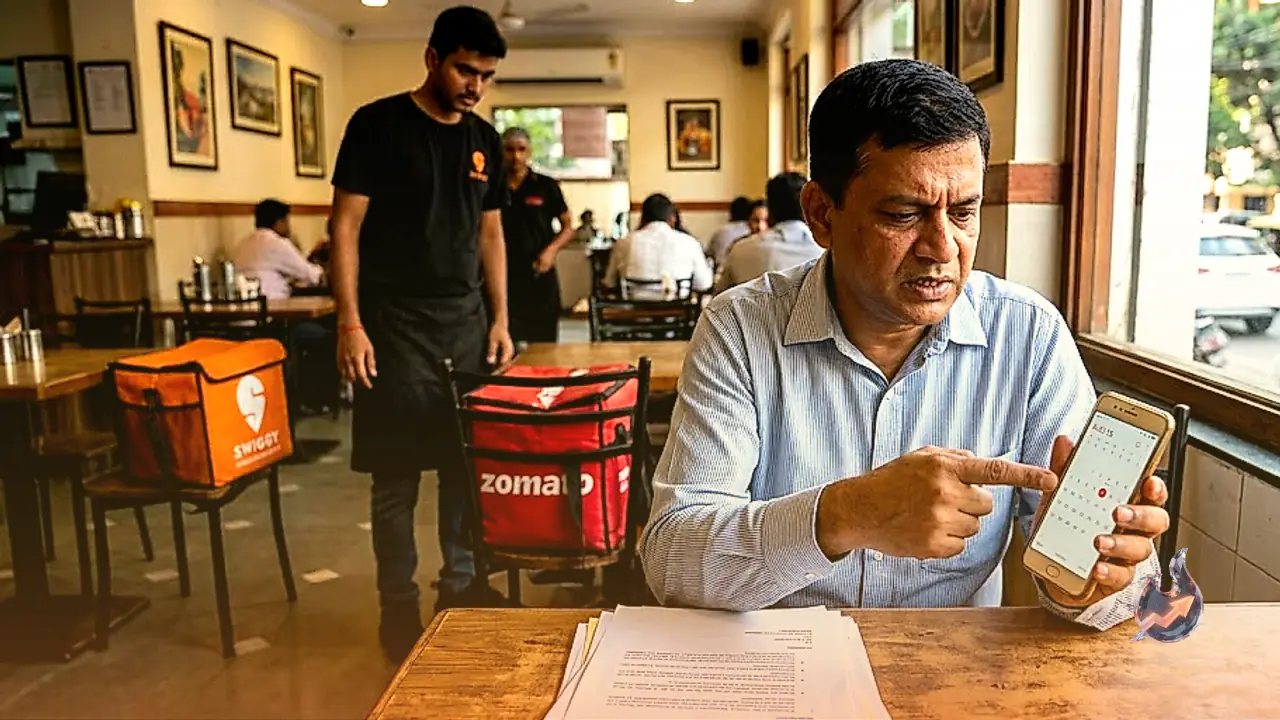

Food delivery services across Bengaluru face a major operational disruption as more than 1,000 dining establishments and hotels prepare to halt all order processing through food aggregators Swiggy and Zomato starting August 15. The aggressive collective action stems from long-standing grievances regarding high commission fees, unexpected payment deductions, and forced participation in discount schemes that restaurant owners claim are wiping out their profit margins.
Financial Pressure and High Commissions
According to representative industry bodies, current commission rates charged by Swiggy and Zomato range between 8% and 28%, determined by the specific establishment type and service tier. Beyond baseline commissions, restaurant operators face compounding overheads including platform advertising fees, promotional campaigns, payment gateway charges, and sponsored visibility options required to maintain app prominence.
S. Subramanya Holla, President of the Bruhat Bengaluru Hotels Association (BBHA), highlighted that these cumulative deductions leave establishments with shrinking margins, compelling many to increase menu pricing to keep operations viable. Providing a concrete financial breakdown, P.C. Rao, Honorary President of the Bengaluru Hotel Association, noted that a restaurant generating Rs 1 lakh in gross orders via these aggregators often receives barely Rs 40,000 after accounting for platform commissions, customer discounts, and operational deductions. The coordinated movement is spearheaded by the Bruhat Bengaluru Hotels Association (BBHA), the Bengaluru Hotel Association, the Karnataka Hotel Association, and the National Restaurant and Bar Association (NRBA).
Key Demands Submitted to Food Aggregators
To establish fairer operating standards, the associations have submitted a structured resolution to both Swiggy and Zomato containing the following key demands
- Immediate cessation of automatic payment deductions following customer complaints prior to independent verification.
- Exemption of restaurants from bearing financial losses when orders are cancelled after food preparation is complete.
- Mandatory explicit written consent from restaurants before enrolling them in promotional campaigns, advertising spends, or discount programs.
- Provision of itemised monthly settlement reports detailing every applied deduction and charge.
- Assignment of a dedicated relationship manager to each restaurant partner to expedite dispute resolution and address operational bottlenecks.
The August 15 Deadline and Potential Actions
The hotel associations have requested a formal written response from both Swiggy and Zomato prior to August 15. Representatives warned that failing a satisfactory resolution by the deadline, participating establishments will suspend all operations on both delivery applications and initiate a citywide boycott.
Several owners have voiced readiness to pause platform operations independently. Restaurant owner Ajith Shetty Kiradi indicated he would stop fulfilling Swiggy orders if grievances remain unaddressed, while association representative Vasanth Giliyar stated that legal remedies may also be pursued if formal discussions stall.
Market Competition and Industry Outlook
The standoff coincides with structural shifts in India's food delivery ecosystem, as new alternatives prepare for rollout, including Rapido's "Ownly", Flipkart's upcoming food delivery network, and expanding ONDC-based food aggregators.
Arun Adiga of Bengaluru's iconic Vidyarthi Bhavan suggested that increased market choices could enhance bargaining leverage for restaurant partners, potentially driving down commission rates over time. However, BBHA President S. Subramanya Holla clarified that the boycott movement is intended strictly to build a transparent, equitable commercial environment rather than align with any specific market player. As of July 29, neither Swiggy nor Zomato has released a public response regarding the demands.


