





















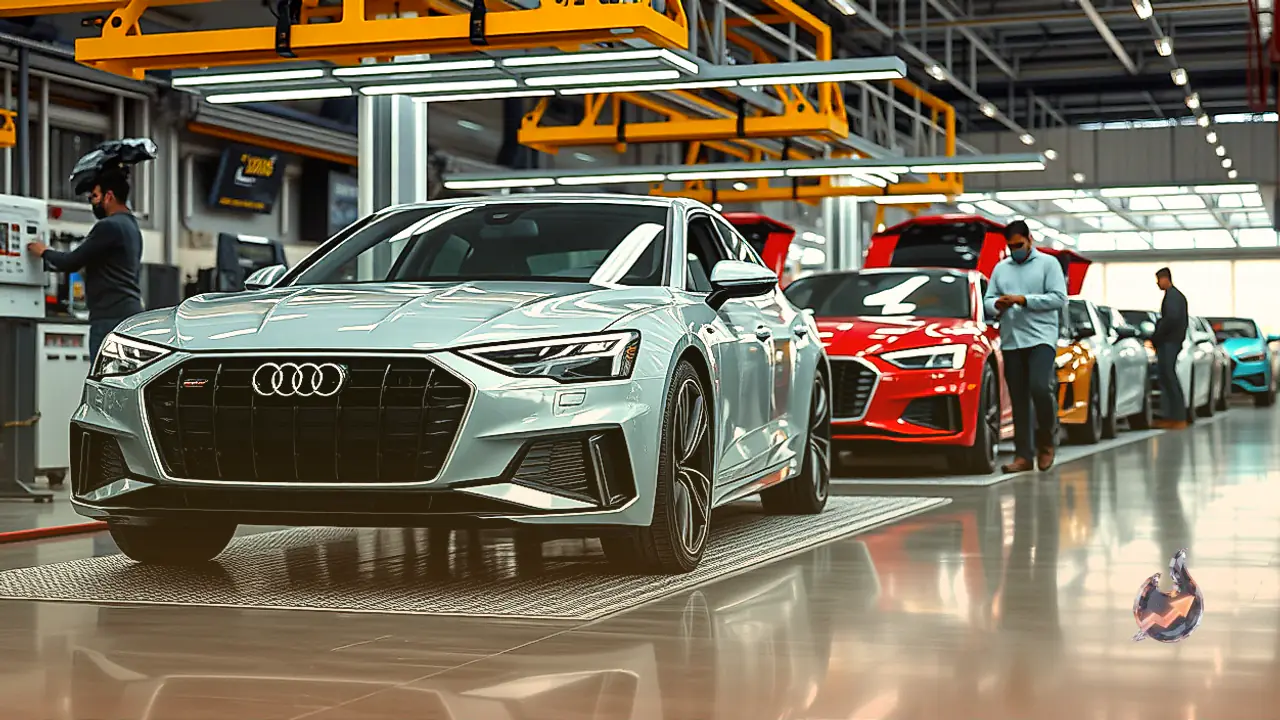

German luxury automobile manufacturer Audi is actively considering the local production of battery electric vehicles within India. The company has set a clear target to expand its footprint in the country's premium car segment, aiming to push its market share to between 15 and 16 percent over the next three to five years. To execute this growth trajectory, the carmaker is deploying a three-pronged framework focused on customer orientation, introducing new product portfolios, and broadening its retail dealership reach across key regions.
Targeting a Twofold Expansion in Luxury Segment
Audi currently commands roughly 8 percent of the luxury passenger car segment in India. The brand intends to double this volume over the coming three to five years by strengthening its operational capabilities. Balbir Singh Dhillon, brand director at Audi India, emphasized that prioritizing customer demands, maintaining an active launch cadence, and investing in broader network penetration will serve as the primary drivers to achieve this planned expansion.
Deliberations on Domestic Assembly of Electric Cars
The automaker is evaluating practical steps to introduce battery electric models assembled or manufactured locally in India. According to Balbir Singh Dhillon, the firm expects to reach a formal decision regarding locally produced battery electric vehicles within the next few months. Setting up local assembly lines for electric powertrains would allow the brand to strengthen its competitive positioning as the adoption of alternative fuel options gains momentum in the luxury space.
Leveraging the Proposed Trade Agreement for Market Testing
The German automotive company also plans to tap into the proposed India-European Union Free Trade Agreement (FTA) to evaluate broader product portfolios. By taking advantage of potentially more competitive tariff structures under the pact, Audi intends to introduce additional vehicle models directly via import channels to assess customer demand and overall commercial feasibility before committing to local manufacturing lines. Dhillon explained that the brand will continue domestic manufacturing for its primary core models, utilizing imports selectively to widen the catalog of options available to Indian luxury car buyers.
Export Openings for the Broader Indian Auto Sector
The emerging trade framework between India and the European Union holds the potential to unlock notable outward export avenues for the domestic automotive ecosystem. The prospective agreement involves both participating sides opening approximately 95 percent of their respective markets. Highlighting this aspect, Balbir Singh Dhillon noted, "इससे कारों के निर्यात का मौका भी मिलेगा।" He further stated that the benefit extends beyond whether Audi itself pursues exports, as the broader Indian automobile manufacturing sector stands to gain considerable market access from reciprocal trade terms.