




















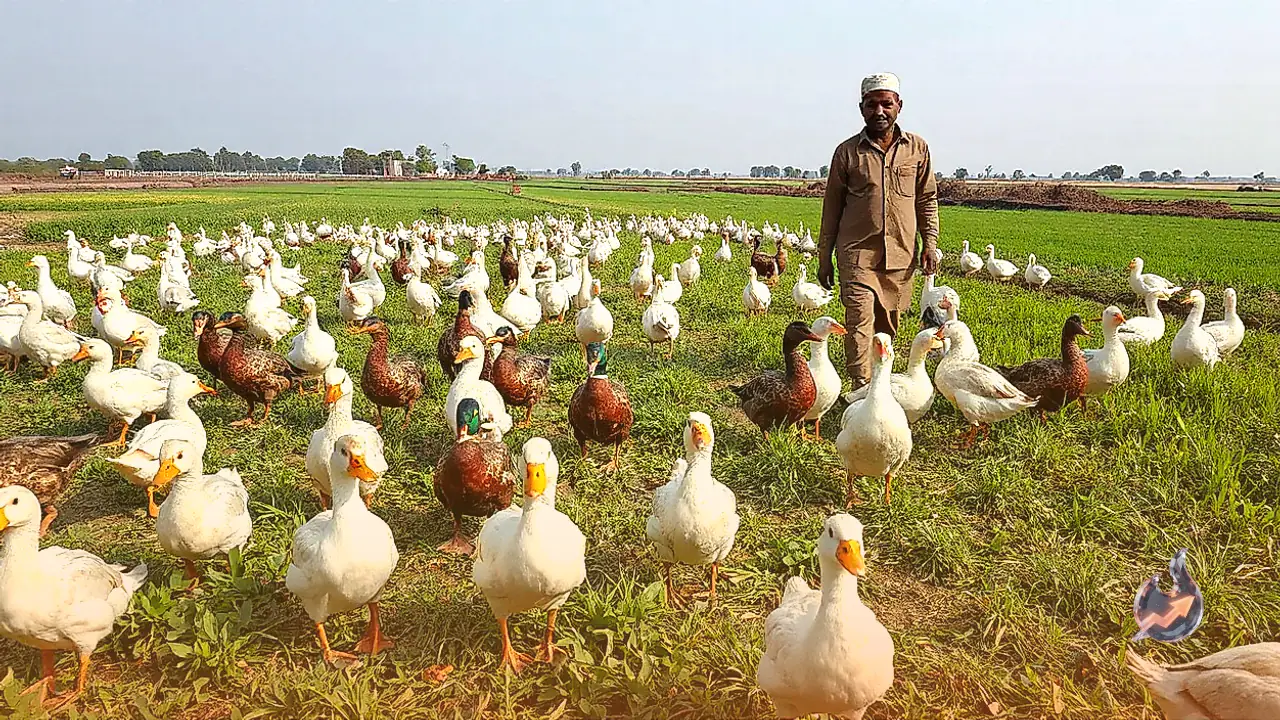

Commercial duck farming is rapidly transforming into a dependable source of rural revenue across Bihar. An increasing number of rural entrepreneurs are stepping away from conventional livestock choices to build profitable units around egg-laying waterfowls. The cornerstone of success in this enterprise rests upon picking high-yielding avian varieties. Selecting the wrong lineage leads directly to subpar egg output, which undermines commercial viability and shrinks operational margins. By contrast, investing in scientifically proven egg layers creates an immediate pathway to viable farm economics. In Makhdumpur block of Jehanabad district, farmer Ramakant currently maintains a commercial flock of 1000 birds.
Setting Up Operations and Moving Beyond Indigenous Stock
Ramakant launched his enterprise four months ago with a structured operational approach. His experience indicates that any grower entering duck farming must prioritize housing arrangements and nutritional management from day one. In typical village settings, growers frequently depend on native, nondescript varieties. While these country birds display natural resilience, their egg yield remains significantly lower than required for commercial profitability. This yield shortfall keeps prospective keepers from realizing meaningful financial returns, making breed upgrading essential.
The Dual Advantage of Khaki Campbell and Indian Runner
Two specialized varieties dominate commercial egg output. The Indian Runner breed reliably produces approximately 280 eggs per bird annually. Alongside it, the Khaki Campbell breed stands out as an exceptional producer, achieving up to 300 eggs per bird each year. Raising both high-performing lines ensures substantial aggregate collection figures, producing roughly 580 to 600 eggs combined between two birds over an annual cycle. Even on a modest scale with an initial herd of 100 birds, an operator can generate consistent annual earnings with low baseline expenditures and manageable day-to-day husbandry.
Operational Costs, Market Realizations, and Bottom-Line Returns
Production is already underway across Ramakant's 1000-bird setup. Wholesale buyers purchase these eggs at rates between 11 and 12 rupees per unit, while direct retail sales yield even higher realisations. On the input side, daily feeding costs for a flock of 1000 ducks run at approximately ₹2000. Managing clean, compact sheltering arrangements alongside disciplined feeding enables smallholders to extract substantial profit margins with minimal labor overheads.