






















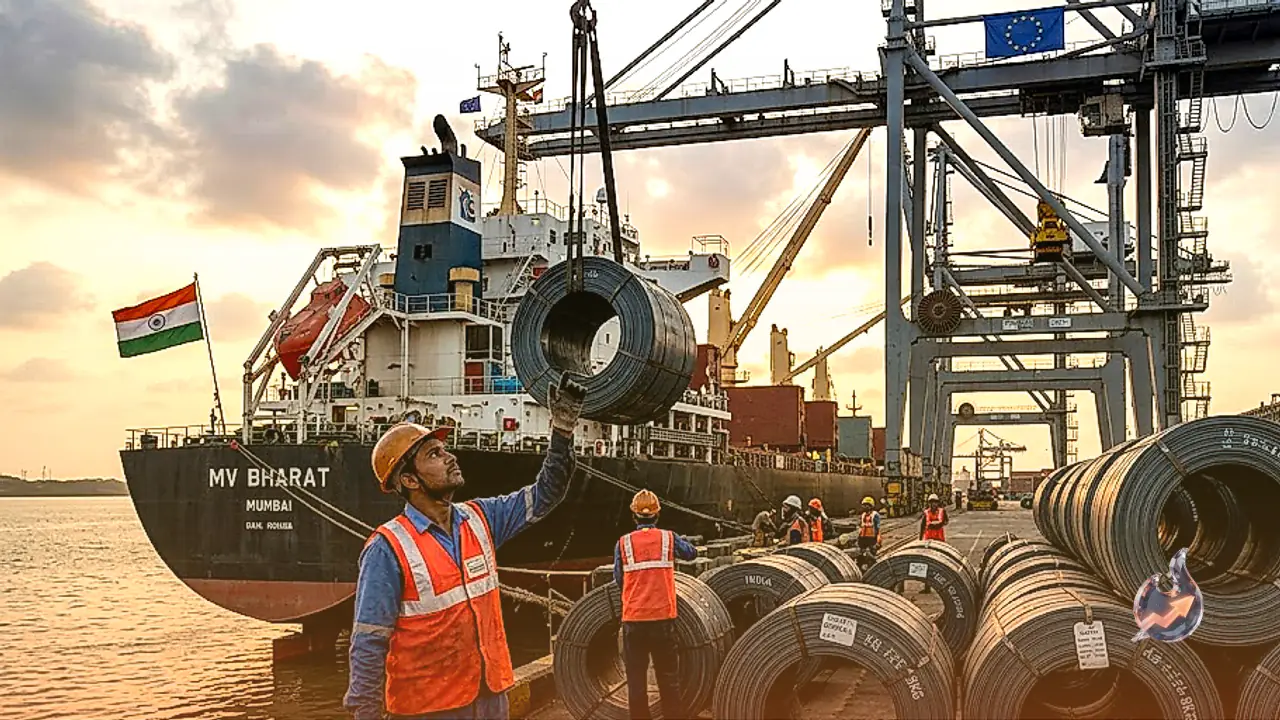

Even before a final free trade agreement is officially concluded between India and the European Union, the bloc has announced a major provision for Indian exporters. A commerce ministry official stated that India has secured an annual special tariff rate quota of 1.9 million tonnes for steel exports to the European Union.
Authorities expect that exporters will be able to ship an additional 900,000 tonnes through remaining quotas, which would push the total export volume to roughly 2.8 million tonnes. With this arrangement, India has successfully secured market access for over 80 percent of its total steel shipments heading to the European Union.
Previous exports and regulatory background
During the previous financial year, India shipped approximately 3.0 million tonnes of steel products to these European markets. These tariff rate quotas have been awarded under the European Union surplus capacity regulations for the steel sector, which came into effect on July 1 of this year.
The primary objective behind this regulatory framework is to shield the European Union domestic steel industry from the adverse impacts of global overcapacity in steel manufacturing.
The Melt and Pour compliance framework
Under the scope of this EU regulation, a total duty-free quota of 18.3 million tonnes has been established. Any import volumes exceeding this specified quota will attract a steep duty of 50 percent.
Additionally, a Melt and Pour system has been introduced to enhance transparency regarding the tracking of ore melting and casting procedures during steel production. This mechanism is widely utilized in steel trade to precisely determine the exact country where the metal was melted and cast.
Exporters begin utilizing the quota
The commerce ministry official noted that Indian exporters started utilizing the quota immediately after the regulations came into effect on July 1, and shipments are currently flowing into the 27-nation European bloc.
The official added that the benefits of a free trade agreement for the steel sector have essentially been unlocked early through this mechanism. Exports conducted within the allocated quota will remain completely free of customs duties, while any shipments exceeding the available quota will incur a 50 percent tariff charge.