
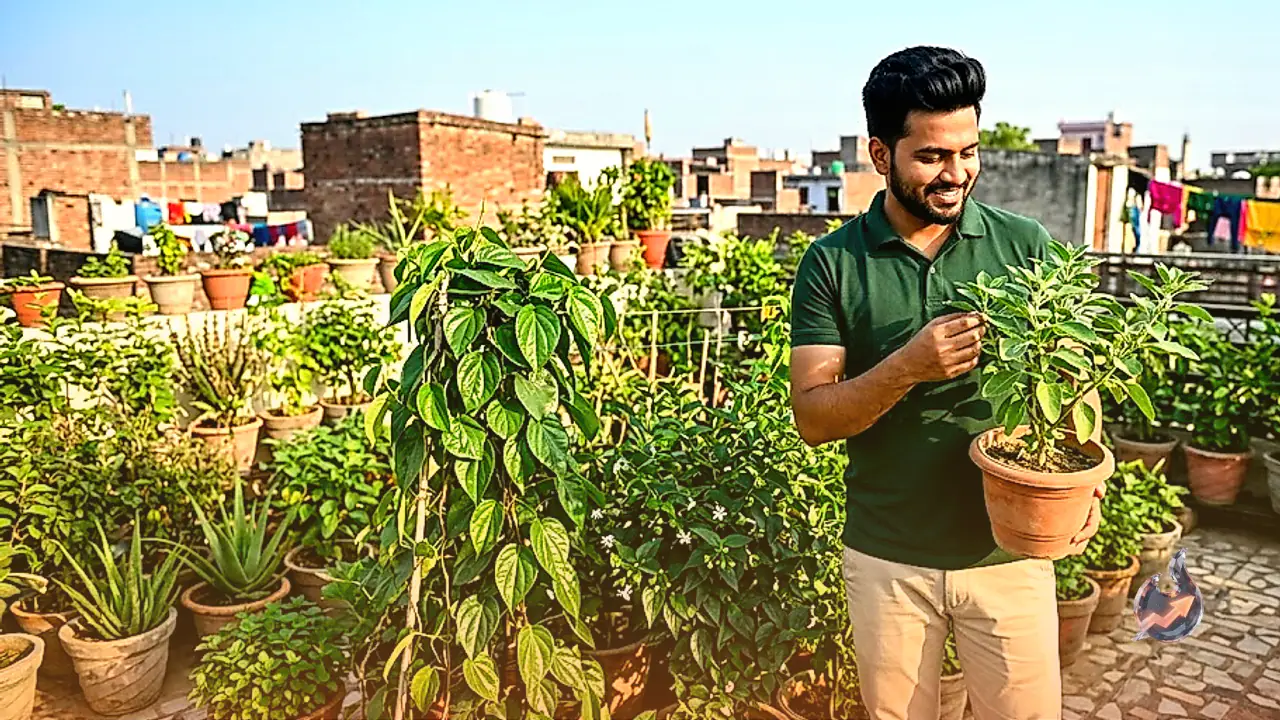




















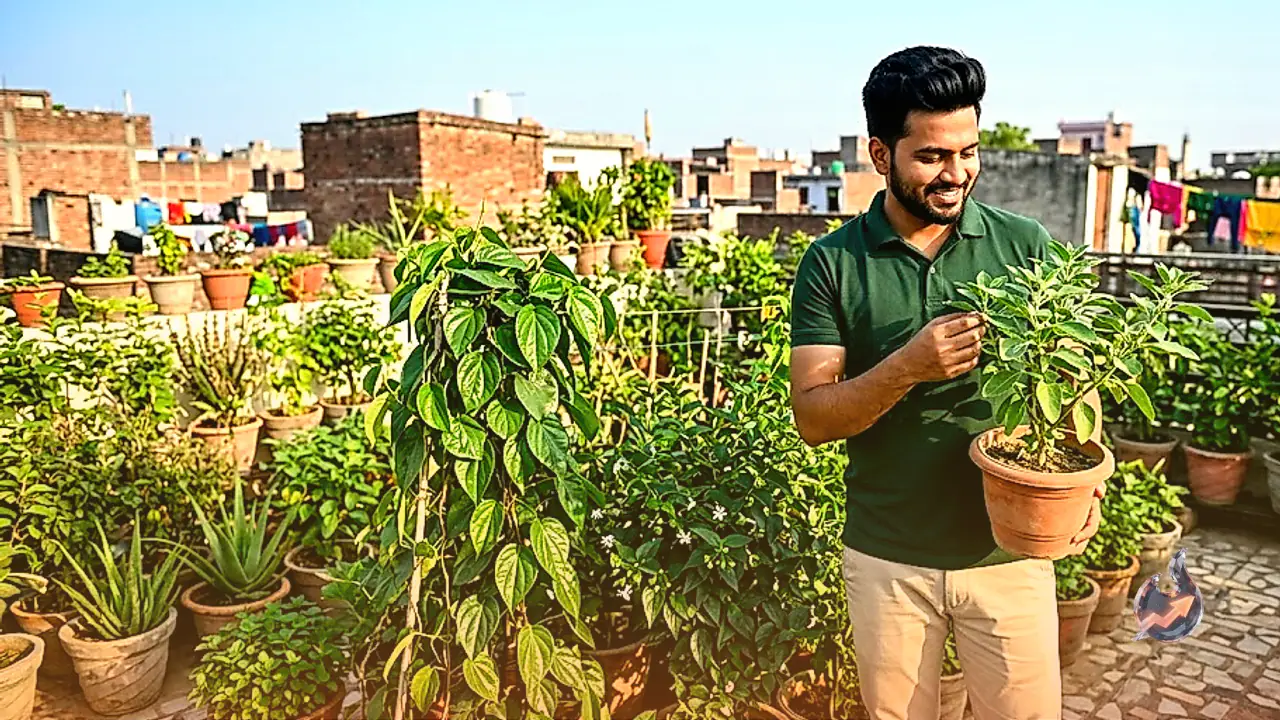

Vivek Maurya, a resident of Shastrinagar in Ghazipur, has successfully developed a unique medicinal garden right at his home. His domestic green space features a variety of herbal plants and creepers that beautifully combine health benefits with natural aesthetics. By blending traditional knowledge with modern home gardening techniques, Vivek has carefully cultivated seven distinct types of plants on his premises.
Betel Leaf Creeper and Proper Care
In his Shastrinagar home, Vivek Maurya has grown a betel leaf creeper inside a pot. This climbing plant requires adequate support and partial shade to thrive properly. Betel leaves are traditionally used for aiding digestion and keeping the mouth feeling fresh. Regular moisture, good quality organic manure, and proper drainage in the pot help ensure the healthy and steady growth of this plant.
The Harsingar Tree and Its Traditional Uses
Another prominent addition to Vivek Maurya's home is a Harsingar plant that has now grown into a massive tree. Also widely recognized by the name Parijat, this tree produces highly fragrant flowers. In Ayurveda and traditional medicine, the leaves, flowers, and seeds of this plant are extensively used to treat fevers, inflammation, joint pain, various skin conditions, and digestive troubles.
Fragrant Tuberose Plants
Vivek Maurya has also planted tuberose specimens across four separate pots at his residence. Its slender leaves and aromatic white flowers enhance the overall visual appeal of the home. Tuberose is primarily utilized in the manufacturing of perfumes, fragrances, and for decoration purposes. Although traditional medicine mentions the medicinal utility of its flowers and roots, consuming them for health purposes should always be done under expert guidance. The plant requires well-drained soil, adequate sunlight, and controlled watering.
Mint and Its Everyday Culinary Uses
The garden features a mint plant, which can be easily grown in a simple flower pot. Its aromatic leaves are commonly used in making chutneys, refreshing drinks, and traditional home remedies. Mint is traditionally valued for improving digestion and providing instant refreshment. It prefers partial shade, regular watering, and consistently damp soil conditions.
An Eight Year Old Ashwagandha Specimen
An ashwagandha plant has been thriving inside a pot at Vivek Maurya's Shastrinagar residence for the past eight years. While ashwagandha is generally cultivated as a medicinal crop within roughly 150 to 180 days, it can survive for several years with proper care and attention. This established plant has recently started bearing flowers and fruits as well. The roots of ashwagandha are utilized in Ayurvedic preparations aimed at reducing stress, combating bodily weakness, and boosting immunity.
A dauna plant has been growing in Vivek Maurya's garden for the past five years. According to him, it is frequently planted near sacred basil plants and emits a pleasing fragrance from its leaves. Dauna is locally recognized both as an aromatic and medicinal plant. Its leaves are traditionally used in preparing herbal teas, homemade herbal remedies, and for natural fragrance. In certain regions, it is also utilized in home remedies for aiding digestion, fighting colds, and keeping insects away.
Bhui Amla and Its Natural Habitat
The small plant featuring tiny leaves and clusters of small pods hanging underneath, found growing in the garden, has been identified as bhui amla. Across India, this plant is known by various names such as wild amla, bhumyamalaki, and hajdana. It typically sprouts naturally during the monsoon season in damp soils, agricultural fields, vacant plots, and shaded locations. In Ayurveda, the entire plant is traditionally used to support digestion, relieve urinary issues, and address liver-related complaints.