





















A sharp political debate has erupted over India's implementation of the E20 fuel policy, with Opposition leader Rahul Gandhi accusing the central government of subjecting vehicle owners to systemic financial loss. Rahul Gandhi, who serves as the Leader of Opposition in the Lok Sabha and is a former Congress president, released a video statement on the social media platform X, claiming that petrol blended with 20 percent ethanol is causing widespread mechanical damage to automobiles. Responding to the criticism, Union Minister Hardeep Singh Puri and the Ministry of Petroleum and Natural Gas defended the renewable fuel initiative, highlighting its vital role in enhancing national energy independence and lowering harmful vehicular emissions despite a slight reduction in fuel economy.
Opposition Allegations and Political Backlash Over E20 Fuel Mandate
In his video address, Rahul Gandhi launched a direct attack on the central government, asserting that the E20 fuel blending policy amounts to direct financial exploitation of the public. He emphasized that millions of commuters using cars and two-wheelers like scooters are experiencing severe engine damage due to the 20 percent ethanol composition. According to Gandhi, vehicle owners are being forced to spend their hard-earned money on frequent repairs and component maintenance. Raising questions over the transparency of the decision, he alleged that the entire scheme is tainted by policy-level corruption, remarking that "something is not just fishy, the whole situation is completely rotten." He further warned that the Congress party intends to escalate the issue into a major public movement across the country in the coming days.
Government Defense and Counter-Arguments by Union Minister Hardeep Singh Puri
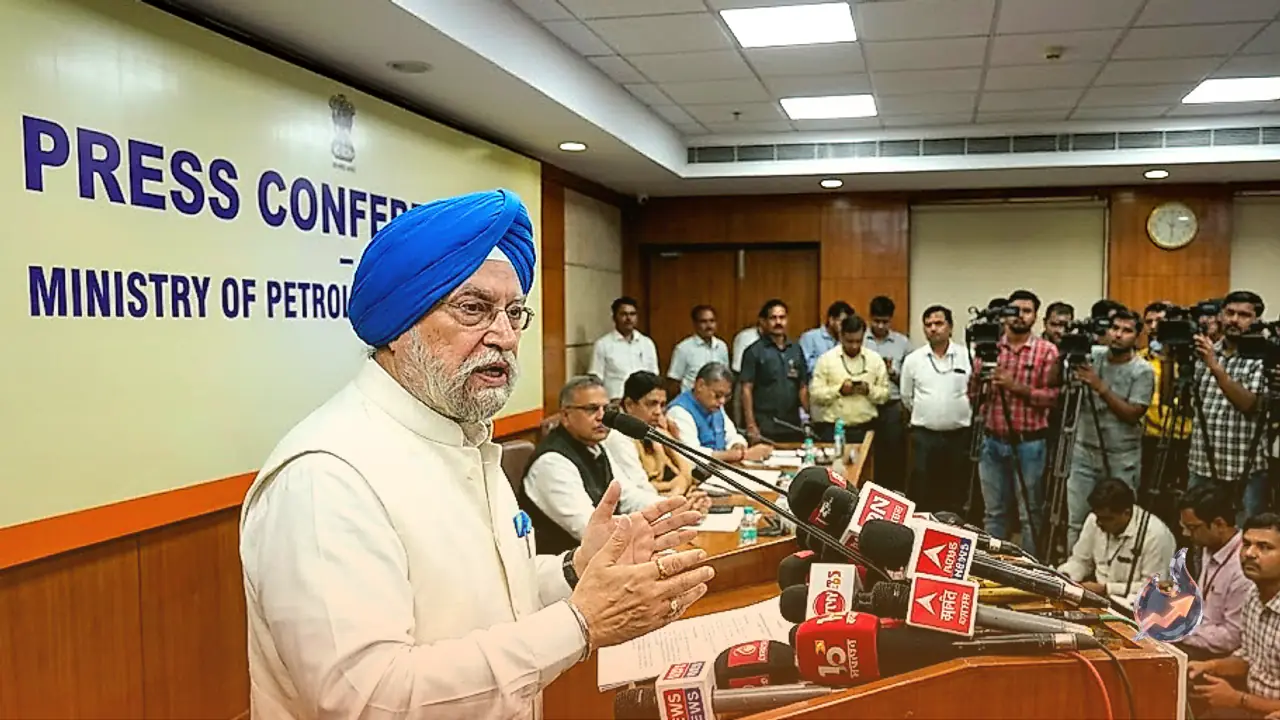
Countering the allegations made by the Opposition, Union Minister Hardeep Singh Puri stated that certain political entities are attempting to fabricate an unnecessary controversy around the E20 fuel blend. He clarified that extensive technical investigations and assessments have revealed no evidence of widespread mechanical failures or large-scale engine breakdowns among vehicles. Addressing concerns over potential fuel contamination, the minister noted that adulteration risks exist across multiple domains, including food products, ambient air, kerosene, diesel, and petrol. He reiterated that the E20 transition was not executed arbitrarily but was implemented in a structured, phased manner following comprehensive scientific testing and close consultation with leading automotive manufacturers.
Minor Mileage Reduction Balanced Against Energy Independence and Lower Emissions
Addressing vehicular efficiency concerns, the Ministry of Petroleum and Natural Gas previously clarified its stance on July 10, acknowledging that the adoption of E20 fuel may cause a minor drop in vehicle mileage ranging from 3 to 5 percent. However, the ministry maintained that the strategic and environmental benefits of ethanol blending far outweigh this slight reduction in fuel economy. By integrating 20 percent ethanol into petrol, India significantly bolsters its long-term energy security while curtailing its heavy reliance on expensive foreign crude oil imports. Furthermore, the ministry highlighted that E20 represents a cleaner, higher-quality, and more efficient alternative compared to traditional E10 fuel or unblended petrol, resulting in a substantial reduction in carbon emissions nationwide.