






















The story of Indian aviation is filled with visionary moments, but few are as fascinating as the corporate democratic exercise that gave birth to the name Air India. Long before it became the nation's iconic flag carrier and recognized across global airports, the airline was known simply as Tata Airlines. When the time came to rebrand and restructure the aviation business following World War II, the leadership decided against picking a name behind closed doors in an executive boardroom. Instead, they placed the choice directly into the hands of their workforce. By a razor-thin margin of just 14 votes, the staff chose a name that would define the country's skyways for generations to come. This historic journey, spanning airmail routes, nationalization, and an eventual corporate homecoming, remains one of the most celebrated chapters in commercial history.
The Dawn of Indian Aviation: From Airmail to Tata Airlines
Commercial aviation in India was born on October 15, 1932, when pioneering industrialist JRD Tata piloted the inaugural flight of Tata Airlines. Taking off from Karachi and flying via Ahmedabad to Mumbai, this maiden flight did not carry passengers. Instead, its primary cargo consisted of airmail letters and official dispatches. At a time when physical transport across the subcontinent was slow and cumbersome, introducing reliable airmail services revolutionized business communications.
Tata Airlines quickly established a reputation for strict timeliness and operational excellence. Encouraged by the initial success of the airmail network, the company expanded its fleet and gradually began taking on commercial passengers. During these early years, the airline operated strictly as an internal division of Tata Sons. Its identity was tied entirely to the family brand, relying on the goodwill and reputation that the Tata name enjoyed throughout British India.
World War II Interruptions and the Shift Toward a Public Entity
The outbreak of World War II in September 1939 brought civilian aviation across the globe to a sudden halt. Commercial passenger operations for Tata Airlines were suspended as the government requisitioned the fleet. Planes, pilots, and maintenance crews were repurposed to support defense movements, transport military personnel, and ferry critical supplies across regional bases.
When the war ended in 1945, Tata Airlines resumed civilian passenger flights to overwhelming demand. A war-weary public eagerly embraced air travel, causing passenger numbers to surge beyond previous capacity. Observing this massive post-war growth, JRD Tata and the board recognized that the airline had outgrown its status as a minor subsidiary inside Tata Sons. To fund fleet expansion and build a world-class network, the leadership decided to spin off the airline into an independent public limited company.
Empowering Employees: Four Name Options and a Democratic Choice
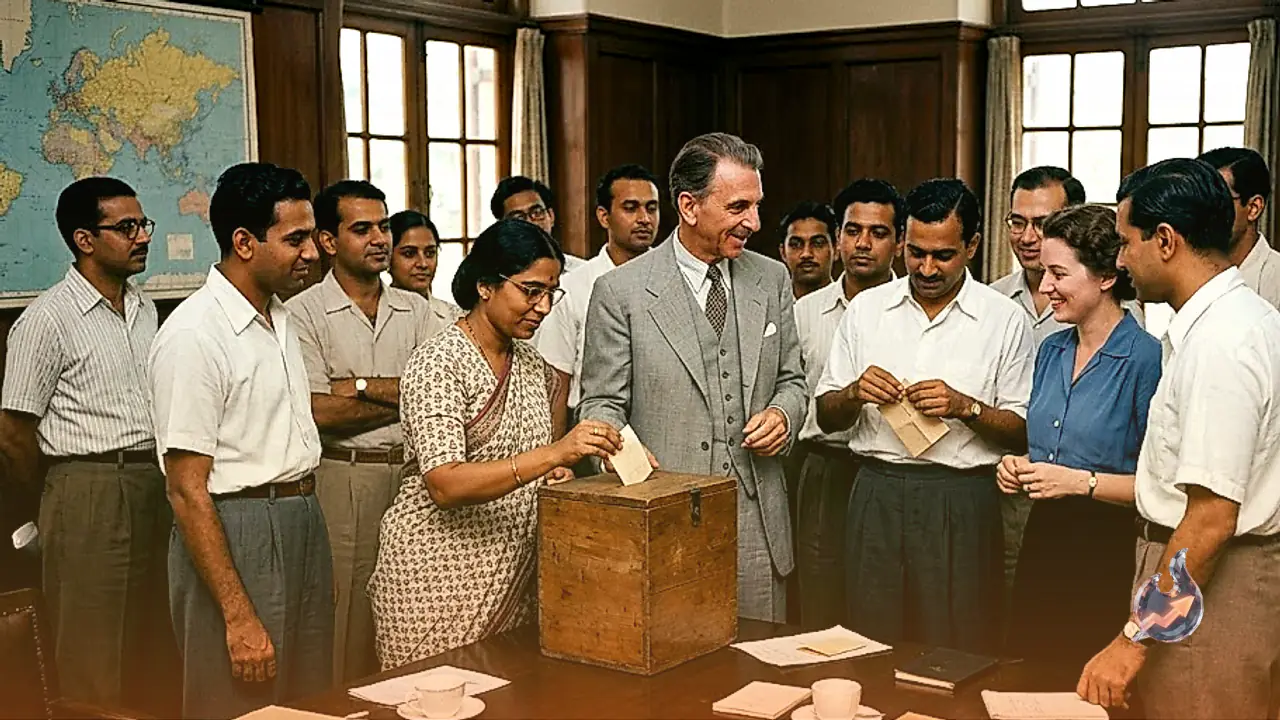
As plans took shape for the new public entity, management faced a fundamental decision regarding branding. JRD Tata strongly believed that the new airline should not be viewed merely as a family enterprise. It needed to represent national aspirations and project an Indian identity on the global stage. To achieve this, the company implemented a novel internal voting exercise, inviting every employee to cast a ballot for their preferred company title.
Four distinct options were presented to the staff
- Air India: A crisp, internationally recognizable title that emphasized national identity.
- Indian Airlines: A broad name conveying a grand domestic and regional presence.
- Trans-Indian Airlines: A name reflecting wide geographical coverage across the country.
- Pan-Indian Airlines: A title focused on unifying all regions of India under one service.
By giving employees a direct voice in selecting the company name, management sought to foster a sense of shared ownership and national pride ahead of planned international routes.
A Two-Round Voting Drama: How Air India Won by 14 Votes
The internal election sparked great excitement across the company's offices and hangars. When the ballots were tallied after the first round of voting, two names emerged as clear frontrunners. Air India secured 64 votes, while Indian Airlines trailed closely with 51 votes. The remaining choices, Trans-Indian Airlines and Pan-Indian Airlines, received negligible support and were eliminated from contention. Because neither leading name had achieved a decisive majority, management organized a second runoff election between the top two contenders.
The runoff vote saw high participation as employees debated which name best suited their organization. When the final ballots were counted, Air India emerged victorious with 72 votes compared to 58 votes for Indian Airlines. The margin of victory was exactly 14 votes.
Respecting the democratic outcome, the company officially changed its name from Tata Airlines to Air India on July 29, 1946. On the very same day, the enterprise was formally registered as a public limited company. This marked a monumental transition, turning a private corporate division into a public brand chosen by its own workforce.
Post-Independence Expansion: The First Flight to London in 1948
Following India's independence in August 1947, the newly formed government sought to establish a premier flag carrier to connect the nation with global capitals. In March 1948, the Government of India acquired a 49 percent stake in Air India, forming a public-private partnership known as Air India International.
On June 8, 1948, Air India made history by launching its first international scheduled service from Mumbai to London via Cairo and Geneva. The flight, operated by a Lockheed Constellation aircraft named the 'Malabar Princess', carried prominent dignitaries and marked India's formal entry into international civil aviation. Under JRD Tata's guidance as chairman, Air India earned worldwide acclaim for its high service standards and warm hospitality.
Nationalization in 1953 and the Grand Homecoming in 2022
As the aviation industry grew rapidly during the early 1950s, the Indian parliament passed the Air Corporations Act of 1953, nationalizing all existing private airlines in the country. Under this legislation, the government took full ownership of Air India. Domestic operations were consolidated under a separate state-owned carrier named Indian Airlines, adopting the runner-up name from the 1946 employee vote.
For nearly seven decades, Air India operated under state control as the country's official international carrier. However, mounting debt and operational challenges in later years led to calls for disinvestment. In January 2022, after nearly 69 years as a government enterprise, Air India was officially handed back to the Tata Group following a successful privatization bid. This historic handover marked one of the most emotional full-circle moments in corporate history, returning the airline back to the group where JRD Tata and 14 employee votes had first laid its foundations.


