






















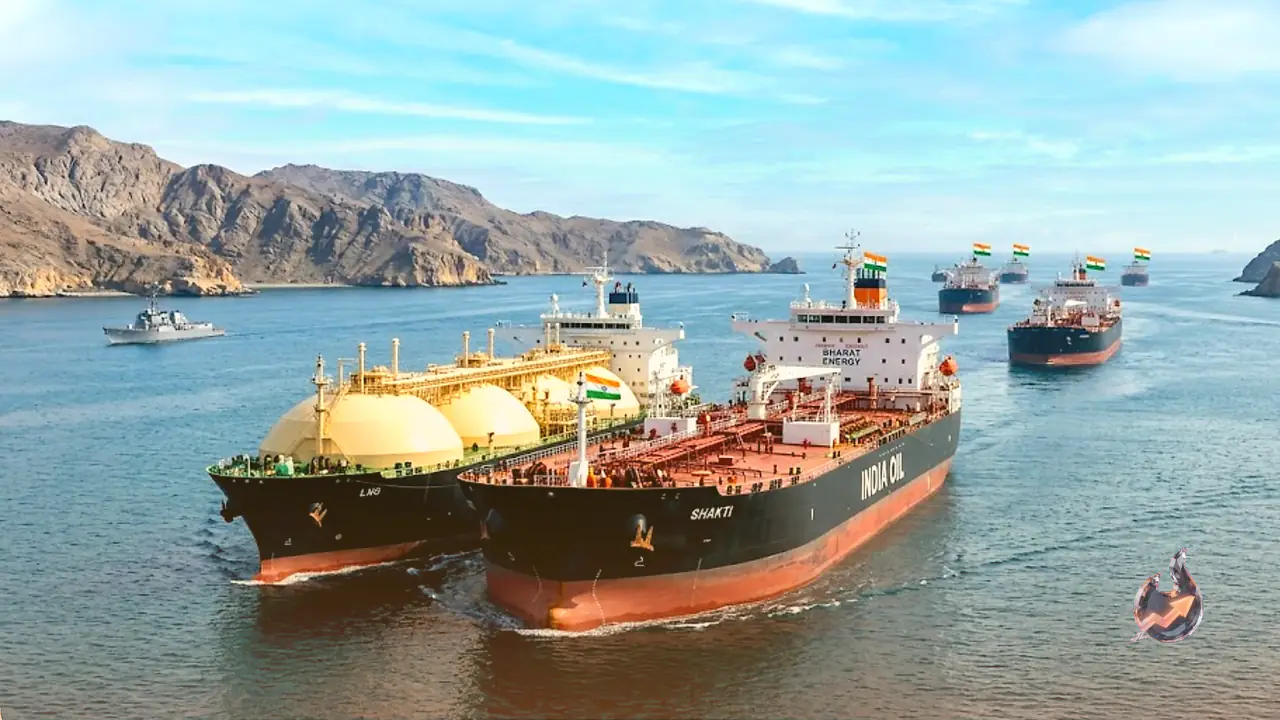

There is finally some good news for India coming out of West Asia. The Strait of Hormuz, one of the most important shipping lanes in the world, has reopened. Ever since the ceasefire between Iran and the United States, a steady stream of ships carrying oil and gas has been moving toward India. So far, more than 30 India-bound vessels have crossed Hormuz, though dozens more are still lined up waiting to pass through.
Why Hormuz Matters So Much for India
This sea route is critical not just for India but for the entire world. A fifth of all the energy supplied across the globe passes through it. Whether it is gas from Qatar or oil from the Gulf countries, India brings in most of its cargo through this passage. The Gulf nations are India's main partners for LNG and LPG purchases, which is exactly why any disruption here hits India's energy supply directly.
How Many Ships Have Crossed, and What They Carry
According to the shipping ministry, 30 India-bound ships have now crossed the Strait of Hormuz. Half of these vessels are carrying LPG and LNG. Eight others were loaded with bulk cargo, and seven were crude oil tankers. Of the 30 ships, 17 fly foreign flags, with the largest single group being five vessels flying the flag of the Marshall Islands.
Looking at the numbers, 19 ships crossed Hormuz between March 1 and June 17. After the MoU was signed by Iran and the United States, 11 ships made the crossing safely. Some of these have already reached Indian ports, while others are about to arrive.
26 Ships Are Still Stuck at Sea
Amid the relief, the worry is that 26 India-linked ships are still stuck in the Persian Gulf, waiting their turn. The Persian Gulf lies to the west of Hormuz, and these 26 vessels have not yet crossed the strait. They include both Indian-flagged ships and foreign-flagged ships bound for India. Of these, three are carrying fuel, ten are loaded with fertilizer, and the remaining 13 are carrying other goods.
How the Crisis Began
The trouble started on February 28, when the United States and Israel jointly struck Iran. Conditions in Hormuz deteriorated soon after, disrupting the movement of ships. Now, with an agreement reached between the United States and Iran, this vital sea route has reopened, raising hopes of major relief for India's energy supply.