





















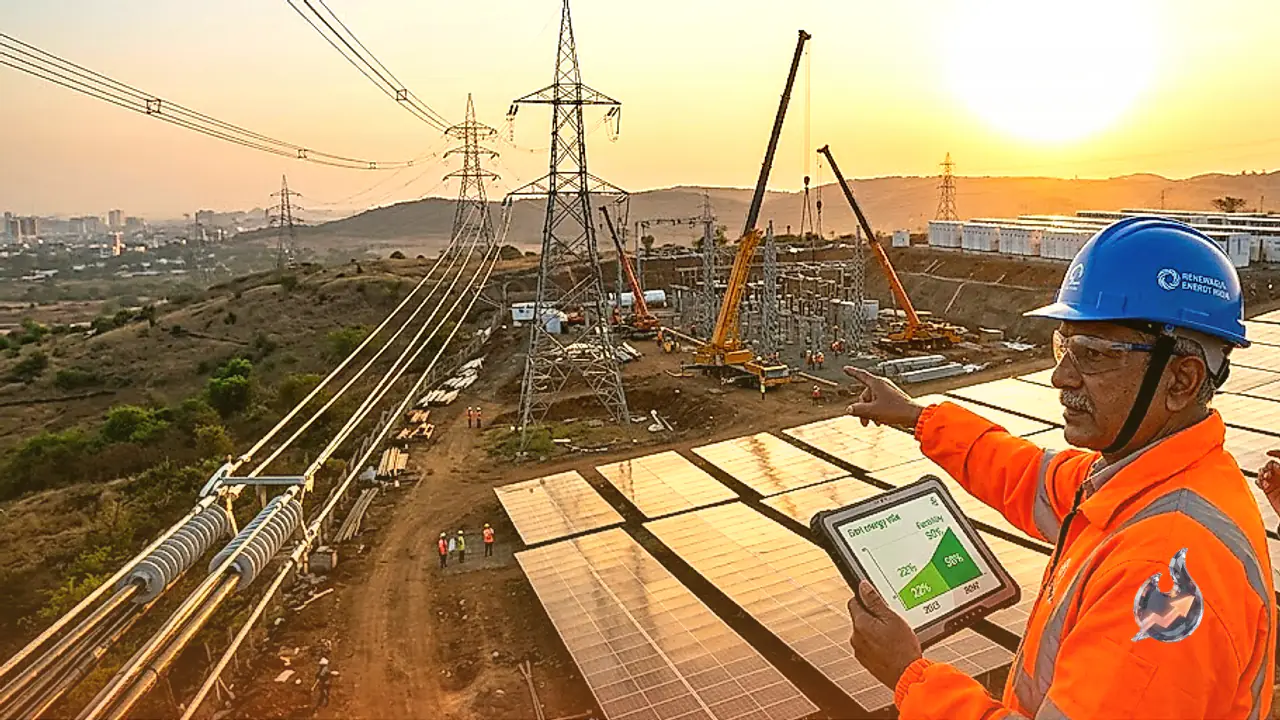

India is laying out a massive long-term roadmap for its energy sector, aiming to significantly boost the share of electricity in the nation's total energy mix over the coming decades. Speaking at the 'Bharat Electricity 2026' event, Ghanshyam Prasad, Chairperson of the Central Electricity Authority (CEA), stated that the country plans to elevate electricity's contribution from the current 22 percent to between 45 and 50 percent by the year 2047. This ambitious structural transition offers significant strategic growth opportunities for investors looking at long-term opportunities in power generation companies, renewable energy infrastructure, and grid equipment manufacturers.
Ambitious Power Generation Targets and Renewable Milestones
Highlighting the recent progress made in the country's generation landscape, Prasad revealed that India added a record 64,000 MW of new power generation capacity during the previous year. Out of this total addition, renewable energy sources alone contributed more than 50,000 MW, underscoring the rapid shift toward green power. For the ongoing year, the government has set a target to add up to 70,000 MW of additional power generation capacity across the national system.
Looking further into the future, Prasad explained that India is well on track to double its original 2030 renewable energy targets by the year 2035. Beyond solar and wind energy expansion, the national plan emphasizes large-scale energy storage and clean power technologies. The country aims to achieve 100 GW of pumped hydro energy storage capacity by 2035-36. Furthermore, India is targeting 100 GW of nuclear power capacity by 2047 to provide consistent base-load clean electricity.
Supporting Net-Zero Transition and Expanding Demand
The total national energy mix includes diverse sources such as fossil fuels like coal and petroleum, nuclear energy, and renewable resources. Currently, electricity accounts for just 22 percent of India's total energy consumption. To achieve net-zero carbon emission targets and support broader economic transformation, increasing this share to 45-50 percent by 2047 is deemed essential for energy security and sustainability.
This projected shift is driven by surging power demand from key growth engines, including industrial manufacturing, modern transportation networks, and expanding digital infrastructure such as data centers. To meet these growing requirements, work is currently underway on power generation projects worth Rs 4 lakh crore, representing a combined capacity of 266 GW. Alongside power generation, plans are being executed to develop 600 GVA of power transformer capacity to support grid operations.
Rapid Grid Integration and Operational Infrastructure Needs
A primary objective under the roadmap is to ensure that newly built renewable energy plants are integrated into the national power grid within 24 to 36 months of construction. However, managing such accelerated growth requires addressing potential supply chain hurdles. Prasad stressed the urgent need to prevent supply bottlenecks in critical components, including transformers, reactors, and advanced electrical grid machinery.
To maintain grid stability amidst a higher proportion of intermittent renewable energy, the electricity framework requires widespread technological modernization. Key priorities include upgrading electrical substations, deploying advanced weather and generation forecasting systems, and incorporating Artificial Intelligence (AI) for real-time grid balance and automated management.
Non-Fossil Capacity Achievements and Grid Resilience Challenges
Adding further perspective at the event, D. Sai Baba, Additional Secretary in the Ministry of Power, announced that India has officially crossed 300 GW of installed non-fossil fuel-based power capacity. He reinforced that power generation projects valued at Rs 4 lakh crore are actively being deployed to deliver 2.66 lakh GW of clean energy to the national grid infrastructure.
Sai Baba pointed out that the chief operational challenge facing the power sector is ensuring that this burgeoning renewable energy capacity is converted into a reliable, uninterrupted, and affordable power supply delivered at the precise location and time it is needed. Meeting this challenge requires building a robust, resilient, and modernized grid structure capable of satisfying India's future energy demands.