





















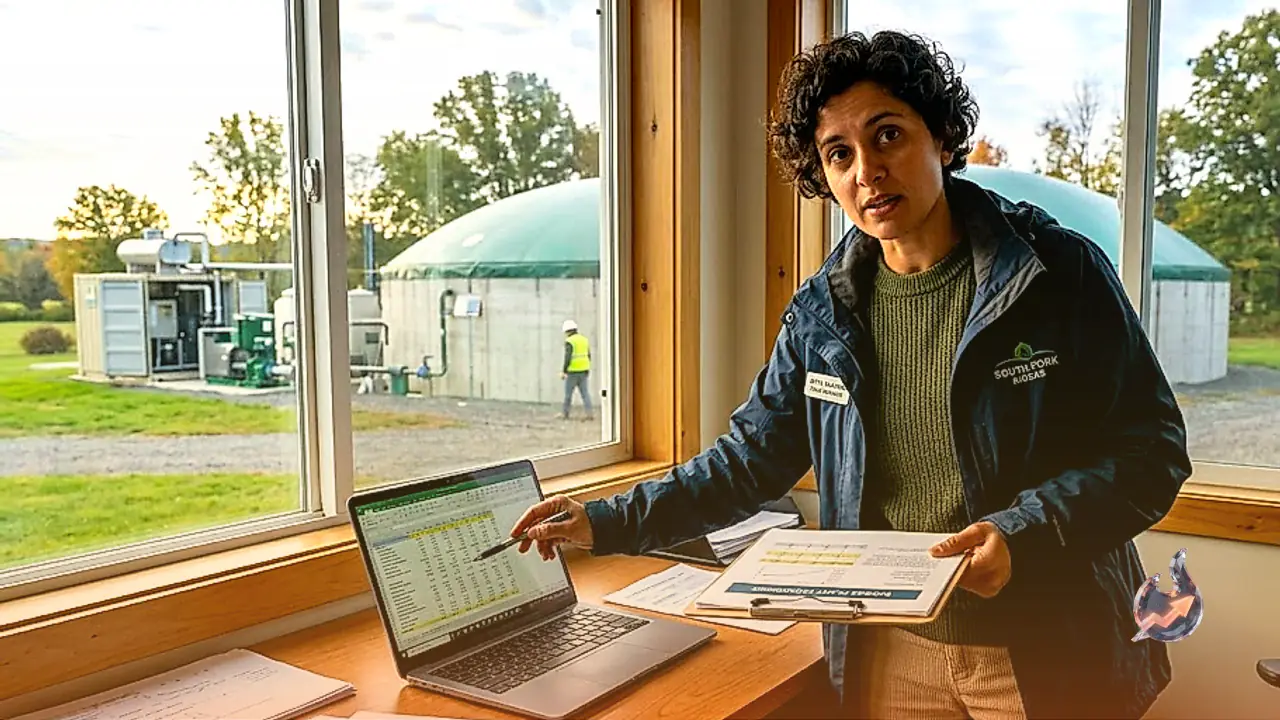

Converting wet organic waste into energy presents a dual benefit of clean urban waste management and a sustainable revenue stream. Daily food scrap and organic refuse from residential complexes, institutional campuses, and commercial hubs can be processed locally to tackle waste handling challenges while generating biogas. However, entering the biogas production space requires a clear financial strategy, appropriate space allocation, and guaranteed organic feedstock. The financial feasibility and profit potential of any biogas project depend directly on the chosen technology and daily processing volume.
Financial Breakdown of Micro-Scale Biogas Units
Micro-scale biogas facilities offer a practical solution for localized environments generating limited quantities of wet waste. According to analysis provided by Priyanka Singh, Senior Program Lead at the Council on Energy, Environment and Water (CEEW), setting up a micro-scale biogas plant with a processing capacity of 50 to 100 kilograms of daily waste requires an initial capital expenditure ranging between Rs 5 lakh and Rs 9 lakh.
Running these smaller facilities involves regular upkeep and operational attention. The annual operating expense for a micro-scale setup stands at approximately Rs 40,000. On the earnings side, such units can generate an annual revenue between Rs 50,000 and Rs 1.5 lakh. Given the modest yearly operational surplus, recovering the complete initial capital outlay typically takes between 6 and 9 years.
Capital Dynamics and Faster Returns in Medium-Scale Facilities
When daily waste supply is significantly higher, scaling up to medium-sized facilities handling 500 kilograms to 1 ton of organic waste daily yields much stronger economic efficiency. A facility designed for 500 kilograms per day capacity calls for an initial capital investment between Rs 32 lakh and Rs 45 lakh. The ongoing annual operation and maintenance expenses for this scale generally range from Rs 60,000 to Rs 2.5 lakh.
The expanded capacity leads to substantially higher financial returns. CEEW estimates indicate that a 500 kg daily capacity plant can yield an annual revenue of approximately Rs 9 lakh, shortening the capital payback period to around 3.5 years. Scaling up further to a 1 ton per day plant elevates annual revenue to around Rs 16 lakh, which accelerates the investment recovery timeline down to just 2.7 years.
The Bengaluru Koramangala Decentralized Community Example
A prominent real-world example of large-scale decentralized organic waste processing operates in Bengaluru's Koramangala locality. This facility features a processing capacity of 5 tons of wet waste per day and was constructed with an initial investment of approximately Rs 2.5 crore. It generates a recurring monthly revenue of roughly Rs 4 lakh.
This initiative highlights the effectiveness of multi-stakeholder collaboration. Priyanka Singh noted that the Koramangala plant operates through a joint partnership involving the BBMP, the Koramangala Resident Welfare Association, and Carbon Masters. Such decentralized models serve as effective templates for universities, residential gated communities, IT parks, and neighborhood clusters, enabling on-site waste disposal without dumping waste in distant landfills.
Key Decision Factors Before Selecting Plant Capacity
Choosing the right plant scale depends directly on waste security and capital availability. For entities with limited upfront funds or modest waste generation, starting with a micro-scale plant provides a manageable, low-risk way to handle organic refuse locally, making it ideal for schools, small apartments, and corporate offices.
Conversely, where substantial organic waste streams can be guaranteed alongside adequate initial funding, investing in medium to large-scale biogas infrastructure yields far superior returns. Larger facilities recover their capital costs rapidly and generate significant long-term net profits. With precise planning and secured waste inputs, biogas processing transitions from basic waste management into a highly profitable enterprise.