























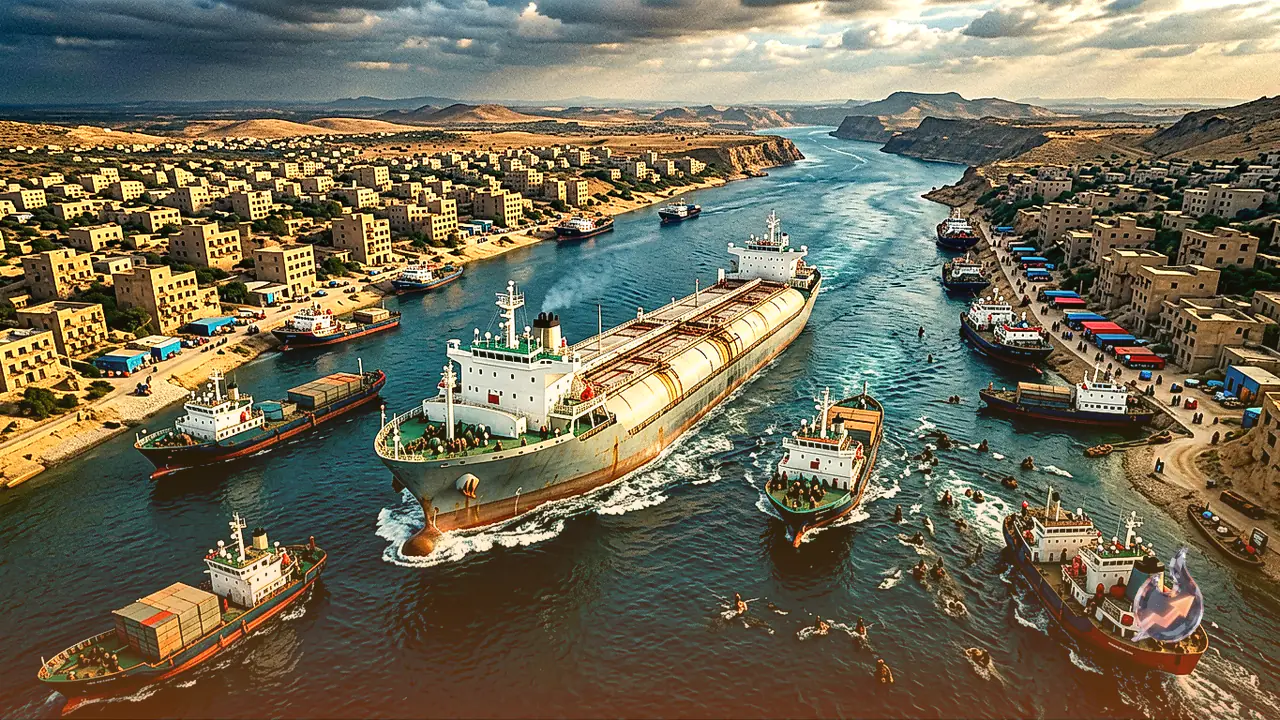

Amid rising tensions across critical global maritime corridors, an Indian oil tanker has successfully sailed through the highly sensitive Bab el-Mandeb strait, which connects the Red Sea to the Gulf of Aden. This waterway serves as a vital artery for international energy supplies, though navigating through it has become increasingly perilous due to active maritime piracy and regional conflicts.
Why Bab el-Mandeb Matters for Energy Supply
Following disruptions in the Strait of Hormuz, the Bab el-Mandeb strait has emerged as an indispensable route for global energy logistics. India currently relies on this crucial maritime pathway for receiving oil shipments originating from both Gulf nations and Russia. Ensuring the unhindered flow of vessels through this chokepoint remains a top priority for India's energy security and economic stability.
The Contrast in Maritime Security
While Indian shipping operations managed to transit the turbulent zone smoothly and without interference, the scenario for other nations paints a different picture. Maritime pirates and hostile factions have not spared vessels from countries like Turkey, subjecting Turkish commercial and cargo ships to severe security threats and attacks in the same waters, leading to widespread disruptions in regional trade.
Broader Regional Conflicts and Strains
The underlying instability stems from persistent geopolitical friction in the Middle East, including ongoing cross-border escalations and attacks emanating from Yemen toward various cities in Saudi Arabia. Despite these volatile conditions that keep global shipping companies on high alert, the safe passage of India's oil cargo highlights robust logistical planning and effective transit management in high-risk zones.