






















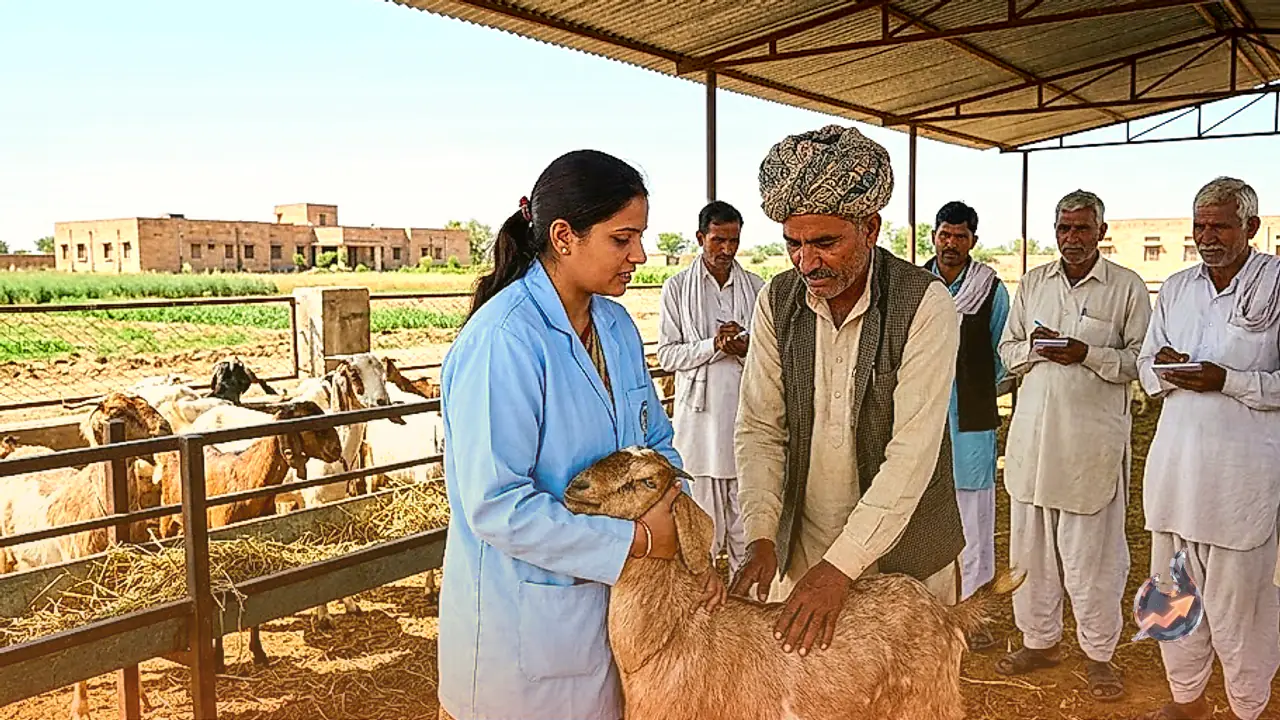

Rising agricultural costs and fluctuating crop yields have highlighted the need for alternative income streams in rural areas, making animal husbandry a crucial pillar for financial stability. Addressing this imperative, the Farmer Skill Development Centre at Agricultural University in Jodhpur organized a seven day training program dedicated to scientific goat farming. The workshop aimed to equip local farmers and youth with modern livestock management practices designed to reduce operational expenses, raise productivity, and boost overall earnings.
Integrating Farming with Animal Husbandry
During the session, agricultural experts emphasized that relying solely on conventional crop cultivation poses economic risks for rural households. Integrating crop farming with scientific goat management creates a diversified income foundation that shields farmers during adverse weather conditions or market declines. The experts also noted that various government schemes are actively supporting such integrated farming models to help agricultural workers achieve higher income levels and sustainable financial independence.
Value Addition and Direct Market Access
A central focus of the workshop was eliminating intermediaries from the supply chain to ensure farmers receive fair returns for their produce. Trainers encouraged participants to establish direct links with commercial markets and explore value addition beyond raw milk sales. Experts pointed out that goat milk can be processed into commercial goods such as specialized soaps and cosmetic products. By developing these value-added items, rural entrepreneurs can tap into premium market segments and generate significantly higher revenues.
Scientific Practices and Livestock Management
To optimize herd health and production efficiency, the training covered key scientific methodologies. Participants received guidance on selecting superior goat breeds, implementing balanced nutritional management, maintaining timely vaccination schedules, and constructing proper housing structures. Furthermore, experts advised farmers to form cooperative groups for joint branding and marketing. Collective efforts allow smallholders to gain stronger bargaining power in local markets while lowering individual transportation and promotional costs.
Empowering Youth and Preventing Migration
Participating farmers and young delegates expressed renewed confidence after gaining technical knowledge, contrasting the new practices with traditional, low-yield methods used in the past. To date, the Farmer Skill Development Centre at Agricultural University has successfully trained over one thousand farmers and youth through its practical capacity-building programs. Experts believe that adopting scientific goat farming and commercial processing will create robust self-employment opportunities in villages, ultimately reducing distress migration from rural regions to urban centers.