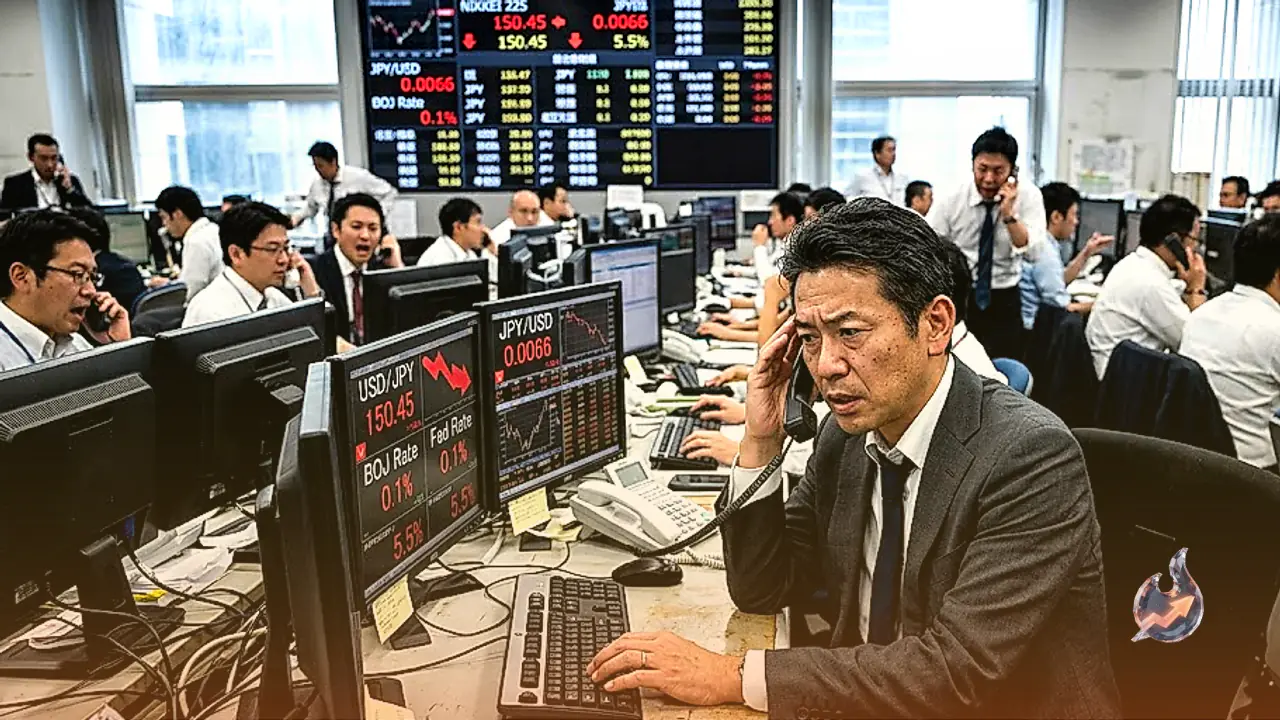























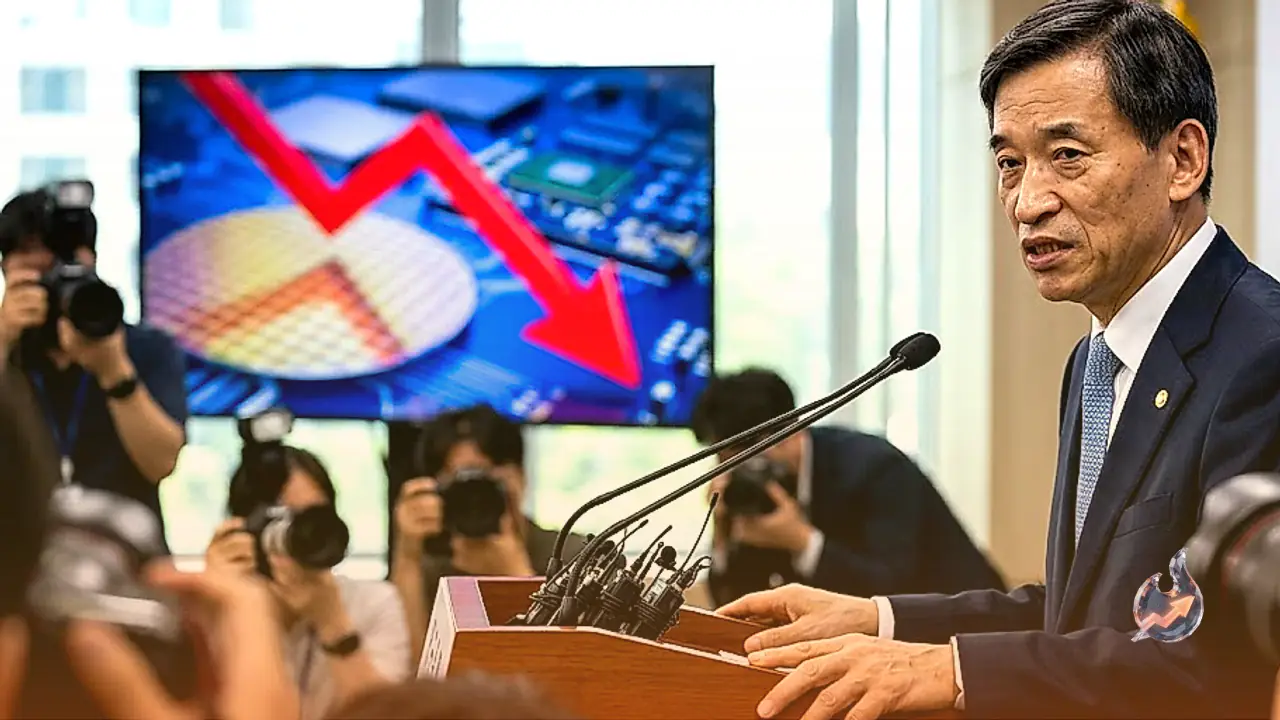

South Korea's currency and stock market are caught in a squeeze this week, pressured on one side by a tougher stance from the Bank of Korea and on the other by a violent selloff in the semiconductor shares that anchor the Seoul exchange. BNY's Geoff Yu points to a hawkish 25 basis point rate rise from the central bank, lifting the policy rate to 2.75%, paired with a warning that both economic growth and core inflation are now likely to run hotter than officials had earlier pencilled in.
A hawkish turn from the central bank
The quarter-point increase came with a clear message: price pressures are not fading as fast as hoped. The central bank expects inflation to stay elevated for a prolonged stretch even with oil prices lower, and it now sees core inflation overshooting the 2.4% it had projected back in May. Headline inflation, meanwhile, is expected to hold steady at 2.7%. Policymakers leaned on a run of strong data to justify their caution, including robust exports led by semiconductors, firm investment and an improving picture for domestic demand.
That strength, though, brings its own worries. The bank flagged faster house price gains, a heavier household debt load and choppier moves in the exchange rate as risks it is watching closely. In short, the economy is doing well enough to keep inflation sticky, which is precisely why the guidance leaned hawkish and why the GDP and core inflation forecasts were nudged higher.
Why the chip stocks are sliding
The immediate trigger for the market turmoil was a sharp selloff in U.S. chipmakers, which spilled over into Asian semiconductor names. The weakness owes less to any clear deterioration in the companies' fundamentals and more to profit-taking and renewed caution over lofty AI-related valuations. In Seoul, SK Hynix tumbled 11.5% after a recent bout of extreme volatility, while Samsung Electronics fell more than 8% and other South Korean chip names also declined. The slide weighed heavily on both the KOSPI and USD/KRW.
Cracking down on single-stock leveraged products
With volatility rising, South Korea's authorities have announced supplementary measures on single-stock leveraged ETF/ETN products. The aim is to curb overheating, strengthen investor protection and reduce the risk of further swings in memory chip names. These products have grown rapidly since launch, and officials want to rein in the speculative leverage building up around them.
New listings frozen, risk controls tightened
Under the new rules, new listings of single-stock products, including inverse and covered call variants, will be temporarily suspended until markets stabilize, and advertising and event marketing will be banned outright. Risk controls will also be tightened on several fronts, through lower LP deviation thresholds, tougher penalties, faster designation of risky products, expanded pre-investor education and automated risk alerts.
A cooler inflation print
There was at least some relief on the inflation front. June CPI fell 0.4% on the month, the largest one-month decline since April 2020, dragging the annual rate down to 3.5% from May's 4.2% and snapping a three-month acceleration streak. Core prices went nowhere, staying flat on the month and easing to 2.6% year on year, with both figures coming in under consensus.