























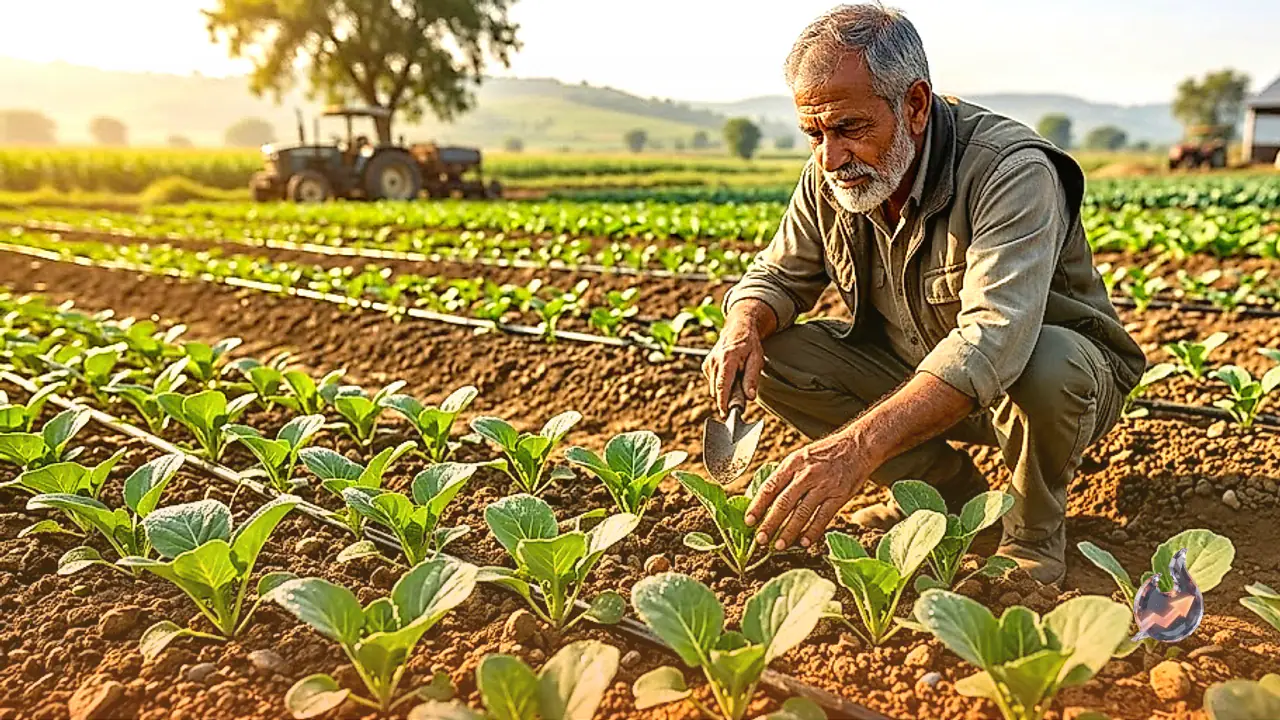

Samastipur: In the agricultural sector, profitability heavily depends on choosing the right crop at the perfect time. For farmers looking to maximize their income through vegetable cultivation, the month of July brings a golden opportunity. By starting the cultivation of early cauliflower during this period, farmers can be among the first to reach the market with their fresh produce. When early-season cauliflower arrives in the local markets, it typically commands a premium price. Aware of this economic advantage, farmers across several districts in Bihar have already begun transplanting their early cauliflower saplings in full swing. By adhering to proper scientific methods and utilizing high-quality advanced seeds, an abundant harvest can be achieved with minimal investment.
Cauliflower is not just an ordinary vegetable; it is a highly essential ingredient in Indian kitchens. The consumer demand for it remains consistently strong throughout all twelve months of the year. People consume it in a variety of ways beyond traditional curries. It is heavily utilized in making nutritious soups, preparing delicious pickles, and manufacturing numerous other processed food products. From a nutritional and health standpoint, it serves as an excellent dietary choice. This vegetable is naturally rich in Vitamin-B and contains substantial amounts of healthy proteins. Because health-conscious consumers regularly include it in their meals, its consumption rate in wholesale markets never drops.
Choosing the Right Advanced Seeds
Dr. Ravindra Kumar Tiwari, Principal and Senior Agricultural Scientist at the Birauli Krishi Vigyan Kendra (KVK) in Samastipur, has shared crucial scientific insights for successful cultivation. He stated that the optimal growth of cauliflower plants occurs best in a cold and humid climate. Dr. Tiwari noted, "Selecting certified seeds and preparing healthy saplings is the first condition for better production." He explained that based on the optimal time for transplantation, cauliflower seeds are officially classified into three distinct categories: early, medium, and late varieties.
For cultivators who wish to plant an early crop in July, advanced varieties such as Early Kunwari, Sabour Agrim, Pusa Katki, and Summer King are considered the most profitable options. If a farmer prefers to wait slightly and cultivate during the medium duration, they should select seed varieties like Pusa Agahani, Pant Shubhra, Pusa Shubhra, and Pusa Synthetic. Similarly, for those engaging in late farming, agricultural scientists strongly recommend planting the Pusa Snowball-1 and Pusa Snowball-16 varieties. Choosing the correct seed type according to the regional climate keeps the crop safe from seasonal diseases and ensures excellent financial returns in the market.
Field Preparation and Soil Selection
Experts have also issued specific guidelines regarding initial field preparation and the selection of appropriate soil types. Dr. Dhiru Tiwari, Vegetable Specialist at the KVK, pointed out that the roots of this crop can easily rot if water stagnates in the field. Therefore, land with a highly efficient water drainage system must be selected for cauliflower farming. For this purpose, loamy soil or sandy loam soil is considered the absolute best choice. Before initiating the transplantation process, deep plowing of the field should be done to loosen the earth, followed by proper leveling to make the surface entirely flat.
Scientific Fertilizer Management
Managing compost and chemical fertilizers in the exact required quantities is the most significant step for a high yield. Dr. Dhiru Tiwari advises that approximately three weeks prior to the date of planting saplings, 20 to 25 tonnes of fully decomposed cow dung manure per hectare should be spread across the field. Cow dung manure significantly enhances the natural fertility of the soil. Additionally, the balanced application of 120 kg of Nitrogen, 60 kg of Phosphorus, and 40 kg of Potash per hectare is absolutely essential for robust plant growth.
Special care must be taken while applying chemical fertilizers. Exactly when the final plowing of the field is being carried out, the entire 100 percent prescribed quantity of Phosphorus and Potash must be mixed thoroughly into the soil. At that very moment, only one-third of the total required Nitrogen should be added to the field. The remaining quantity of Nitrogen must then be divided into two completely equal parts. The first half should be applied to the crop 30 days after transplantation, and the second half exactly 45 days after planting. By adopting all these modern and scientific agricultural techniques, any farmer can achieve magnificent cauliflower quality and earn massive profits from the market.