





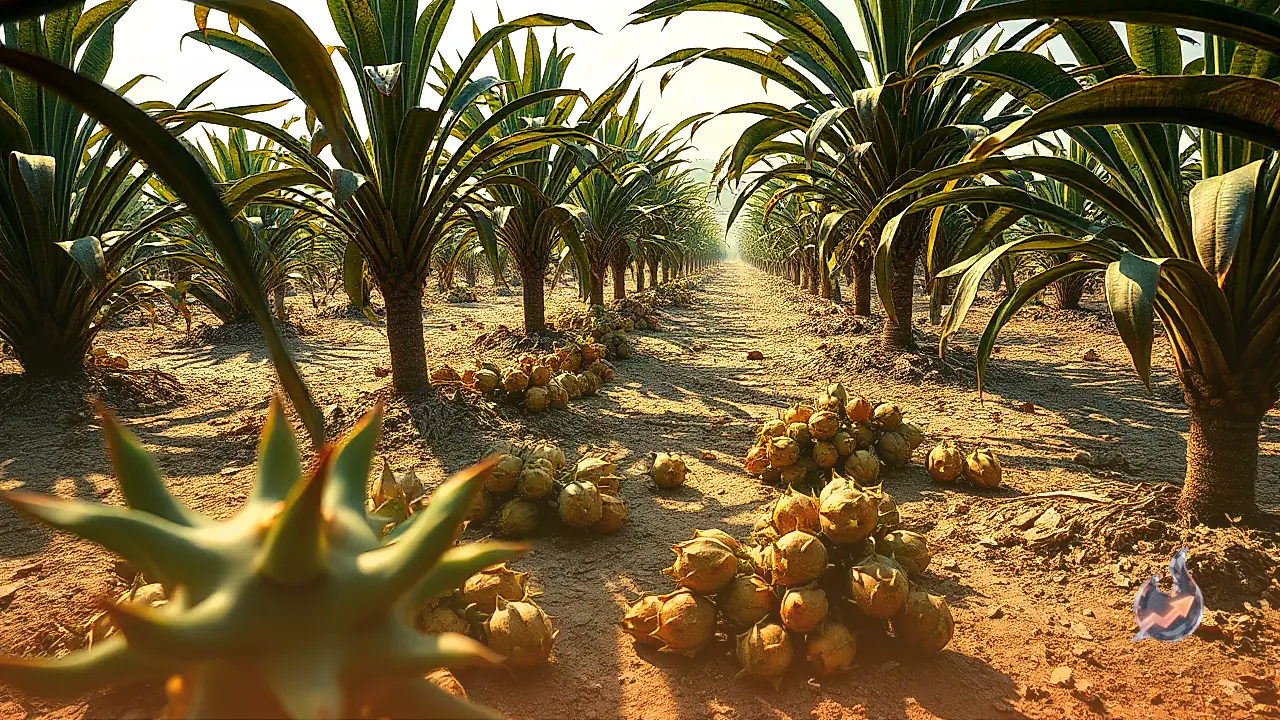

















Mirzapur district in Uttar Pradesh has transformed into a leading center for dragon fruit cultivation, marking a remarkable shift from conventional agriculture to high-value commercial horticulture. Across the district, over 365 farmers are actively cultivating this exotic fruit on roughly 360 acres of land. Supported by attractive market prices and dedicated government assistance, local growers have successfully multiplied their farm revenues, in many cases doubling their regular income.
The Journey from Experimental Plots to a National Hub
The cultivation of dragon fruit in Mirzapur trace its origins back to 2017, when the District Horticulture Department encouraged a trial initiative. Only one or two farmers stepped forward initially, planting the crop across a modest area of five to ten acres. As those early ventures yielded high productivity and strong financial returns, adjoining farmers recognized the crop potential and embraced the innovation.
Over the span of nearly nine years, cultivation expanded rapidly across the district. Today, Mirzapur stands as one of the largest dragon fruit cultivation regions in the country. Farmers achieve yields ranging between 45 and 50 quintals per acre, establishing the fruit as a dependable and lucrative alternative to traditional field crops.
Government Subsidies and Optimal Planting Schedule
To support capital costs associated with supporting trellises and saplings, the government provides a substantial financial subsidy of Rs 2,70,000 per hectare to eligible farmers. This financial backing has made it significantly easier for small and marginal landholders to transition into high-density fruit orchards.
The recommended window for planting dragon fruit saplings starts after July and extends through September. The crop generally takes about two years from planting to reach productive maturity. Once established, the harvest window spans from June through December each year, coinciding with strong consumer demand across urban retail markets.
Women Farmers and Global Export Linkages
An encouraging aspect of this agricultural development is the active participation of women. More than 30 women farmers in Mirzapur own and manage dragon fruit orchards, securing independent livelihoods. The produce harvested across the district is routinely supplied to major regional consumer markets, including Varanasi, Prayagraj, and Lucknow.
High fruit quality has also opened international trade opportunities, with shipments reaching buyers in Gulf countries. Under standard market conditions, dragon fruit sells at rates between Rs 300 and Rs 400 per kilogram. During the peak summer period, heightened nutritional awareness and seasonal demand push retail and wholesale prices up to Rs 500 to Rs 600 per kilogram.
Horticulture Department Support for New Growers
District Horticulture Officer Mewa Ram stated that the administration remains committed to expanding the district cultivation footprint. Prospective farmers looking to start dragon fruit farming can register directly with the horticulture department. Along with financial subsidies, authorities are supplying quality saplings and guidance to ensure growers encounter no logistical bottlenecks during initial establishment.