



















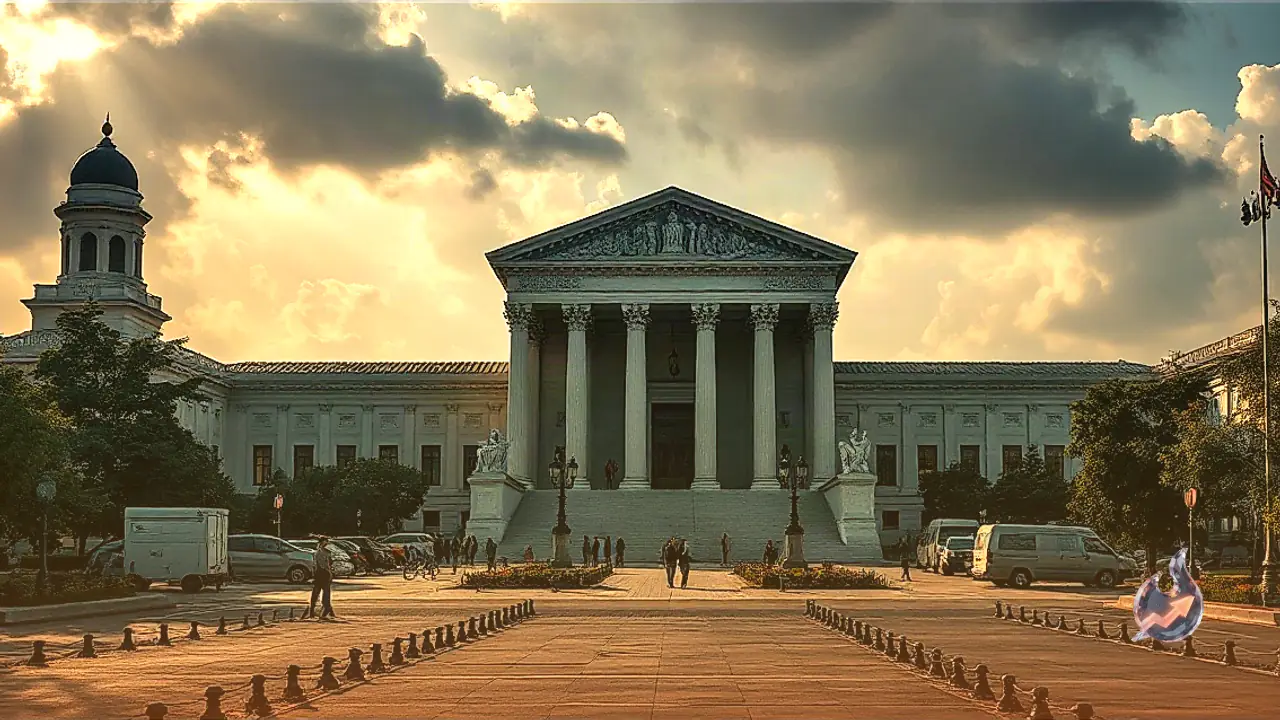

The institutional independence and appointment framework of the Election Commission of India have once again moved to the forefront of constitutional scrutiny. In the aftermath of the Maharashtra assembly elections, when allegations were raised regarding sudden expansions in voter registries, Chief Election Commissioner Gyanesh Kumar had mounted a stern defense of the electoral roll. He asserted that if a voter's name appeared in two separate locations, that individual had effectively engaged in dual voting and committed a legal transgression. He insisted that the commission could not remain passive while voters were labelled as lawbreakers, demanding that formal affidavits be submitted or an apology tendered to the nation. However, the nature of the public discourse surrounding the commission has since shifted toward its internal decision-making processes and executive oversight.
Public disclosures concerning the functioning of Nirvachan Sadan suggested that Chief Election Commissioner Gyanesh Kumar had frequently taken policy calls without adequately consulting his two fellow Election Commissioners. In response to the growing attention surrounding these reports, the poll body issued an official clarification. The commission stated that differing perspectives among members represented the vitality of internal democracy, adding that all institutional decisions were taken through broad-based consultation and mutual consensus. Following this internal development, the legal mechanism governing how election commissioners are chosen came up for rigorous examination before the Supreme Court of India.
Split Verdict in the Supreme Court
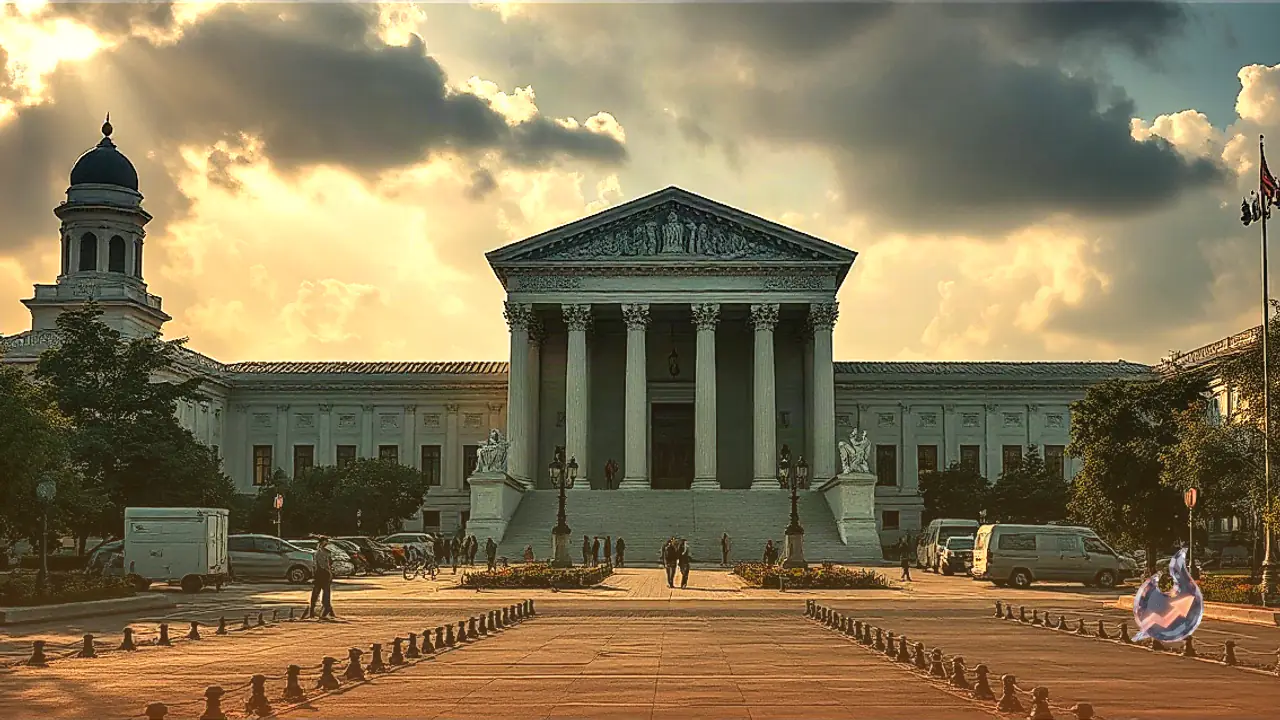
A two-judge bench of the Supreme Court, comprising Justice Dipankar Datta and Justice Satish Chandra Sharma, was hearing a batch of petitions challenging the constitutional validity of the 2023 law regulating the appointment of the Chief Election Commissioner and other Election Commissioners. The bench delivered a split opinion, leading the matter to be referred to Chief Justice CJI Surya Kant for assignment to a larger bench. While Justice Satish Chandra Sharma observed that the significant constitutional questions raised warranted an examination by a five-judge Constitution Bench, Justice Dipankar Datta was of the view that the two-judge bench was fully competent to adjudicate the validity of the enactment.
In his substantive judicial opinion, Justice Dipankar Datta raised critical concerns regarding the institutional structure established by the Union Government. He pointed out that the Supreme Court had already laid down the fundamental constitutional principle in the 2023 Anoop Baranwal ruling, establishing that the executive cannot enjoy exclusive control over appointments to the country's premier election watchdog. Consequently, the court's role was strictly limited to determining whether the December 2023 parliamentary statute adhered to that core constitutional doctrine.
Four Critical Objections Raised by Justice Dipankar Datta
Justice Dipankar Datta articulated four distinct structural deficiencies embedded within the present three-member selection committee mechanism, highlighting how the composition tilts the balance entirely in favour of the executive
- Compromised Neutrality of the Cabinet Minister: Justice Datta observed that a Union Cabinet Minister nominated by the Prime Minister cannot act with complete independence. Operating under the constitutional mandate of collective ministerial responsibility, a cabinet member cannot vote or take a stance contrary to the head of the government.
- Marginalisation of the Opposition Leader: With both the Prime Minister and a nominated Union Minister sitting on the three-member selection panel, the ruling dispensation commands a permanent two-to-one majority. Under such an arrangement, the presence of the Leader of the Opposition in the Lok Sabha is reduced to a symbolic formality, as the government can consistently enforce its preferred choices.
- The Analogy of a Cricket Umpire: To illustrate the fundamental flaw in the selection architecture, Justice Datta drew a comparison with competitive sport. He noted that if the captain of one of the participating teams were permitted to choose the umpire for a match, every decision made by that official would inevitably remain shrouded in skepticism and public doubt.
- The Institutional Perception Test: Public trust serves as the bedrock of constitutional democracy. Justice Datta stressed that the electorate must never perceive the Election Commission of India, which stands as a key democratic pillar, as functioning under partisan influence or executing one-sided administrative mandates.
- Incomparability with Judicial Collegium: Addressing arguments comparing the selection panel to judicial appointments, Justice Datta dismissed the parallel. He noted that the appointment of judges involves comprehensive multi-agency scrutiny, including intelligence verification and administrative inputs from the executive, making it fundamentally distinct from selecting administrators responsible for conducting national elections.
The Evolution of the Appointment Process
Article 324 of the Indian Constitution outlines the framework for the Election Commission and explicitly envisioned that Parliament would enact a dedicated statutory mechanism for appointments. Despite this constitutional directive, no legislation was enacted for 73 years between 1950 and 2023. Addressing this prolonged legislative void, the Supreme Court delivered an interim mechanism in the Anoop Baranwal case in March 2023. Under that directive, a selection committee comprising the Prime Minister, the Leader of the Opposition, and the Chief Justice of India was mandated to recommend appointments until Parliament passed an appropriate statute.
In December 2023, the Union Government enacted fresh legislation that altered this interim composition by excluding the Chief Justice of India and replacing that seat with a Union Cabinet Minister chosen by the Prime Minister. This structural shift prompted petitioners to approach the apex court, arguing that the inclusion of two executive members undermines institutional independence.
The 1993 Transformation to a Multi-Member Body
The relationship between the executive and the election commission has witnessed critical historical friction. Former Chief Election Commissioner T.N. Seshan had recounted in past interviews that during his tenure as Cabinet Secretary, the political executive under Prime Minister Rajiv Gandhi would dictate election schedules, which the commission would merely formalize and announce.
When T.N. Seshan took charge as Chief Election Commissioner and began asserting rigorous constitutional independence in 1993, the P.V. Narasimha Rao government sought institutional counterweights. Through an ordinance, the government transformed the Election Commission from a single-member entity into a multi-member commission by inducting G.V.G. Krishnamurthy and M.S. Gill as Election Commissioners. To prevent unilateral decisions, the law mandated that disputed matters be resolved through majority voting, while maintaining identical status, remuneration, and powers across all three commissioners.