






















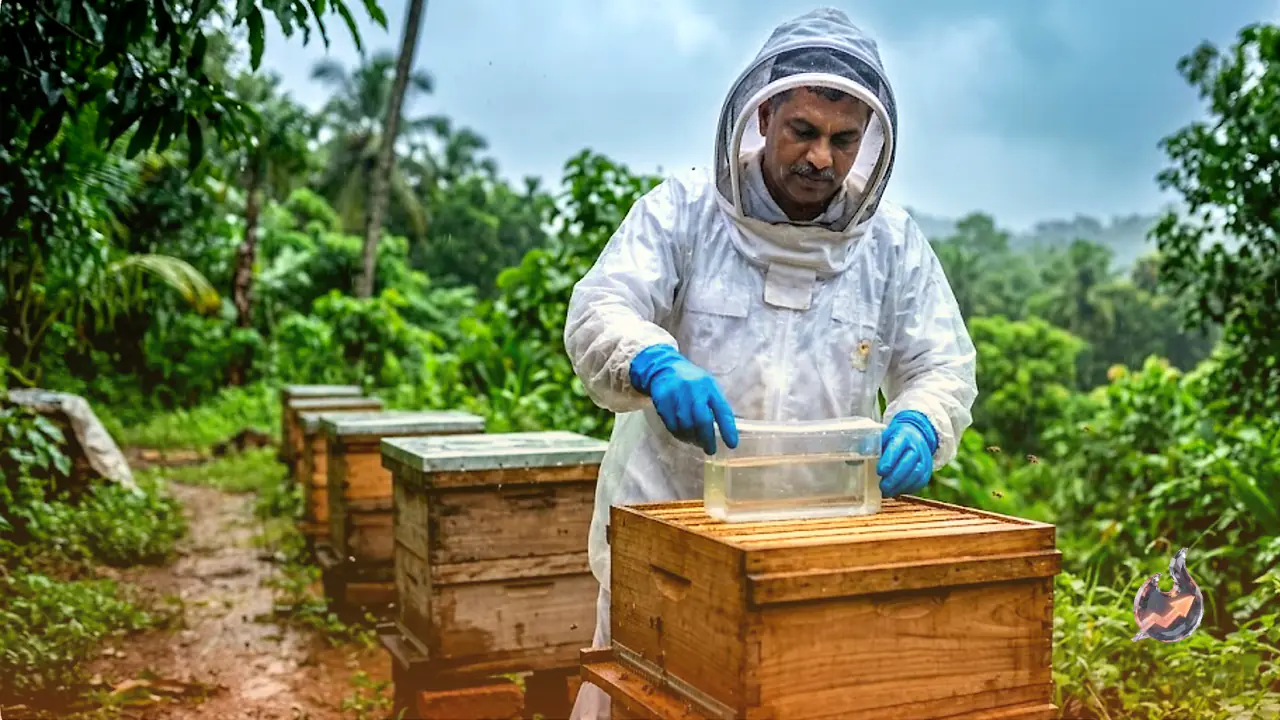

For farmers who keep bees, the monsoon is both a make-or-break season and a test of patience. Non-stop rain, rising humidity, gusty winds and days without sunshine all disrupt the bees' normal routine. Fewer blossoms open up in fields and orchards during this period, so the bees cannot gather enough pollen and nectar, and that shortage shows up directly in how much honey the hive eventually produces. If beekeepers let their guard down on hive maintenance during these weeks, entire colonies can weaken and various diseases can take hold. Even a small lapse in care during the rains can translate into a heavy financial loss for beekeepers, which is why regular monitoring, sound management and a few essential precautions become critical at this time of year. Checking hives periodically, keeping them clean and tracking bee activity closely can prevent most of the damage, while also laying the groundwork for a strong honey harvest once the season turns.
Give the Hives a Safe, Dry Spot
The first and most important step during the rainy season is finding a secure location for the beehive boxes. Hives should be placed where rainwater cannot reach them directly and where water does not pool on the ground nearby. Wherever possible, boxes should be raised on wooden or iron stands to reduce the dampness that rises from the ground. A tin sheet, plastic cover or some other sturdy roofing should be arranged over the hives so that water cannot seep inside. At the same time, there needs to be enough airflow around the hives, because a closed-off, overly damp environment lets fungus and other diseases spread quickly. If water does get into a hive, it should be dried out and cleaned immediately. Making daily hive visits a habit during this season helps catch small problems early, before they can threaten the whole colony.
Keep the Food Supply From Running Short
With fewer flowers blooming through the monsoon, bees often cannot find enough food on their own. Beekeepers need to step in and arrange supplementary feed. A sugar solution, or a supplement recommended by scientists, can be given when required so the bees get enough energy and their numbers don't decline. If this food shortage drags on for too long, the queen bee starts laying fewer eggs, and the whole colony gradually weakens as a result. That makes it important to inspect hives from time to time and confirm there is an adequate food reserve on hand. Colonies that are already weak deserve special attention, and if needed, beekeepers can consider merging them with stronger colonies on a scientist's advice. Timely, sufficient feeding keeps bees healthy and lets them resume honey collection quickly the moment the rain lets up.
Watch Closely for Disease and Pests in the Damp Weather
The risk of disease and pest infestation also climbs sharply during the monsoon. Excess moisture allows fungus, bacteria and other infections to spread fast, and parasites such as the varroa mite can damage a colony as well. Beekeepers should make it a habit to inspect their hives regularly. If anything looks off, a rising number of dead bees, a foul smell, or larvae going bad, an expert should be consulted right away. Keeping the hive clean, removing old and damaged frames, and isolating any infected material are all essential steps. No medication should ever be used without proper knowledge or expert guidance, because the wrong treatment can harm the bees and damage the entire colony.
Cleanliness and Safety Around the Apiary Matter Just as Much
Keeping the beekeeping site clean and secure is just as important during the monsoon. Grass, shrubs and debris that grow up around the hives should be cleared out periodically so that snakes, lizards, ants and other pests cannot make a home there. If rainwater collects around the site, drainage should be arranged immediately. Hive entrances should be kept open enough for bees to move in and out freely, though they can be narrowed slightly if needed to keep outside pests and bees from other colonies from getting in. In windy areas, hives should be tied down securely so they don't topple over or get damaged. If pesticide spraying is happening nearby, beekeepers should coordinate with local farmers and take precautions in advance to protect their bees. Small, consistent precautions like these can prevent major losses.
Good Care Now Can Mean a Bumper Honey Harvest Later
When bees are looked after properly through the monsoon, beekeepers can see a solid payoff in honey production once the rains end. This season should be viewed not just as a challenge to survive, but as preparation for the next production cycle. Habits like regular inspection, balanced feeding, cleanliness, disease control and keeping hives in a secure spot all help beekeepers keep their colonies strong. That, in turn, boosts bee numbers, keeps the queen healthy and improves the hive's honey-making capacity. The government and agriculture departments periodically run training programmes related to beekeeping, and farmers who take advantage of them can learn new techniques and make their honey production more profitable.